Alumni Spotlight: Nicole McCallum (F’12)

nicole

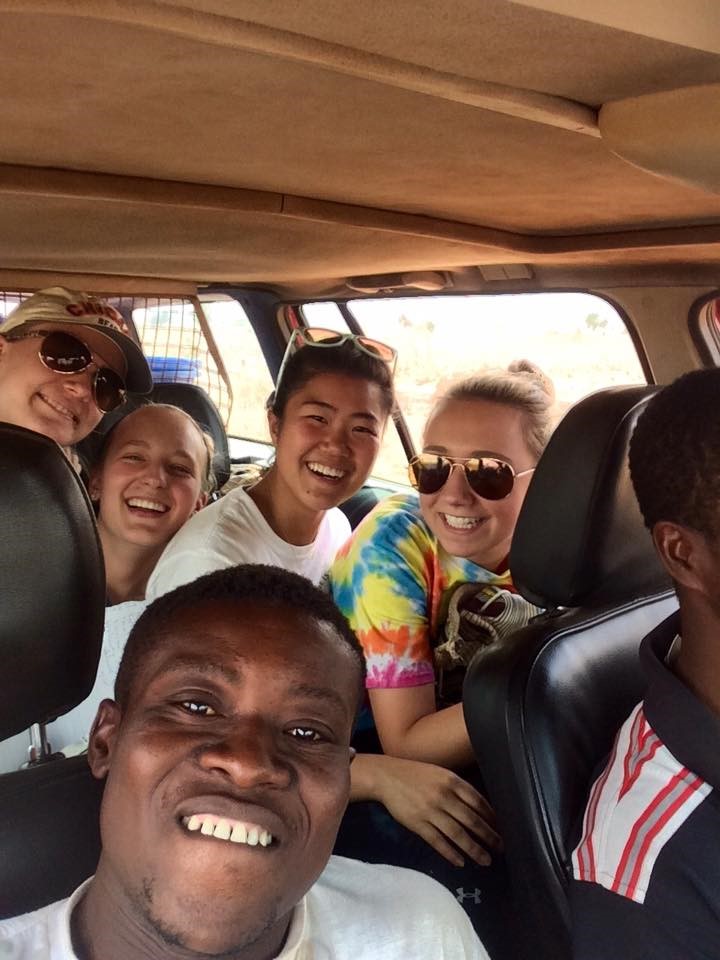
Nicole McCallum (back row, second from the right) is from the Fall 2012 semester at The Island School and she has recently returned from a service trip to Tamale, Ghana. Nicole worked with a group called Saha Global whose mission is to provide developing countries with access to clean water and electricity. Saha scouts the locations prior to the arrival of volunteers like Nicole. In her case, her group “traveled around 45 minutes to the border of Tamale to a little village called Naha. When we first arrived we set up a meeting with the chief and some of the elders in the community.” This is done because “Saha values working closely with each village in order to make the business as successful as possible. During the customary chief meeting we explained that we were there to create a business to provide them with fresh water, we described that the “dugouts” that they were taking their water from were unsafe to drink due to the massive amounts of E.coli and how we would set up the business. We made it abundantly clear that we wanted to work with them and that they would be part of the process.” From here, Nicole and her group built the water infrastructure from the ground up and visited all 44 households that it would serve in order to inform the residents on how to keep their water safe and to deliver to them Safe Storage Containers (SSC). This served the dual purpose of also forming beneficial relationships between Saha Global and the residents of Naha. The result was that “Every single household we visited was so happy with how everything turned out, was ecstatic for the sustainability of the business and could tell that it was going to make a positive impact on their family’s lives. I initially wanted to start this business solely because I was able to provide people with fresh water but through this process it became so much more. Saha Global is so successful because of its incorporation and appreciation of the Ghanaian culture and people with a special highlight on the monitoring process after the field reps leave to assure success.”

Nicole compared her time in Ghana to The Island School by saying that both were life changing experiences. She also found similarities in the people who she described as “inspiringly positive about life”. For Nicole, the best part of the trip was the people. She “learned so much about the Ghanaian culture through talking to my translator, Nestor, and the other translators we got close to along the trip. They showed us their homes, their families, where they like to have fun and really shared their lives with us. We ate all the best with them and experienced local food such as baku, T-Z, eggs and bread, Guinea fowl eggs and lots of rice and chicken”.

The entire reason why Nicole is involving herself in projects like Saha Global is because of her interest in sustainable development. Her time at The Island School inspired this in her and “it is because of The Island School that I am so passionate about what I study” which is a double major in Environmental Engineering and Sustainable Development. Nicole fell in love with her program because “it allowed me to peruse a major that wasn’t just cut and dry. One that allowed me to work hands on, take classes other than just engineering and especially that would encourage me to study abroad. The Island School was a lot like my program because it wasn’t the classic school education, it has flare and allows a student to really delve into what one would be doing in the work place and to look more holistically”.

Nicole has several goals for her project: that it will be successful, “for it to provide the village of Naha with fresh drinking water and for it to stay sustainable and successful for many many years to come”. She has faith in the women that her group trained and in the village as a whole that by the time she makes it back in the future, everything will be “running like a well-oiled machine”.
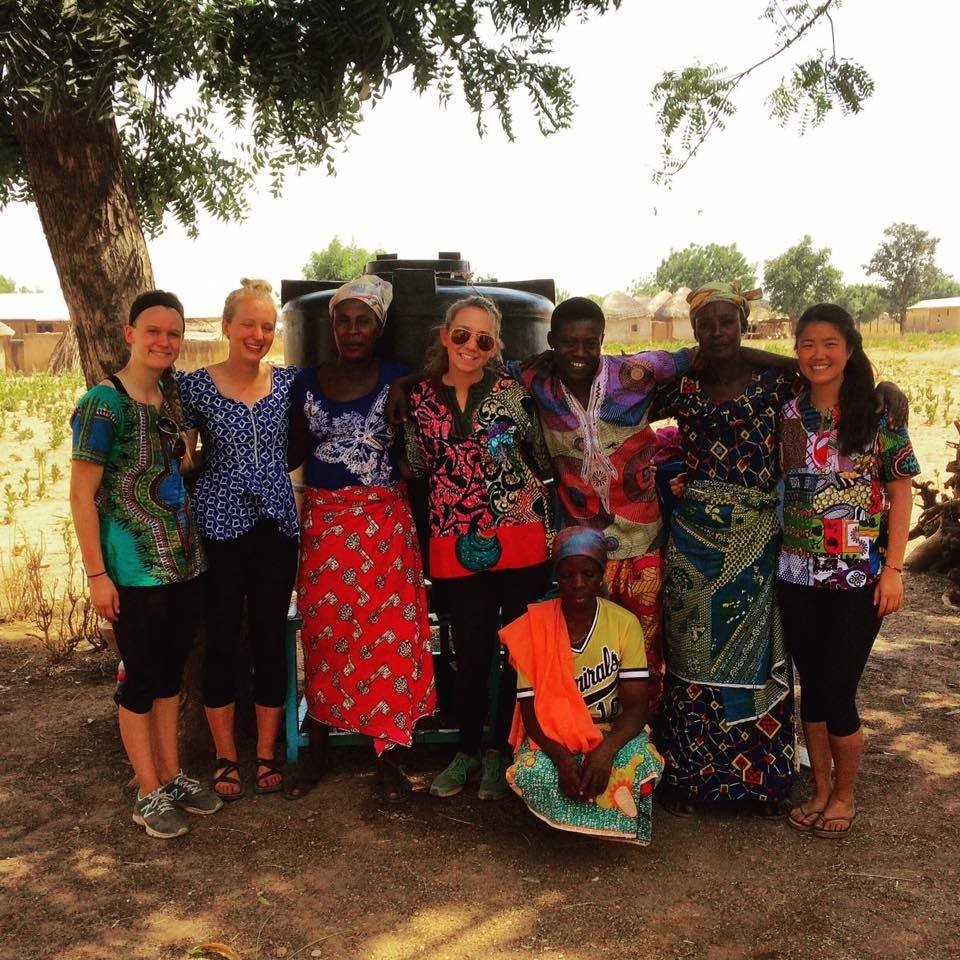
nicole 2Nicole with villagers from Naha and other volunteers

Lastly, Nicole wants to give a shout out to: “Kelly McCarthy because I miss her and haven’t seen her in so long.”
 

Kristin Paterakis (F ’04) continues policy work with Sea Save Foundation

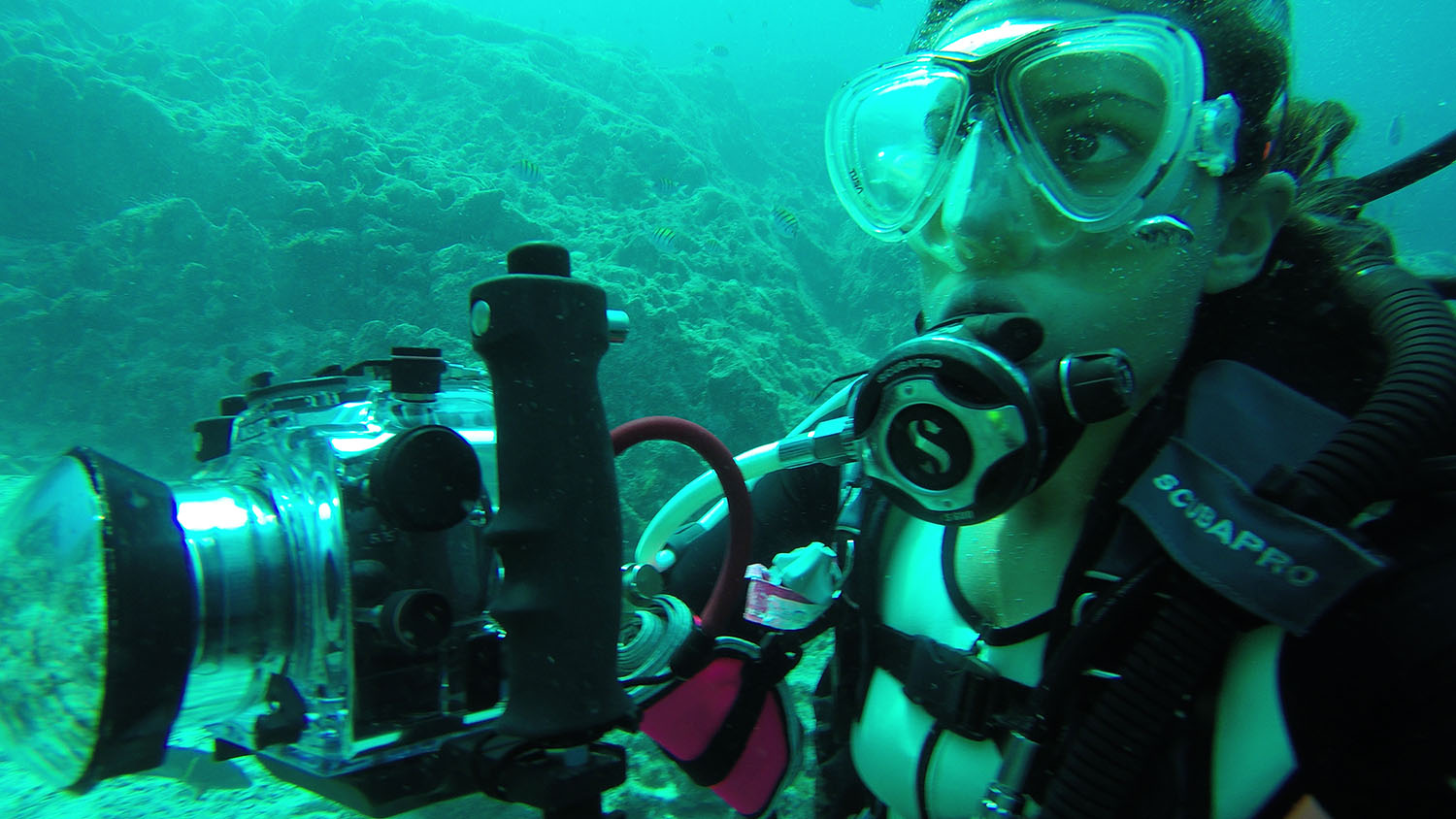
I had bid goodbye to one of the most exciting chapters of my life, my experience at Island school, just two years prior. I was dying to get back to the water and be face-to-face with the sharks I learned to love and respect during my semester at Island School and summers interning with CEI.  An e-mail arrived from an ocean conservation foundation inviting me to join a scholars program exploring the Cayman Islands.  The leaders, Georgienne Bradley and Jay Ireland, promised a combination learning experience including science, conservation and underwater videography.  I jumped at the opportunity and they delivered in spades.

My experience with Sea Save Foundation during this program synergized with the passion I had brought away from Island School.  The direction of my life path had been changed forever.  My relationship with Sea Save has continued and flourished over the years.  I have learned about national and international public policy and watched their leaders play critical roles at CITES as well as in local political ocean campaigns such as shark finning regulations with AB 376 and plastic bans in California.

IMG_8005

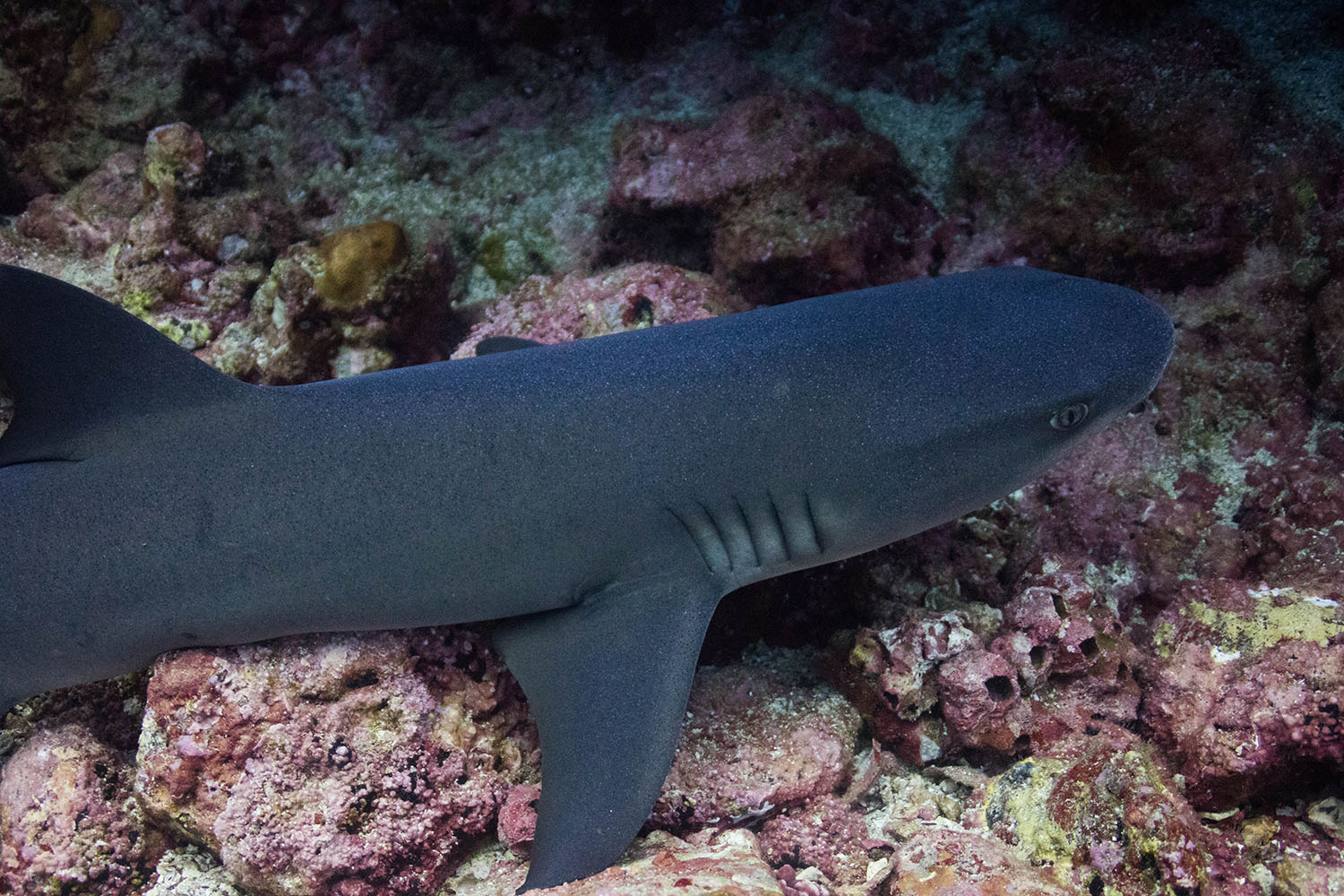
I was reunited with the team last fall when I joined them on an expedition to Cocos Island, a World Heritage Site known for its remote locale and proliferation of megafauna.  Because Sea Save leaders assisted with the development of the UNESCO petition of admission, we were afforded excellent access. My dives were punctuated by visits from whales, turtles, schools of jacks, tiger sharks, hammerheads, eagle rays, whale sharks and many other mesmerizing species.

Sea Save is currently planning an intimate excursion to Cat Island in our loved Bahama-land from May 9 – 15, 2016.  This fundraiser is open to ten participants and will place SCUBA and free divers face to face with oceanic white tips in the open ocean.  This high adrenaline encounter is a perfect opportunity to capture still photographs and video that will be used to promote ocean conservation.

DCIM100GOPROG0492134.

This is a great group of people, they are accomplishing much and they create a fun environment within which we can enjoy the ocean and support conservation. Learn more by going here.

Or send an e-mail to: expeditions@seasave.org


IS BESS students talk ponds at conferences

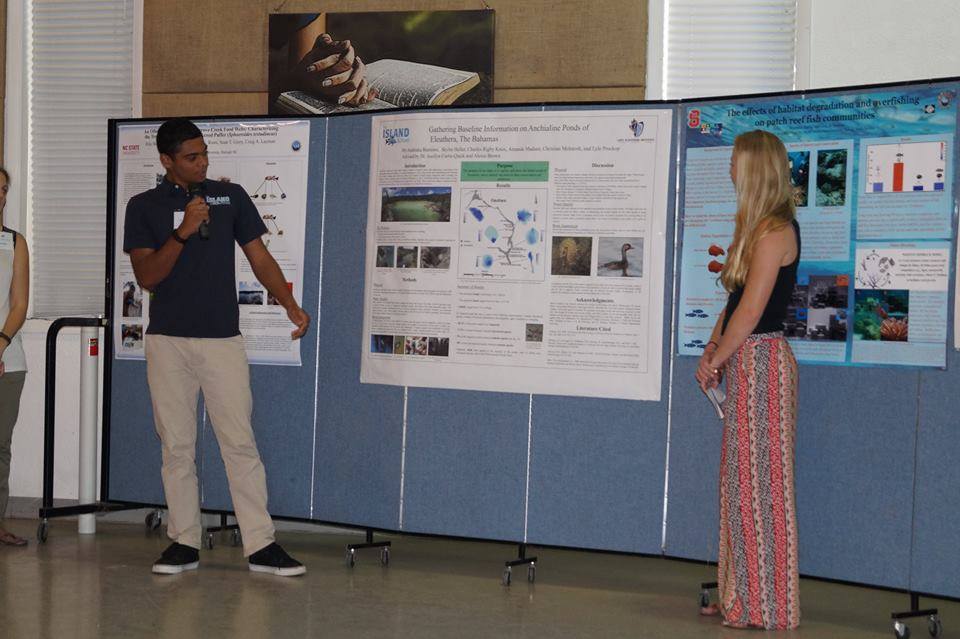
Christian McIntosh, a BESS scholar and a Fall 15 Inland Ponds Research Class student, recently presented the group’s work at the Abaco Science Alliance Conference.  This conference is a biannual event hosted by Friends of the Environment, where Christian is currently interning.  The conference invites scientists to present their work and findings to fellow scientists, as well as the local community and school groups.  Christian talked with passion about the unique life he found in the ponds of Eleuthera during his research class.

Christian McIntosh presenting at the Abaco Science Alliance Conference

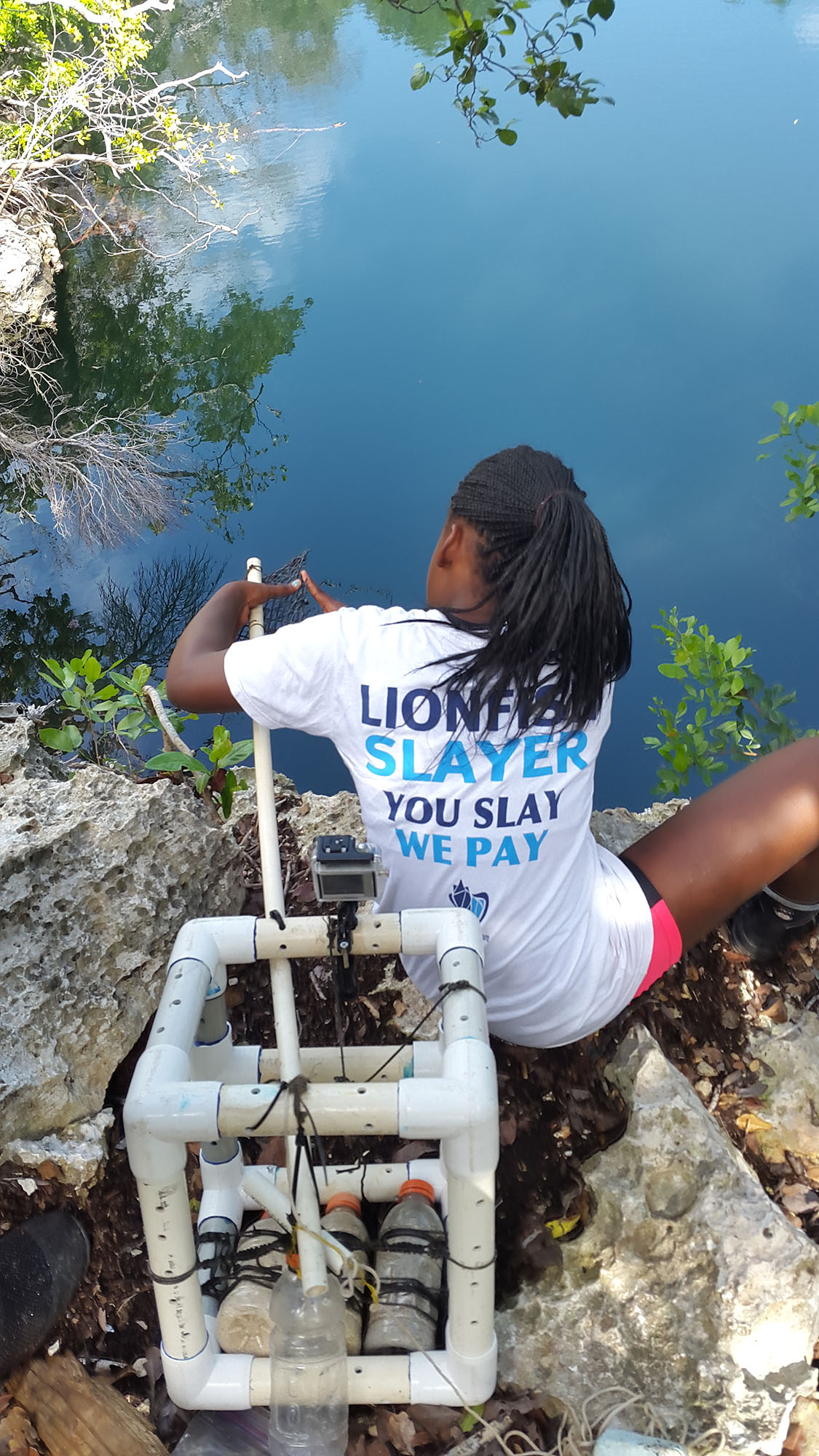
Exciting news just in – last week Andrieka Burrows, fellow BESS scholar and Fall 15 Island School student, had her abstract accepted to present more ponds research at the Bahamas Natural History Conference this March. The goal of the conference is to inspire new avenues of research and cooperation across disciplines while highlighting the benefits of research of the environment, economy and human society of The Bahamas.  We are sure Andrieka will do an excellent job and create more interest and support for the conservation of these understudied and fragile systems.

Andrieka Burrows at work collecting data on inland ponds

We are very proud of our young scientists, Christian and Andrieka, and hope this is the start of not only the protection of anchialine systems, but the beginning of long careers in the conservation of The Bahamas’ natural resources.

If you would like to find out more about the Island School research, check out the posters published online by the Fisheries Conservation Foundation.

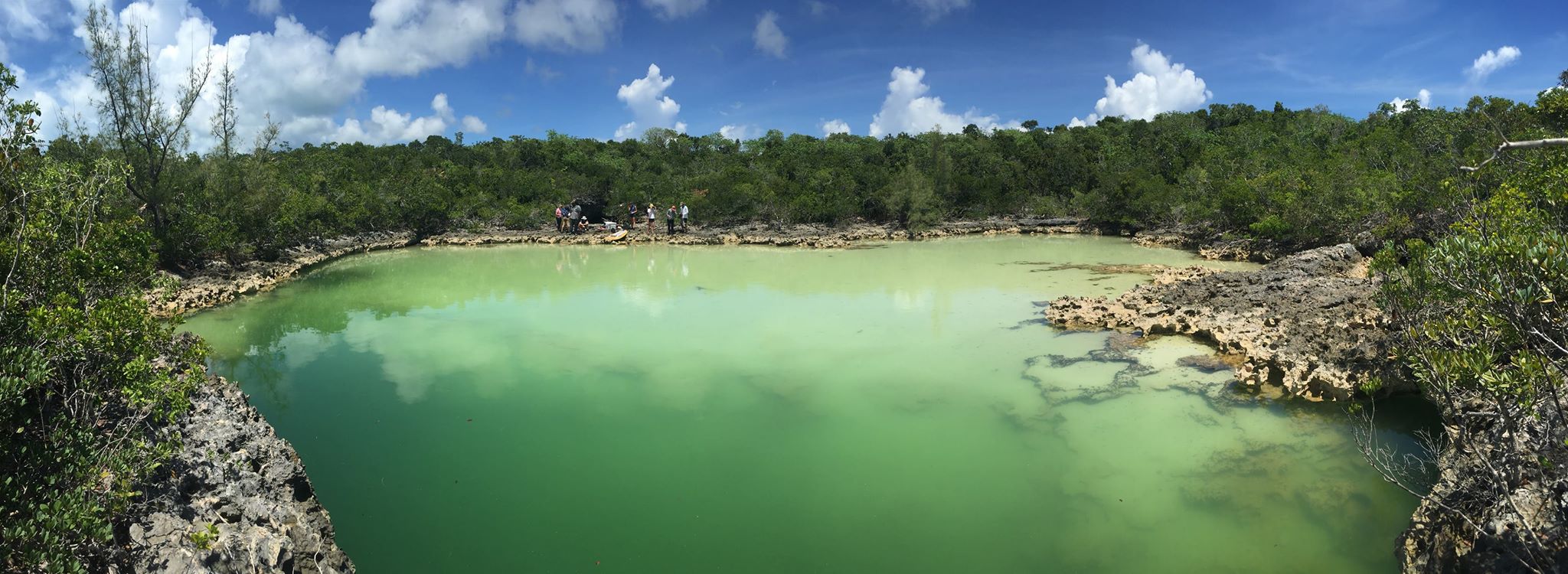
Island School students in the field assessing a pond and the life within

Alumni Spotlight: Spencer Elliot (Sp’09)

title

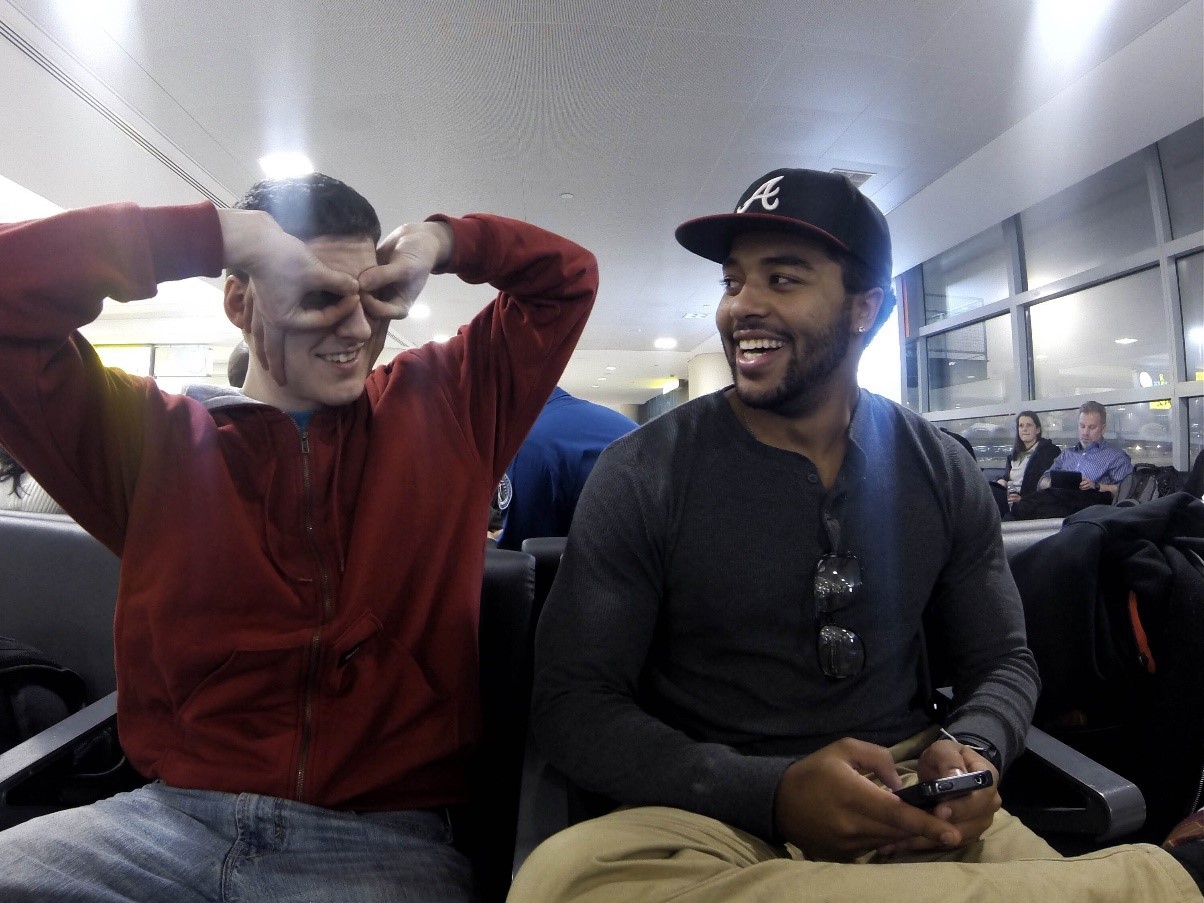
Spencer Elliot (pictured right) has been busy since he attended the Spring 2009 semester of The Island School. Spencer enrolled at Michigan State University and played football there through the end of his sophomore year. After sustaining an injury, he went abroad to Cape Town during the fall of his junior year and interned with a non-profit organization called Sporting Chance. The goal of Sporting Chance was to “provide an opportunity for impoverished youth to have an option to play sports. They also hosted coaching clinics in more affluent areas, but their work in the Townships (or “shanty towns” as my high school text book referred to them) was the cornerstone of their mission”. Spencer is an advertising major so, he spent his time with Sporting Chance crisscrossing all over Cape Town documenting “everything I saw. I went to everything from coaching clinics, to charity events, to school gym classes. I would then turn my footage into promotional videos that Sporting Chance could use to show their sponsors what they were doing. My internship experience allowed me to see Cape Town in its entirety. I saw the beautiful, white beaches with pent house apartments, I saw the tin shacks families live in with no running water and everything in between”. As time passed Spencer realized that there was a true homelessness epidemic in Cape Town, particularly among the youth. After just one month on the job in Cape Town, “I sent a Facebook message to my mom telling her that I couldn’t come home for my spring semester, I had fallen in love with Cape Town and felt like there was more I was supposed to do while I was there. She told me that she supported my decision, but it was up to me to find a way to put a roof over my head and work. I started researching non-profits in the Cape Town area, but it didn’t take me long to decide I wanted to do to something with street children. I found The Homestead, contacted Paul and the rest is history. Bwatts and I stayed in a 1 bedroom studio apartment smaller than a dorm room and payed $200 dollars per month”.

Bwatts (pictured left above) and Spencer first met in the 8th grade as they played on the same football team together. Their relationship was cordial but certainly never a formal friendship until their senior year in high school. Spencer says he will never forget the moment their friendship began, he was “walking outside of our school and I heard someone digging around in a dumpster. All of a sudden Bwatts stuck his head up and I was shocked. I asked him what he was doing and he told me he was searching for bottle caps for coke rewards. Gosh…I’ll never forget it. A couple weeks later, we had the first day of our Media Broadcasting class. The class which aired the school news every day. Our teacher Mrs. Hamersma told us we had to pick a partner to work with throughout the class. I didn’t really know why, but as soon as she said that I knew I wanted this kid who was searching for coke rewards in a dumpster to be my partner. I asked him and he was kinda caught off guard. I was too I guess. The whole thing came from left field really. But luckily he said yes and the rest is history. We’ve been working together ever since” but working for The Homestead is by far the largest project they have ever done together as a team. For a behind the scenes clip covering this moment, look here

In Spencer’s eyes, what makes Cape Town’s current situation so alarming is the number of homeless children on the streets. The Homestead is a non-profit organization based within the greater Cape Town area that provides a chance for homeless kids to receive an education, a team of supportive adults and most importantly a home to boys that would otherwise be homeless. Spencer and his friend Bwatts are currently attempting to raise $50,000 for the benefit of The Homestead. They arrived at that goal after “talking with Paul Hooper, the director of the Homestead. He told us that it cost them on average $1,000 dollars to support one kid for one year. That’s including their tuition fees, housing, food, everything”. They arrived at that number because it would provide total at The Homestead for 50 kids that were previously on the street. To raise this money, Spence and Bwatts have created a feature length documentary which launched yesterday here.  The documentary they have created “dives into the world of what life at the homestead is like, the work they are doing, the boys stories, the staff members and we tried to integrate some things that will allow people to get a feel for what it was like for two 20 year old best friends to be in Cape Town chasing a dream. We put a priority on trying to make the Documentary as upbeat and interactive as possible. We want the viewer to feel like they are standing there next to us experiencing The Homestead for themselves”.

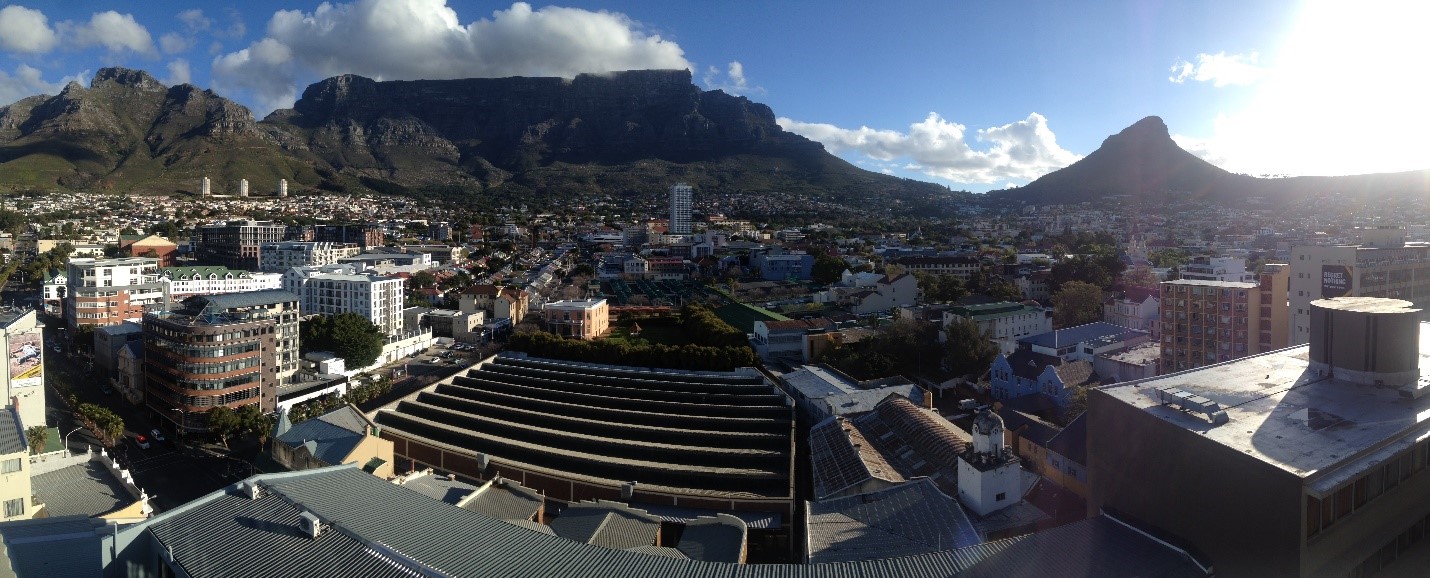
cape town

Spencer’s decision to work in Cape Town was influenced by his time at The Island School back in 2009. It was his first time away from home for an extended period, and his first time experiencing the wonders of a completely different world. Immersing himself “in a new community where I didn’t know a soul at such a young age has helped form me into the man I am today”. As a future advertising major, Spencer loved “interviewing locals and hearing their perspectives. Island School remains a turning point in my life where I made a decision about the person I wanted to consciously try to be”.

To conclude, Spencer has a couple shout outs that he would like to make sure are heard. The first goes out to “my entire semester first off. I think about Spring ’09 and the legendary faculty we had regularly. I have the glass window tattooed on my left arm for a reason. Because Island School Spring 09 changed my life and I’m forever grateful”. More specifically, he would like to thank former faculty member Andrew “Fieldy” Fields and fellow student Latario “Tario” Moxey. Fieldy was inspirational to Spencer, he describes there as simply being “a goodness about him that was infectious. I trusted him and that was a big deal for me”. Then, Spencer refers to Tario as “one of the most important people I’ve met in my entire life. We had more important talks than I’ve probably had with anyone and I will always be thankful that we were able to meet”.

All of us at The Island School wish Spencer nothing but the best in his efforts to raise money for The Homestead. For additional information on what Spencer and Bwatts are up to, check out their Crowdrise campaign page here.

Alumni Spotlight Gap Year Edition: Phoebe Colvin-Oehmig (F’15)

phoebe

A first for the Alumni Spotlight column, Phoebe Colvin-Oehmig recently returned home after attending the Fall 2015 Gap Year program at The Island School. She graduated from Waynflete in Portland, Maine and had been inspired to study plastics since she first read an inscribed copy of Tracking Trash: Flotsam, Jetsam and the Science of Ocean Motion by Loree Griffin Burns at the age of 13. Her interests were only furthered during her studies at Waynflete and so when given the chance to study plastics during her nine weeks at The Island School, Phoebe jumped at the opportunity. Inspired by what she experienced and learned during her time on campus at The Island School, Phoebe returned home and wrote the following about what she has accomplished at home and what she will be up to in the near future:

With my new knowledge, I knew I needed to do something. I returned home to Maine with a mission to eliminate Styrofoam and plastic bags in Brunswick. I joined “Bring Your Own Bag Midcoast,” a local grassroots environmental advocacy group whose mission is to promote reusable bags and containers in Midcoast Maine. In an effort to raise awareness and to educate the public, I began writing letters to newspaper editors in which I highlighted the equally hazardous environmental effects of both paper and plastic bags, as well as the health risks involved with plastic. Not only are plastics harmful to Maine’s seafood industry by causing premature deaths of marine animals by clogging their digestive systems, they also poison our seafood. Plastics act like sponges, soaking up toxins in the ocean. These, toxins, called Persistent Organic Pollutants (POPs), enter marine animals when they ingest micro plastics. These toxins, including DDT, dioxins and other pesticides, reside in their tissues. When a fish swallows plastics, and a lobster eats that fish, and a lobster-man catches the lobster, and we consume the lobster, we eat not just the meat of the lobster, but all the toxins residing in the lobster’s tissue from the plastic the fish ate.plastic

Plastics picked up after a trawl

While people seem to better understand the hazards of plastic bags, paper bags seem environmentally benign. However, the reality is paper bags are just as environmentally damaging. Over its lifetime, one paper bag produces 70% more greenhouse gas emissions and 50 times more water pollutants than a plastic bag, increasing atmospheric acidification and ozone depletion. Paper bags also leave a greater carbon footprint than plastic; it takes the same amount of fuel to ship eight plastic bags as one paper bag. As a local grocery chain stated, “It takes us six deliveries of paper to bring the same number of bags to stores as when we use plastic, with all the fuel use and emissions that go along with that. The production of paper had 4 times the energy and global warming implications of plastic.”plastic 2Microplastics in a sieve

At a December Brunswick Town Council meeting, our group, Bring Your Own Bag Midcoast, proposed an ordinance to ban Styrofoam. The council room was overflowing with supporters for a Styrofoam ban as we presented the environmental and health issues caused by Styrofoam and showed the minimal cost difference between Styrofoam products and other alternatives. After several testimonies, the members of the Town Council unanimously voted to begin the process of banning Styrofoam. Next on our agenda is to implement a five-cent fee on paper and plastic bags in stores with greater than two percent food sales in order to encourage shoppers to bring reusable bags. This plan would copy other bag ordinances, which have been deemed successful. However, with publicity come detractors. I have had to rebut press written in opposition to my efforts. But I was also contacted by the Natural Resources Council of Maine (NRCM), which offered to fund our mission—further evidence that ripples spread. In addition to writing newspaper articles and blog pieces for my high school and NRCM, I have filmed a public service announcement promoting reusable bags, which will soon air on a local television channel. I plan to major in environmental studies and continue advocacy as I continue my education.

phoebe 2Phoebe speaking at her local town council meeting

I will be returning this spring to the Cape Eleuthera Institute as an intern for the Flats Conservation and Ecology team to continue researching marine plastics. I stepped away from comfort this year, from my familiar lifestyle and the expected path from high school into college. I learned to consider outside myself, to live sustainably for the future, to look globally but also to know that action at the local level can bring about real change.


Zika Virus Update

Dear Island School families,

We on Eleuthera have been following the reporting on the Zika virus in the news and want to update you on our response and address some concerns that have been raised.  We are aware of the spread of the Zika virus throughout South America and the Caribbean, and are monitoring the CDC, PAHO/WHO, the US Embassy in Nassau, and local media and public health reporting in The Bahamas for updates. The CDC does not currently list The Bahamas as having any reported cases of Zika virus infection. Because the spread of Zika and other viruses to all countries where Aedes aegypti are endemic is predicted, we are applying our standing mosquito protection protocols for our community as usual.

The spread of these viral diseases is difficult to monitor properly – as the article mentions, infections of a specific type can only be verified in a laboratory test.  We encourage prevention of mosquito bites – some students bring personal no-see-um mesh camping type nets for their beds, and bug-net pants and tops. We also promote use of DEET and encourage covering up with long socks and long pants and long sleeves.

We also monitor the CDC for general medical issues:

http://wwwnc.cdc.gov/travel/destinations/clinician/none/the-bahamas

and the US State Department for safety, travel, and security:

http://travel.state.gov/content/passports/english/country/the-bahamas.html

and

https://www.osac.gov/Pages/ContentReportDetails.aspx?cid=17138

We recommend you read the information in the above links and be familiar with the local issues.

The health of our students and communication with families have always been top priorities. Please reach out if you have any questions.

Board Leadership in Action

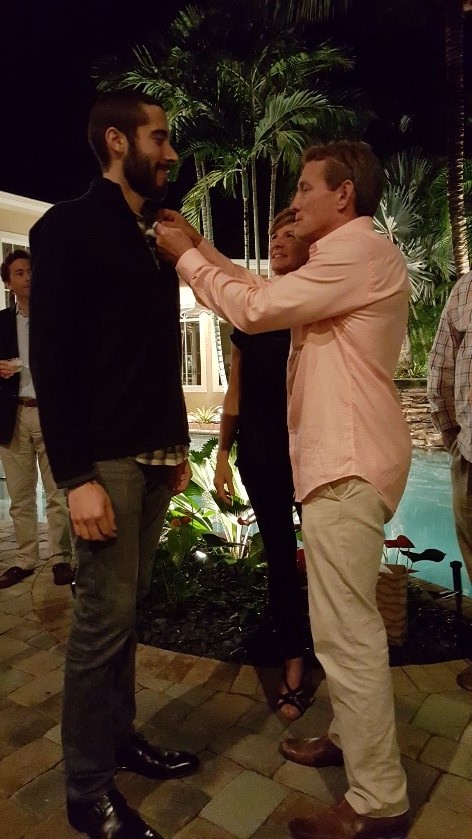
blogDrew Fink (F’05) gets pinned by Chris and Pam Maxey during the evening celebrations hosted by longtime supporters Les and Wendy Morris

In January, the Board of Directors for The Island School gathered in West Palm Beach, Florida for one of their three annual meetings. The purpose of the gathering was to celebrate transitions and alumni energy as well as share ideas on the direction and focus of the school as we head into 2016. Alumnus Drew Fink (F’05) was pinned with the starfish as he was welcomed into the ranks of the Board during this, his first meeting. Alums have consistently shown strong leadership and passion for The Island School and its mission of Leadership Effecting Change by volunteering for the Board. Drew was welcomed by returning Island School alums on the Board:

Francesca Forrestal (F’99), Thatcher Spring (F’99), Meg Bunn (F’01), Johann Scheidt (S’02), Nick DelVecchio (F’02), Greg Henkes (S’03) and Peter Meijer (S’05)

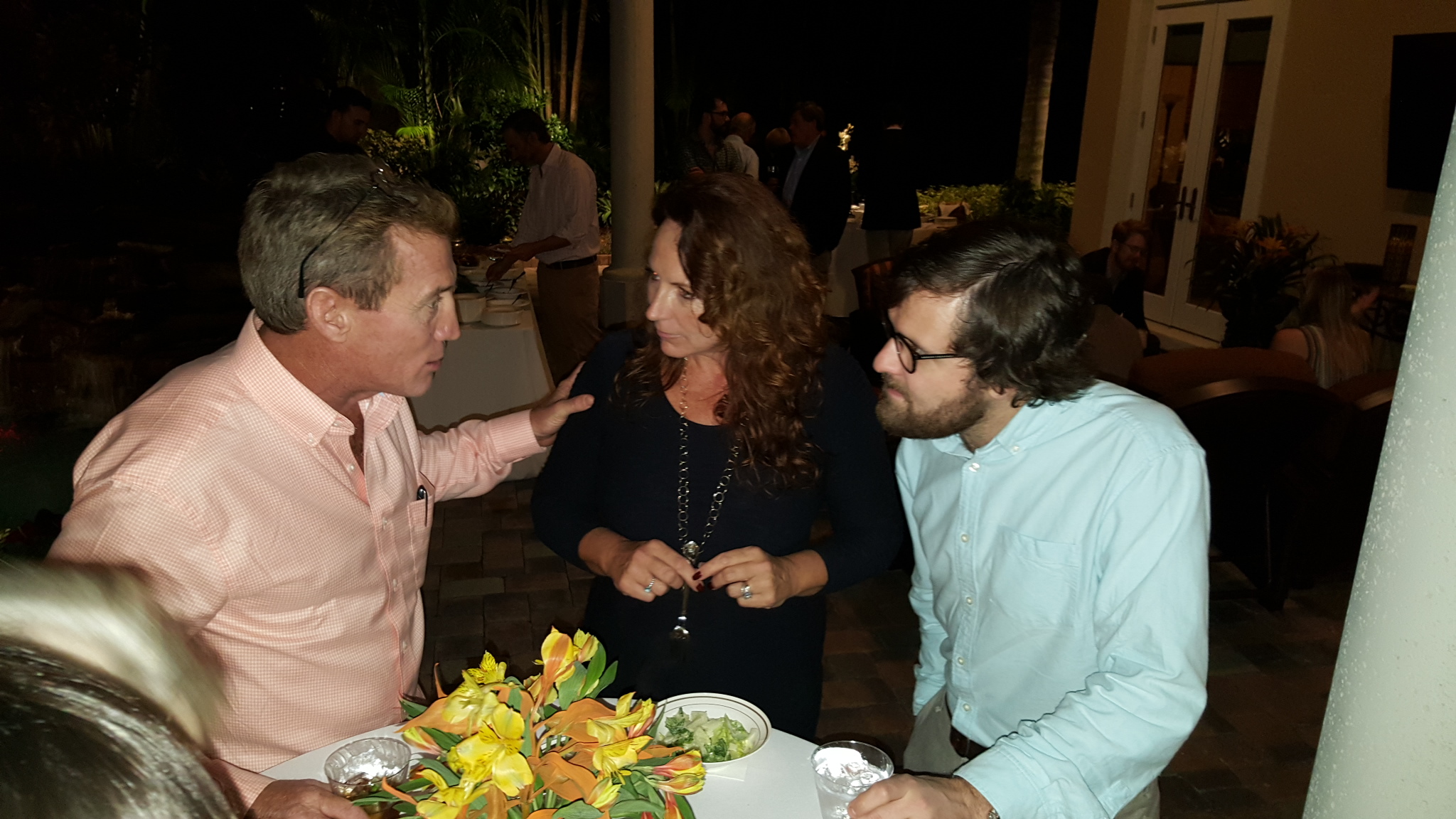
20160115_195304Chris Maxey talks with Board members Ande Frost (Parent F’04, S’09, S’13) and Greg Henkes (S’03)

Do you want to be part of the The Island School’s Board and play a significant role in the vision, direction and execution of the future of the school? We are reaching out to all Island School, Cape Eleuthera Institute, and Deep Creek Middle School alumni who are at least two years removed from college and would like to submit an application to the nomination committee. If you would like to be considered, and you are passionate about what we do, please write to alumni@islandschool.org with a resume and cover letter describing your interest. The basic requirements for membership are as follows:

  • Minimum of two years of experience in the work force.
  • Demonstrated service to the organization after your semester/summer term.
  • Skill set or demonstrated interest relevant to the work of the Board.
  • Consistent participation in CONCHtribution, the annual alumni giving campaign.
  • Accepting of financial obligations surrounding travel to meetings and other board engagements.

If you are interested, we can send you the Board’s handbook for you to learn more about what the expectations for a potential two year commitment entail. The two primary expectations that are held of all Board members are attendance of all three annual meetings (Boston, MA in October, Nassau, Bahamas in January and Eleuthera itself in April) at your own expense, and that The Island School is within your top 3 philanthropic commitments. If you have any questions or simply want to know more, please do not hesitate to reach out to alumni@islandschool.org and we will respond as soon as possible.


Local Students partner with Island School kitchen staff

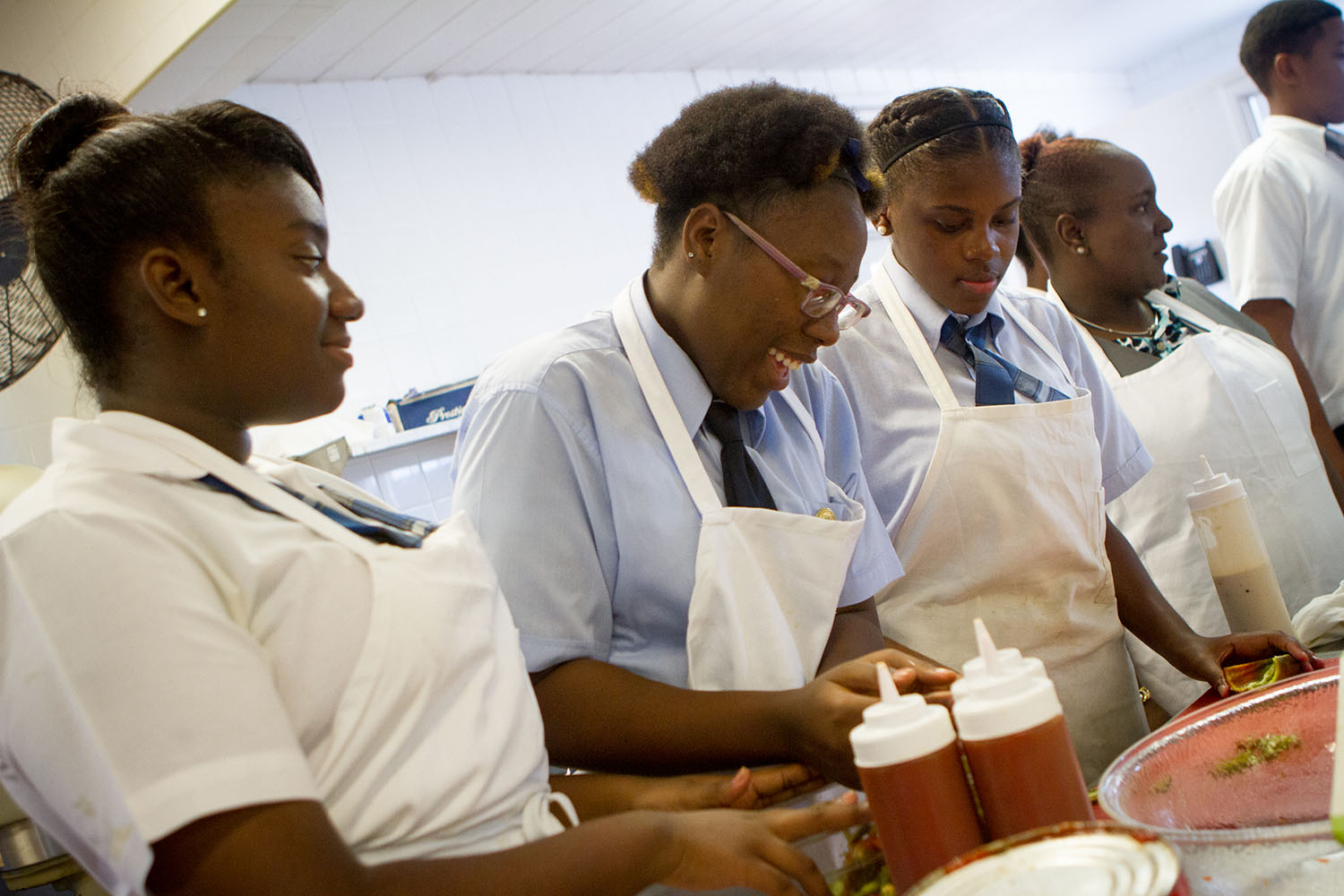
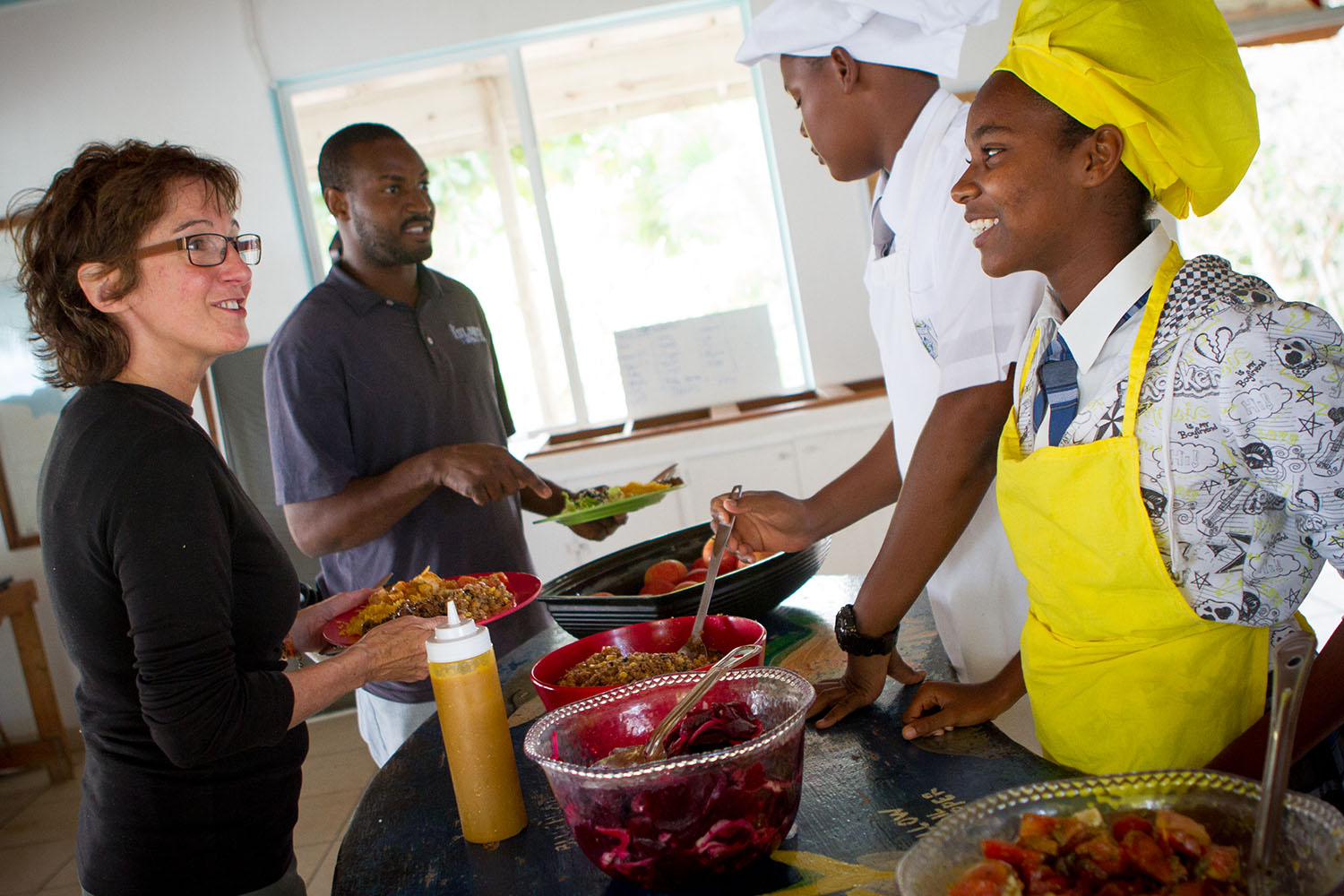
The kitchen staff at the Island School recently hosted two classes of high school students from Preston H Albury High School.  During their time here, the students worked with Sophia and her team to prepare and serve lunch to our staff and visitors. The visits were in coordination with an elective consumer science course at the local high school.

The 10th and 11th grade students were on campus for a half day to help prepare and serve lunch, and to prep breakfast for the following day. They worked in small teams to tackle different parts of the meals such as the salad bar, hot dishes, sandwich ingredients, and creating condiments from scratch.

Preston H Albury High School is located in Rock Sound and is the only high school in the southern part of the island of Eleuthera. Students in the consumer science course focus on topics such as family economics and relations, nutrition, and culinary arts. Ms. Tamika Rahming teaches the course. Sophia Louis, our very own Kitchen Manager, says the partnership between Island School and Preston H is in the works and they are hoping to get a more regular schedule implemented for high school students.

Thanks to our kitchen staff for bringing the classroom into the kitchen!

Fighting Coral Disease

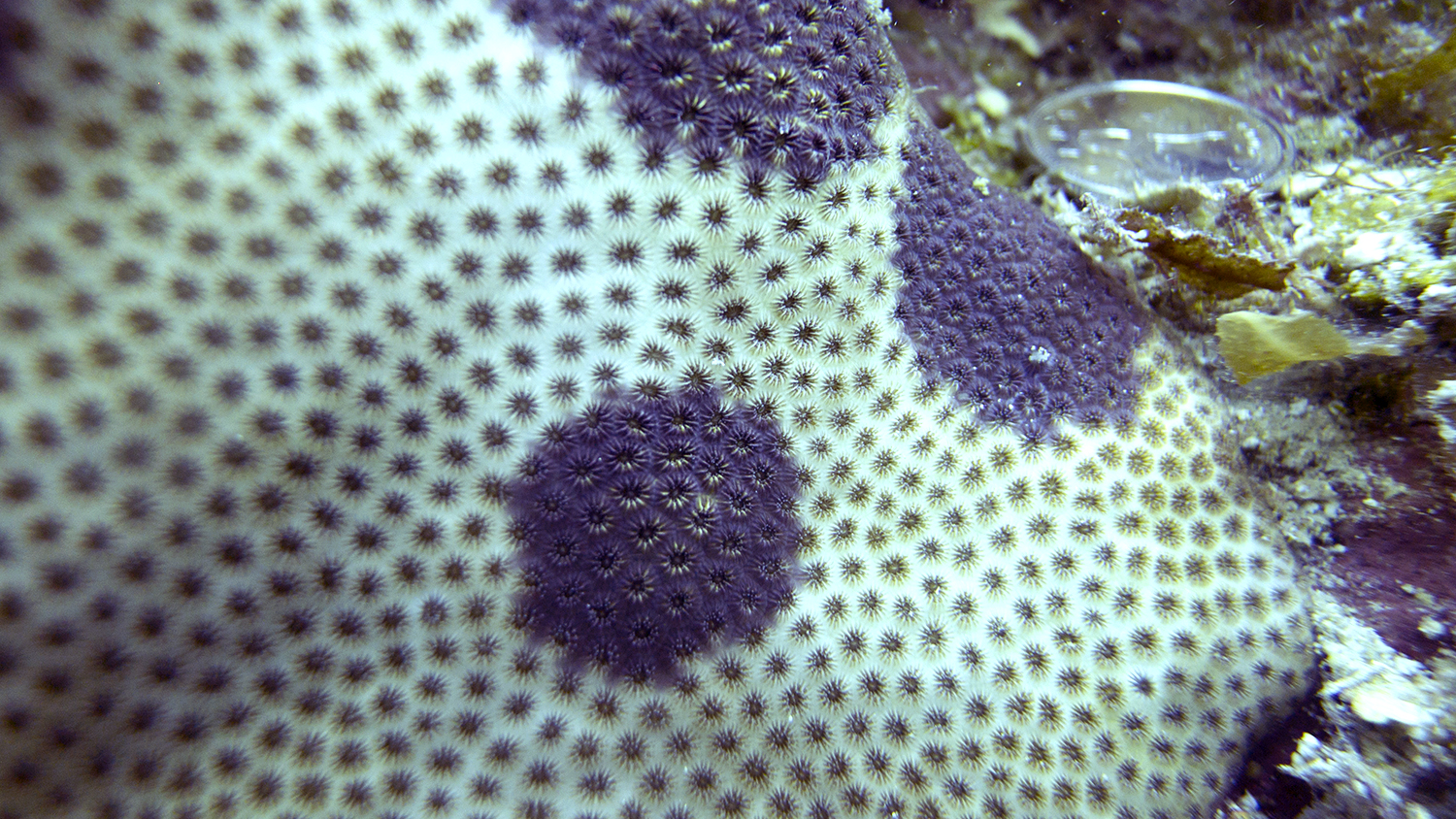
This month, The Island School welcomed Brad Weiler and Sarah Richardson who are undergraduate students at Carleton University in Ottawa, Ontario. Brad and Sarah have spent two weeks with us working on coral disease transmissibility through biotic vectors. They hope to find patterns in transient fish populations, sponge, algae and coral species that may be responsible for spreading disease.

Diseased coral
Diseased coral

Brad will be staying with us for another two weeks to collect more data and do fieldwork for additional research projects. We are excited to be able to provide resources such as staff, boats, and housing for this project.

Feel free to check out their blog at https://coralresearchblog.wordpress.com/ and their Instagram @CoralResearch for more information on their project!