ALUMNI SPOTLIGHT: EMILY JENKINS & MEREDITH HOWE (Su’14)

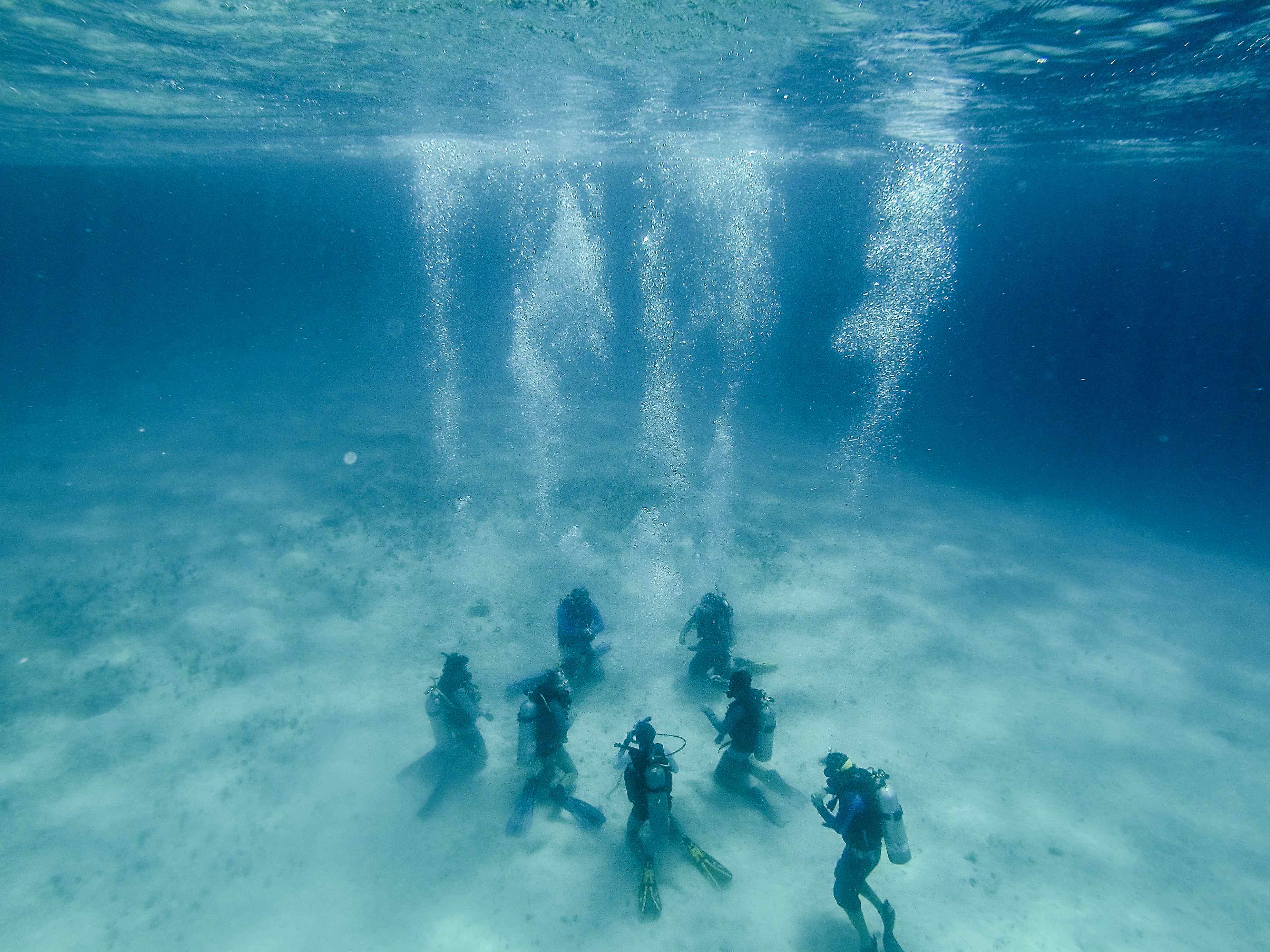
water 1

Meredith Howe and Emily Jenkins from the Summer 2014 semester returned home to their sending schools with a goal to reduce the daily amount of plastic that they consumed. This goal led to the creation of a group called the Broken Bottle Project with the help of a third friend, Meghan Vonck. The catch is that each of the three friends attended a different school in the same district. Meredith is a senior at Forrest Hills Northern, Emily is from Forrest Hills Central and Meghan is from Forrest Hills Eastern. The three of them banded together to reduce plastic water bottle usage across their entire district. We caught up with Meredith and Emily to learn just how they are accomplishing that goal and what they have planned next.

After returning home from The Island School, both Meredith and Emily enthusiastically rejoined their high school communities. Meredith jumped into the Forrest Hills student government and was elected as President of the 90-person committee leading the school. In addition to her work with the Broken Bottle Project, Meredith is currently “in the midst of planning a community outreach day where our entire school will be going out into the community to serve at nonprofit organization on April 21.” Recently, Meredith found out that she will be attending Ohio University this fall and playing on their volleyball team. Emily also recently found out that she will be attending Point Loma Nazarene University in San Diego, CA, where she intends to study Environmental Studies and Sustainability. This past winter Emily was also an integral part of her school’s varsity ski team which “made it to the state championship!! Whoopee!!!!”
water 2

For Meredith and Emily, the Broken Bottle Project “started with a passion for the environment and a passion to make a difference.” For Emily in particular, her passion for bettering the health of our planet stemmed from what she learned at the Island School. Inspiration came in the form of a teacher from Forrest Hills’ Gone Boarding class (a senior-only class where students design and build their own surfboard, longboard or snowboard and create a business partnership with snowboarding giant Burton) who prompted Meredith to think about what she could do to “get our district more informed and excited about the environment.” That same teacher then put Meredith in contact with Emily and Meghan who, after several months of planning, launched the Broken Bottle Project. Together they had “noticed the numerous people in our high schools drinking from single-use plastic water bottles, and we decided we wanted to change this.” Together, the three of them set out to initiate change throughout their entire school district.

The Island School strives to be a “zero waste” campus and a model of sustainability for the region. While here, this caught the attention of Emily and Meredith. Emily found herself pondering while on a dive “I wonder where this plastic goes?” after witnessing some of it drifting through the reef she was at. Fortunately at The Island School, we answered that question for her and that answer prompted Emily to dramatically reduce the amount of plastic she uses in her day-to-day life at home. She even carries this with her to events where large amounts of plastic bottles are being used, such as “last night at my ski team banquet. I noticed the large amount of plastic water bottles being used and I went out of my way to create a recycle bin. I took all the bottles home and recycled them myself.” For Meredith, her sea-change moment came when she realized the scale of the problem. One plastic bottle will not do much harm, but, what about 1,000? Or 1,000,000 bottles floating in the ocean? It adds up quickly. So too does the effect when people use fewer plastic bottles or recycle them properly.

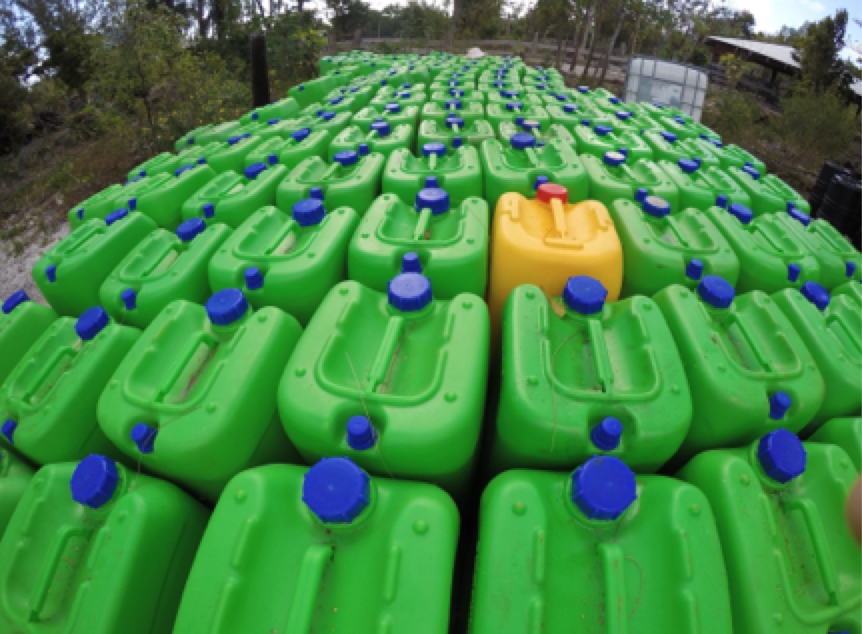
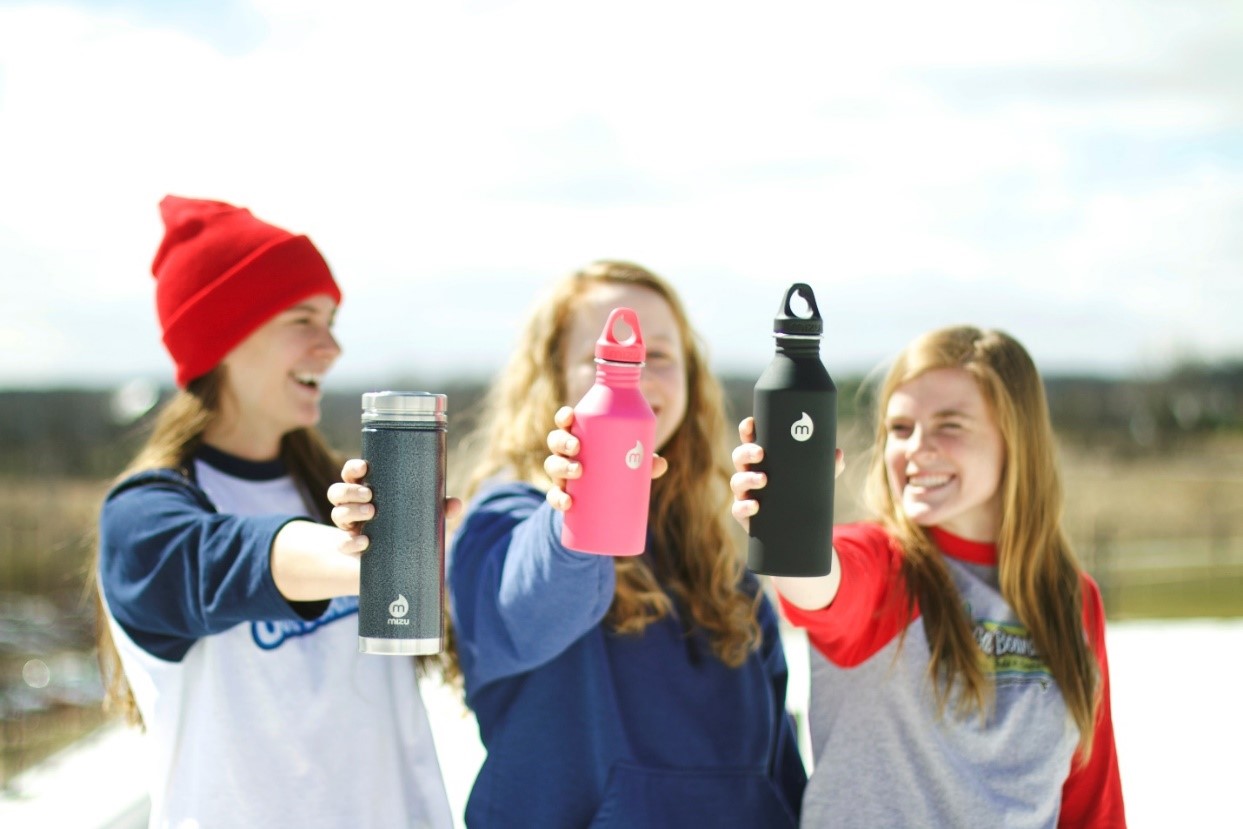
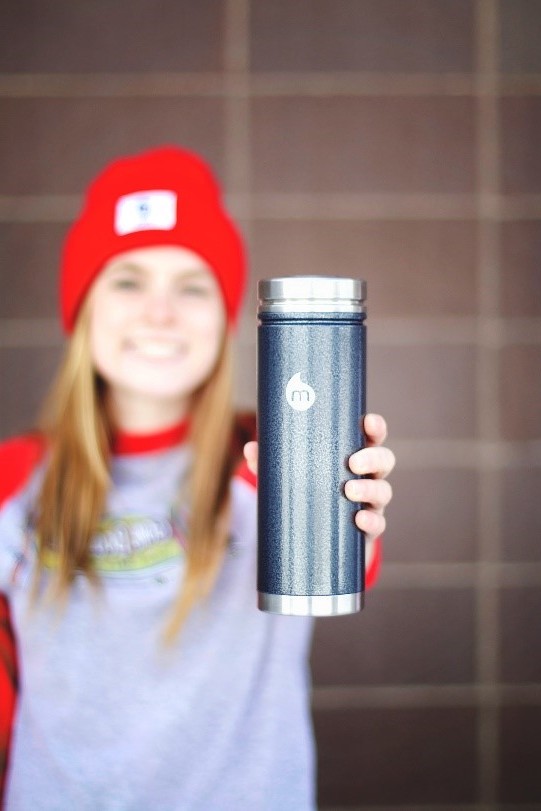
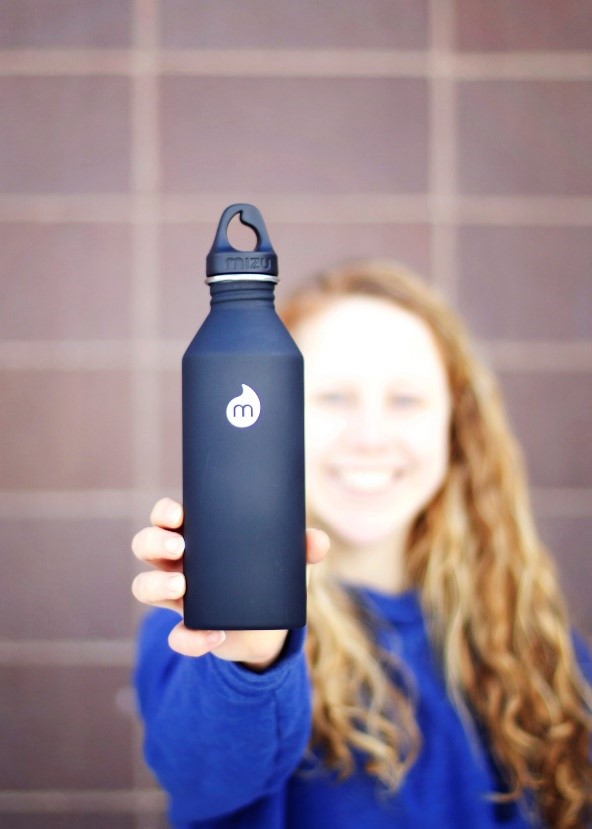
The solution is simple: reusable water bottles and filling stations around the campuses of the school district to keep those bottles full. Emily, Meredith and Meghan made a connection with MIZU who they agreed would be their ideal supplier for these water bottles. They then agreed on a design that would grace the side of the bottle. Now they are raising money, implementing their water bottle filling stations, and taking care of all the logistics. The goal is to raise about $12,000 which will allow them to meet the wholesale price of the water bottles before they distribute them to the school district. The process of reaching out to sponsors and coordinating a multi-school campaign has taught Emily, Meredith and Meghan a lot. Currently, with graduation on the horizon they are investigating options for how to pass the program off to a new group of student leaders. They expect the project to really take off towards the end of April.
water 3

water 4


Emily Jenkins (left) and Meredith Howe (right) pose with two of their water bottles

Both Emily and Meredith had some memories and shout outs that they wanted to share:

Meredith wrote-
My favorite memory during my time at IS Su ’14 is searching for the Banyan Tree with Kate, Evie, Annie Gray, and of course Pibl. Also, the first night when the girl’s cabin played “ice breaker” games.
Emily wrote-
From the Island School, I would like to thank all my fellow peers who helped me become the person I am today! At IS, I really grew as a leader and learned so so so much about myself. I am thankful for pals like Clay Starr and the many others who graduated with me!!! My favorite memory from IS is definitely the down island day where we jumped in the ocean hole, explored Hatchet Bay Caves, and camped (in a rain storm) at Club Med!! Honestly one of the best days of my life.

From everyone at The Island School, best of luck to you, Meredith and Emily! You are well on your way to success and we can’t wait to hear more about the awesome things you accomplish!



Wednesday Morning Freedives by Meg Manning

DCIM100GOPROGOPR0150.When was the last time you free dived? Never? Me either. Until coming to The Island School, I never thought I could hold my breath for more than 10 seconds at a time. Hearing the crazy stories of Maxey sitting on the bottom of Cathedral, which is a giant rock that goes down 40 feet, felt like an unreal lie and heightened my self consciousness of breath holding, preventing me from ever trying. However, one morning when we were offered the option instead of sleep-in, a bold choice I know, I decided to take a leap of faith. Every morning here is an early morning, but there is something truly magical about being on a boat at 6:30 in the morning watching the sunrise over the water. All sleepy thoughts and foggy heads instantly fade once the golden beams break the horizon. I never truly understood the beauty of a sunrise until getting here. In the wise words of Peter, “the sunrise tells you all you need to know.” Getting into the water is the hardest part, but once your snorkel, fins and mask is on, the urge to jump in is unbearable. As a newcomer, you’re pretty much the worst free diver there, but with firsthand knowledge, that is not an issue whatsoever. Swimming over the massive rock, fish, coral, and sometimes turtles if you’re lucky, fill the reef with vibrant colors and movement. The first dive is always the hardest. Equalizing is awkward the first time and as much as you don’t want to accept it, patience is key. Diving deep into the blue abyss, suddenly a fire burns in your chest like no other pain you’ve felt before and swimming upward is the only escape. Breaking the surface, your lungs fill with air and the sensation is gone. But, then something comes over you and you have to do it again. This is the same feeling that makes you wake up every Wednesday morning to get into the water again. Until before you know it, you’ve broken the 10 seconds and can hold your breath for 20.

Check out Meg’s time lapse video of the other morning here: GOPR0128!

Confronting Challenges by Ruby Spitz, Sp’16

25959120282_42e0b48681_z

It’s seven in the morning and I’m laying in a hammock on the deck of girls dorm writing this blog and listening to Jack Johnson. I’m not wearing my glasses or contacts so I cant really see what I’m writing but hey—I like to live on the edge. That’s why I’m here, right? When I came here I had no idea how much of a challenge it would be in ways that I didn’t even imagine. I thought that jumping off cliffs and waking up early to exercise were going to be what pushed me. In fact it has not been those things, however six thirty run track is nothing to be scoffed at.

What really pushes me here is the combination of everything. I didn’t think I was coming to circus camp but I’m certainly learning how to juggle. It’s the five-hour research blocks, coupled with hour-and-a-half long classes. It’s getting up early and staying up late (ten thirty now feels like staying up late.) It’s being constantly around people and always on the go. However, this exhaustion is rewarding in its way. When I go to bed at night I am constantly amazed about everything that I have accomplished during the day. And when I wake up I find myself surprised that I have energy in the morning, yet everyday I wake up excited to face the next challenge, and there have been quite a few in the short month that we’ve been here.

During our ten-day orientation we had three days of SCUBA diving and three days of kayak. SCUBA diving was what challenged me the most between those two. I absolutely hated SCUBA diving at first, it seemed preposterous and stupid and ridiculous to try to breathe under water and my SCUBA diving instructor is determined to adapt and become a fish (Hi Pat!). Anyway, it was something that I feared and absolutely did not want to do twice a day. But that was what I signed up for so I did it twice a day for three days. I was particularly struggling with one of the drills that we had to do in order to get certified. Doing this drill involved taking my mask off underwater and then putting it back on. Every single time I took my mask off I would freak out and demand to go to the surface. However, on my last dive during the three day period, I was able to take my mask off, put it back on, and clear it. I felt an absolute rush of success. The dive that we did after was the most fun dive I’ve done so far—it was so beautiful and we took fins off and jumped around and I felt like I was flying. Something I feared turned into something that I loved.

Right after SCUBA came kayak. I loved kayak because I have been kayaking my whole life and was no afraid of it. I had never ocean kayaked before and we faced some nasty waves and currents. There were a few times when I would see a wave approach me and think: well, this is it. Those waves never ended up being the end, but it was nice when we were on calmer waters. Kayak was a beautiful experience. The water is so clear and blue and this island is a magnificent sight to see. Having a campfire under the stars on the beach surrounded by weirdos that become your best friends is one of the best things ever.

Now we’re in academic weeks that go by in the blink of an eye. Everyday is a new challenge, a new piece of homework I don’t think I have time to do, another long run on a hot morning. Yet everyday I am able to overcome those challenges, I do the things that I never thought I would be able to do and that is the beauty of The Island School, you discover that you can do so much more than you ever thought you could.

SCUBA Diving by Aaron Bogin, Sp’16

Everyone who I met when I told them that I would be going SCUBA diving at The Island School said that each dive would be an incredible experience and that my first breath underwater would be one that I would never forget. SCUBA diving is one of the things that The Island School offered that really pulled me in and got me interested in the program. I was so excited once I got here to finally go on my first dive and have the experience of my life. Four days into the semester, rotation week started. During rotation week, half of the students go on a three-day kayak trip and the other half has three-day SCUBA training. I really wanted to have SCUBA training first partly because I didn’t want to have to leave the campus just after I arrived, but mostly because I was way to excited to dive.

21071093511_ee0e060df8_o

After putting together out kits (this part should not be taken lightly as setting up kits takes some time and they’re pretty heavy) we were ready to descend and start our training underwater. My first breath was exactly the opposite of what everyone told me it would be like. I was scared, I was breathing at an unstructured pace, and I was panicking. In addition to this, I could not manage to sink to the bottom of the six-foot drop where we would do our training. I had to be quite literally pulled to the bottom by my SCUBA instructor.

When the first day was over I decided that I didn’t like diving. I was disappointed because I wanted so badly to love it and be good at it but I didn’t love it and I wasn’t good at it. Even with these thoughts in my mind, I went back out in full spirits the next day to continue training. I did slightly better and enjoyed it a little more day two but I was still bad and I was still dreading having to go back for one more day of training. The third day was completely unlike the first two days. We went on our first deep-sea dive, 40 feet for half an hour, and I did as well as I ever did. I managed to sink straight down (which normally is something you don’t exactly wish for when in the middle of the ocean) and I kept myself balanced at the bottom and I wasn’t breathing at a strange pace and I wasn’t scared. I was feeling what I was told I would feel. The day ended with getting SCUBA certified, a feat that I was very proud of, and root beer floats (If you’ve been to The Island School then you know how crazy that is, and if you’re applying to The Island School in the future, root beer floats aren’t something I’d necessarily count on having all the time).

Since SCUBA week, I have been on three dives for Marine Ecology and loved each one more than the last. The first couple of seconds when I am dropping down into the bright blue ocean still take me aback every time. When you drop into the ocean when diving, it truly feels like you are diving into a new world. You forget everything around you and nothing is wrong-everything is right. SCUBA diving is empowering and it is something that I look forward to every week and something I look back on to see my huge growth that has already taken place.

(Hi to Mike, Nolan, and Molly)

Cross-curricular Work: Art & Human Ecology

Check out some work Spring ’16 students produced for an Art / Human Ecology project! Their assignment was to take photographs that tell the visual story of some aspect of the sustainable systems on campus.

Meg Manning:

Screen Shot 2016-03-27 at 9.54.40 PM

The central question posed at the Island School is “How does one live well in a place?” In order for this school to continue the goal of sustainability, we must strive to be carbon neutral…  If we can achieve this goal, then this question can begin to be answered. On a more personal level, the way that I can live well in this place is by continuing to ask questions. Would becoming carbon neutral be through investing in more biodiesel or more wind and solar energy? How much would this cost? Some of these questions can’t be answered right off the bat, but that is the focus of this photo story, to challenge the systems we have place here at the Island School. If I’m not digging deeper into the reasoning behind such systems, I am doing something wrong.​


Caroline Peters

Screen Shot 2016-03-27 at 9.00.25 PM

Screen Shot 2016-03-27 at 9.00.48 PM

To live well in this place, I must be a part of the community. I must share and look out for others and their interests as well as my own. I also should not waste resources, for the sake of the community and the environment. In these images, I was trying to capture the subtle beauty of the Aquaponics system. By taking detailed, abstract photos I was able to really see the details of the system, which allowed me to think more deeply about the sustainability of the system. It also led me to more questions…

Lizzie Feldman-DeMello

Screen Shot 2016-03-27 at 9.01.59 PM

I think in order to live well in a place one would have to connect with that place physically and emotionally. Honestly I had never thought too much about it until I read the pre-semester reading by Lopez on Columbus’ discovery of the new land. By physically I mean one should be aware of what resources that place has to offer. When I say emotionally I mean one should be empathetic to the planet; not abuse what it has to offer and try to conserve its beauty and resources. One who lives well in a place knows how to use the natural resources to his or her best advantage by conserving the resources as much as he or she can, not being greedy with how much he or she takes and appreciating his or her surroundings. To live well in this place, I need to be aware of my surroundings and appreciate every single second of it without taking anything for granted.

Zika Virus Update II

Here on campus, we’ve been carefully monitoring the continued coverage of the Zika Virus.  We would like to reiterate that no cases have been reported in the Bahamas, and also that we will continue to keep a watchful eye on the progress of the virus.

We on Eleuthera have been following the reporting on the Zika virus in the news and want to update you on our response and address some concerns that have been raised.  We are aware of the spread of the Zika virus throughout South America and the Caribbean, and are monitoring the CDCPAHO/WHO, the US Embassy in Nassau, and local media and public health reporting in The Bahamas for updates. The CDC does not currently list The Bahamas as having any reported cases of Zika virus infection. Because the spread of Zika and other viruses to all countries where Aedes aegypti are endemic is predicted, we are applying our standing mosquito protection protocols for our community as usual.

The spread of these viral diseases is difficult to monitor properly – as the article mentions, infections of a specific type can only be verified in a laboratory test.  We encourage prevention of mosquito bites – some students bring personal no-see-um mesh camping type nets for their beds, and bug-net pants and tops. We also promote use of DEET and encourage covering up with long socks and long pants and long sleeves.

We also monitor the CDC for general medical issues:

http://wwwnc.cdc.gov/travel/destinations/clinician/none/the-bahamas

and the US State Department for safety, travel, and security:

http://travel.state.gov/content/passports/english/country/the-bahamas.html

and

https://www.osac.gov/Pages/ContentReportDetails.aspx?cid=17138

We recommend you read the information in the above links and be familiar with the local issues.

The health of our students and communication with families have always been top priorities. Please reach out if you have any questions.

Read the prepared PDF from Global Rescue LLC here

Alumni Spotlight: Catherine Argyrople (Sp’14)

catherine 1

Catherine Argyrople from the Spring 2014 semester has recently exceeded all of her expectations when it comes to creating a business from scratch. We caught up with her to learn about Catherine Argyrople Photography and how DECA is pushing her to reach new achievements in its competitions.

From a young age, Catherine has always risen to any challenges in front of her. She is a survivor of childhood Neuroblastoma, and if Catherine could beat cancer as a child, she is now well on her way to achieving anything she sets her mind to. Catherine attended the Island School as a sophomore after hearing about it from a family friend while in the sixth grade. Even at such a young age, Catherine had “always been interested in marine conservation and sustainability, so I immediately fell in love with the program and was determined to go when I was old enough!” Catherine had a fantastic time during her semester and completed the half-marathon successfully despite knowing it was going to be a huge challenge for her. After returning home, she chose to continue running long distances, including another half-marathon. The race was in October of 2014 for Dana Farber, a cancer institution in Boston. Catherine has dedicated much of her free time to community service work in support of various cancer organizations like Dana Farber, The Jimmy Fund, and Relay For Life. This continues to be a priority for her because, as a survivor, “I am extremely connected to these local cancer institutions because I was treated there. I also love doing service work in general, and fundraising for Relay For Life allowed me to give back to an organization that did so much for me when I was a cancer patient.”

Another large chunk of Catherine’s time back home has been spent creating her freelance photography business, which has been met with enormous success. Catherine has “worked with over 85 clients in 2015 alone, not only in my hometown of Weston, Massachusetts, but communities over 25 miles away as well.” To say that she is in-demand is a significant understatement! The inspiration for her photography business stemmed from her desire to go on a gap year before attending college. She figured she could use her skills in media and photography, which she had been developing in classes since middle school, to help fund it. So in the fall of 2014, Catherine began her freelance photography and never looked back.

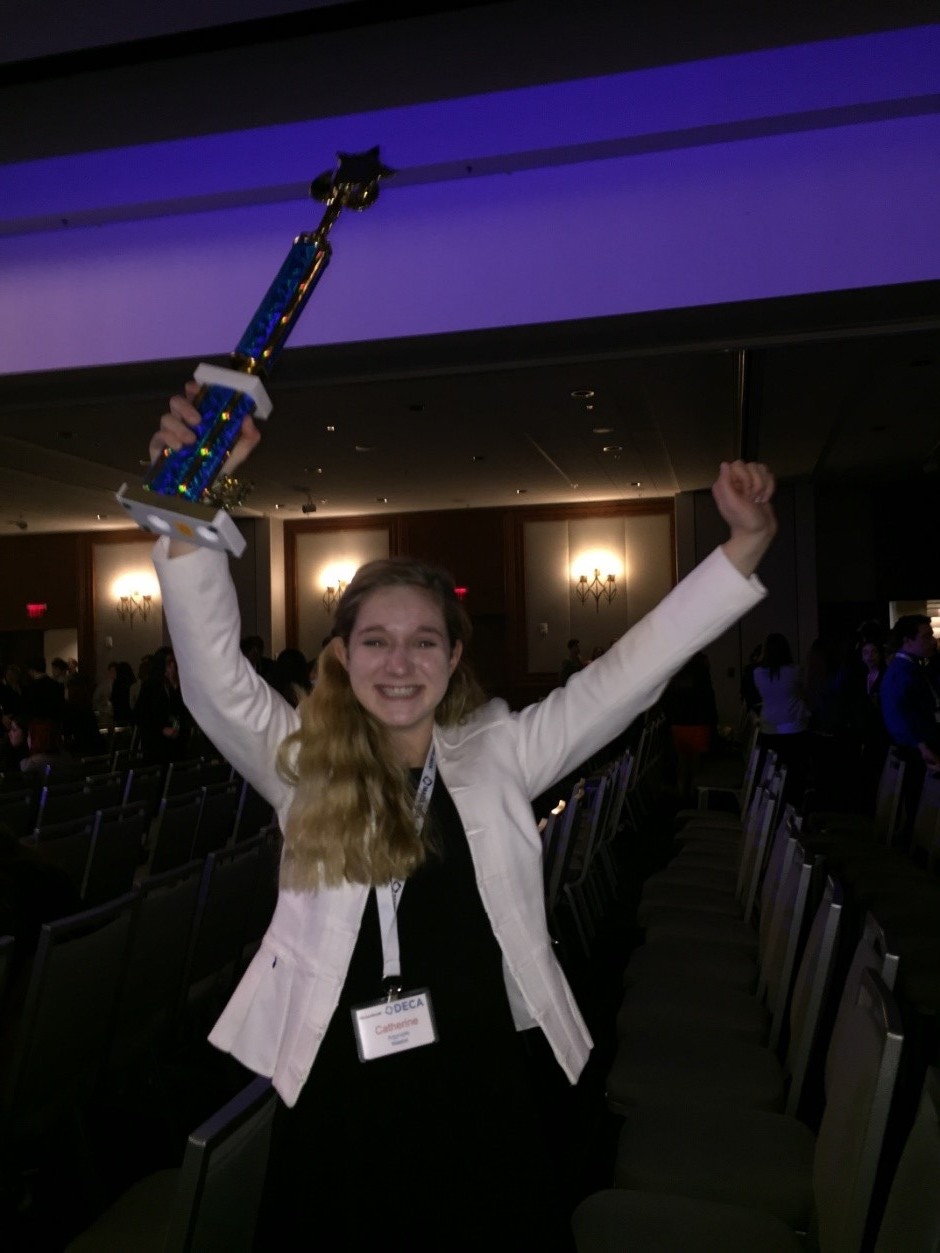
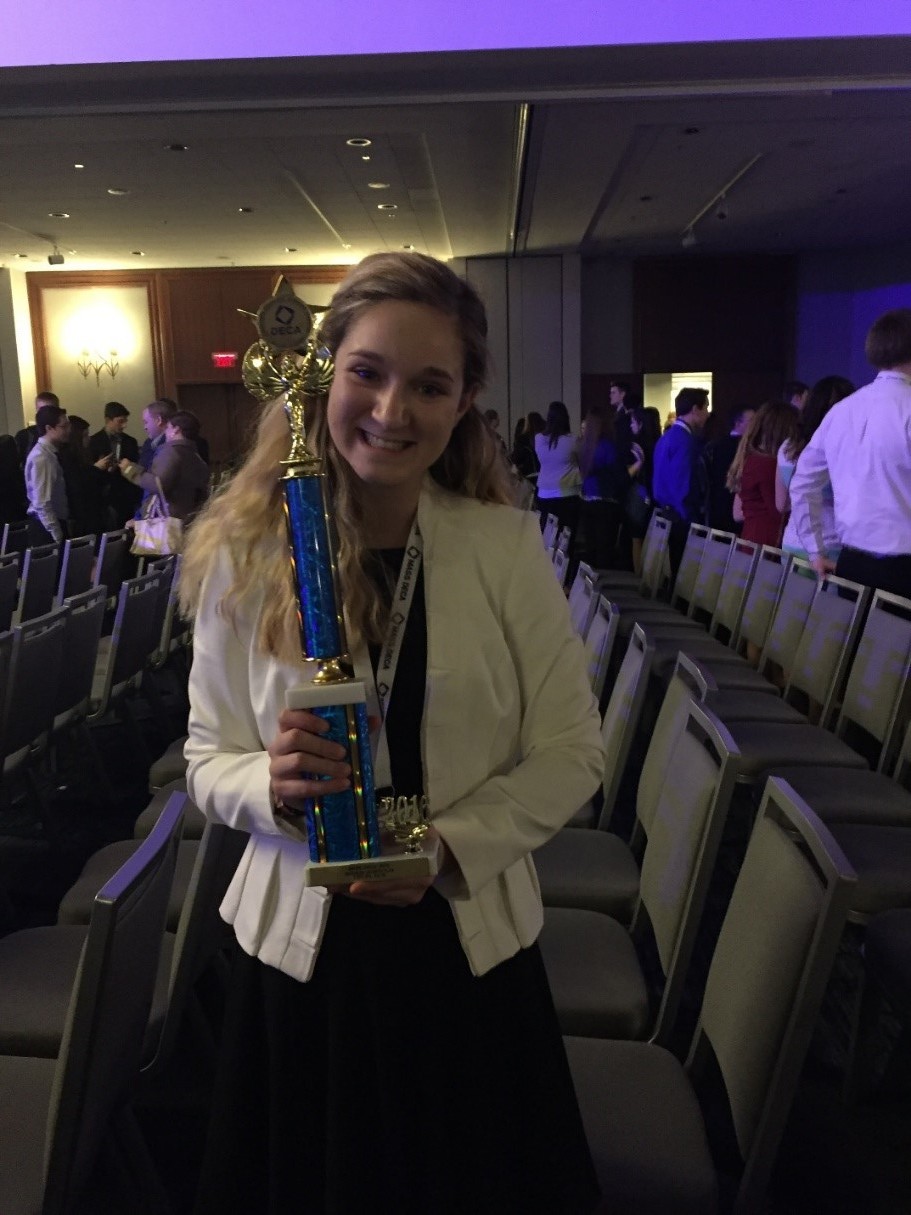
After Catherine’s photography business flourished in the fall, “I decided I wanted to make a business plan to further grow and expand the business.” To follow through on this, she joined her school’s DECA club. DECA is a business competition for high school students in over 3,500 school communities to compete on district, state, and international levels. Each competition features many different categories of events but they all fall under five career clusters. These clusters are: business management/administration, finance, entrepreneurship, hospitality/tourism, and marketing. As Catherine was looking to build a business plan for her photography work, she joined an event in the entrepreneurship category called Business Growth Plan. In her prep for the event, Catherine wrote a 30-page business plan that analyzed her work in Catherine Argyrople Photography and projected how to grow the business over the next five years. In addition to the 30-page report, Catherine crafted a presentation to give at the competition.  Catherine holds herself to high standards with her work and labored for a long time over her business plan. She set a goal for herself of finishing in the top four of the statewide competition, which was the requirement for making it to the international level.  Catherine was thrilled when she surpassed her goal and achieved first place in the category! Her next step is the International Competition held in Nashville in April. Over 15,000 student competitors will be in attendance, which is a huge jump from the 2,500 at the state event in Massachusetts. Her new goal is to finish in the top 10 out of 100+ competitors in the Business Growth category. She is “not sure how feasible this goal is but I am certainly willing to try!”

The competitions can be a huge and daunting task, but Catherine felt “more confident in my project and was really in my element while presenting my business plan in front of the judge. I put my all into this project, so seeing my hard work pay off was so surreal.” In her photography work, Catherine particularly enjoyed getting to know each of her clients during her photoshoots with them. It kept Catherine very busy; to the point where she felt like a “40 year old working mom, but I totally loved the whole experience.” She was busiest on the weekends, when she had 4-5 photoshoots each day. In addition to that, after school on weekdays was usually fully booked as well!

In regards to her future, Catherine has a few goals and dreams. She is still planning on taking her gap year to travel and explore. She will be hearing back from the colleges she applied to soon and will be attending one of them in the fall of 2017 after her gap year is complete. Her career projections for herself include “two media related dream jobs: to be a movie producer like Steven Spielberg or Brian Grazer, or to be an environmental/ anthropogenic documentary producer for National Geographic. When I was at The Island School, I really discovered my interest for environmental advocacy media and can totally envision myself dedicating the rest of my life to this career… The Hollywood movie producer fantasy is just an aspiration I’ve always dreamed of.” Given her track record of reaching goals, it seems like Catherine is well on her way!

catherine 2

When asked what Catherine’s favorite moment from her semester was, Catherine replied with a well thought-out answer which is printed in its entirety below: “My favorite moment of my semester definitely had to be finishing the half marathon. Even though I had trained for the past three months with my best friend and running buddy, Greta, it never totally sank in that I could actually run a half marathon. The half marathon symbolized a seemingly unattainable goal, due to my health complications from having cancer at a young age. On our long exercise days before the half marathon, I just remember running on the bridge from CEI to the center of campus and feeling like I was flying. I had never felt so confident in myself before that moment, and I was just in total euphoria. When I finished the real half marathon, I felt the same way… It was a feeling I had never experienced before, something so foreign to me but so special at the same time. From that day on, I have learned to have confidence in myself and my abilities. While that sounds pretty cliche, it is 100% true. Beating cancer made me a survivor, but emotionally hindered my confidence until I went to The Island School. Participating in DECA and winning states made me feel that same euphoria and sense of pride in my achievements as the half marathon did, and I really hope to experience many future moments like these.”

Catherine, best of luck to you as you hear back from colleges and compete in the DECA international competition. All of us at The Island School are rooting for you and hoping to hear about more of your successes!

Remembering Fred Danforth

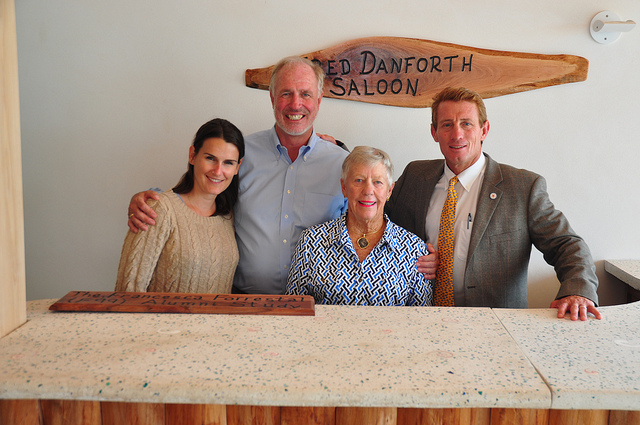
6961181410_3049bd06ff_zThe Island School lost a great friend and mentor when Fred Danforth died last week after a valiant battle with cancer.  Fred’s son Trygg Larsson-Danforth is an Island School graduate of the Fall 2003 semester and Fred’s wife Carlene Larsson served on the Cape Eleuthera Foundation board.  Fred and Carlene have been loyal supporters of The Island School since the early years. Fred’s life work celebrates the mission of The Island School, Leadership Effecting Change.

Fred C. Danforth, co-founder of Ecosystem Investment Partners, the largest private equity firm in the United States devoted to land and stream restoration, died at his home in Mattapoisett, MA on Thursday after a long fight with gall bladder cancer.

An avid fly fisherman, Fred’s passion for environmental restoration began in 2002 when he purchased the Potts Ranch in Montana’s Blackfoot Valley. The ranch contained a severely degraded spring creek that was delivering overheated and nutrient-loaded water to the Blackfoot River. After two years of restoration efforts, trout began to return in prolific numbers, seeking out the cold, clean waters of the restored spring creek. For Fred, gaining the trust and approval of all the project’s stakeholders was as critical to the success of the project as the restoration itself. Realizing that environmental restoration could create economic value, Fred created the Upper Clark Fork Mitigation Bank, the first wetland and stream mitigation bank in Montana. Based on this experience, Fred co-founded Ecosystem Investment Partners in 2006. EIP pioneered a new “ecological asset class” by developing wetland and stream restoration projects in the United States that deliver market returns for investors. EIP has over a half billion dollars under management, making it one of the largest sources of private capital for ecological restoration projects in the world. Born and raised in Brewer, ME, Fred graduated from Yale University in 1973 where he played varsity football. After college, he began his career in finance with Citibank in New York City and left there in 1983 to become president of a regional bank in Tulsa, OK. In 1986, he co-founded Capital Resource Partners, a private equity investment firm located in Boston and retired in 2002 to focus on his projects and partnerships in Montana. A scholarship student himself, the time Fred spent on several Native American reservations, including Ft. Belknap in Montana, led him to endow a scholarship fund at Yale to support Native American students from reservations. A current Danforth scholar is from the Northern Cheyenne Reservation in Montana. Fred is survived by his wife, Carlene Larsson, and two sons, Trygg Larsson Danforth and Pierce Danforth Larsson. A celebration of Fred’s life will be held on April 9th at 5pm at the Boston Harbor Hotel in Boston, MA. The family requests that in lieu of flowers, donations be made to the Fred C. Danforth ’73 Scholarship Fund at Yale University or the Blackfoot Challenge, a non-profit focused on conserving and enhancing the natural resources in Montana’s Blackfoot Valley.

Chris Maxey shares, Fred was a true self made man who loved being a part of a team. You could always lean on Fred to give everything he had in all aspects of his life. We miss him tremendously.

Ambassador Pamela Hamamoto visits the Island School

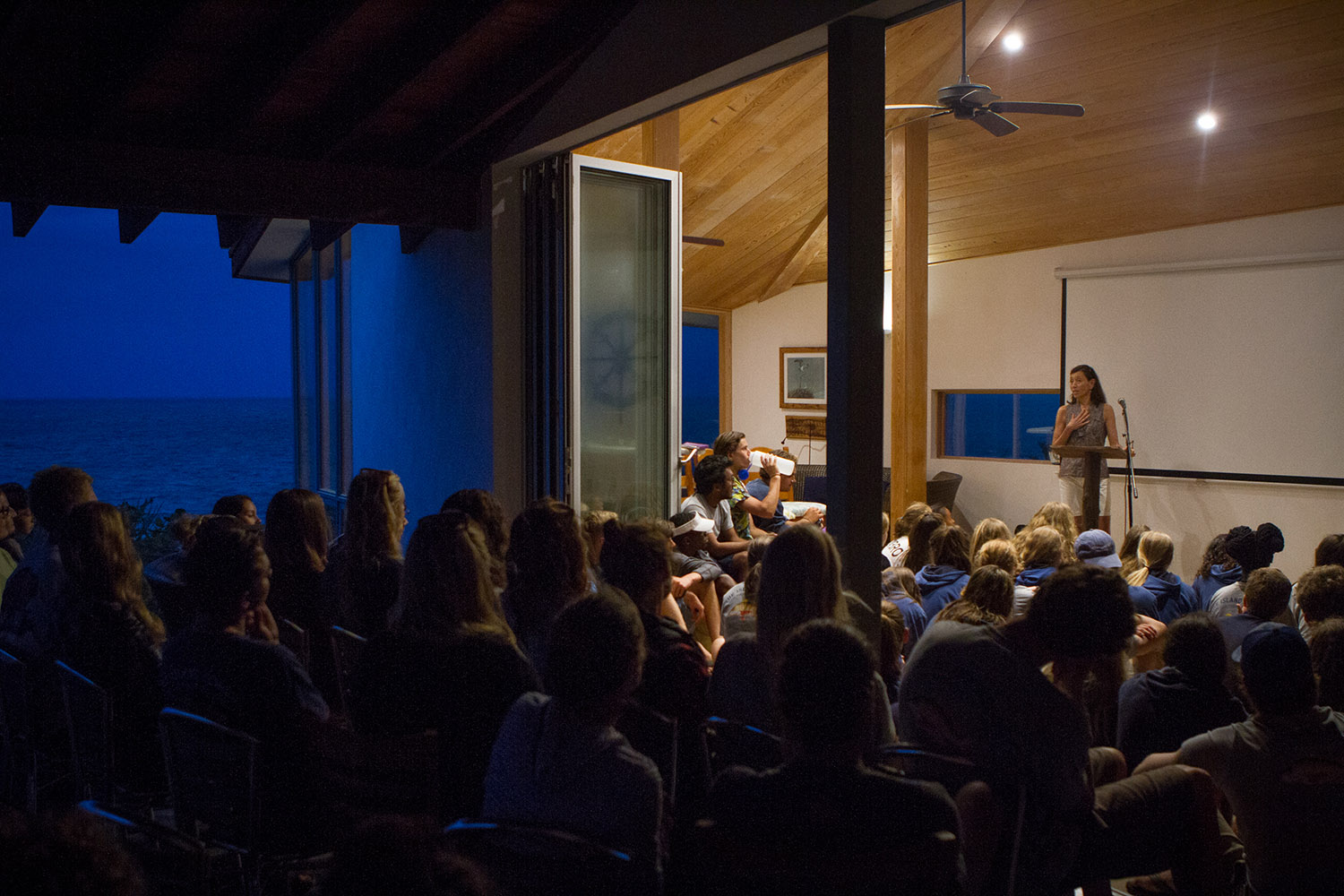
The Island School community was honored to welcome Ambassador Pamela Hamamoto to our campus last week.  She gave a presentation to our staff and students in Hallig House where people were overflowing onto the deck.  Themes of her presentation revolved around foreign policy, women’s rights, and sustainability. Her focus on climate change and the included political challenges was very pertinent to the studies here at the Island School. She pointed out the political challenges of working on climate change policy, but was certainly optimistic about the number of people she works with who were determined to find solutions.

Students filled Hallig house

Ambassador Hamamoto was sworn in as the 18th Permanent Representative of the United States of America to the United Nations and Other International Organizations in Geneva in May, 2014 by Vice President Joe Biden.  She is the second woman to serve in this position since 1958. As ambassador, Pamela Hamamoto oversees a staff of around 250 diplomats and locally employed staff representing over 15 different U.S. government agencies. The United States Mission in Geneva engages daily on issues such as refugee and migrant crises, global health, international law, economic development, internet governance, trade, climate change/the environment, arms control, and human rights.

Ambassador Hamamoto’s final message to our eager students was this: you have to make the change you want to see.  While students are here, they will be exposed to many important issues about sustainability, biology, and policy.  The education and tools to make change will be provided, but what it comes down to is personal drive.  The ambassador made it clear that the path toward large-scale change will always be demanding and sometimes frustrating, but our students are in a position of great opportunity.

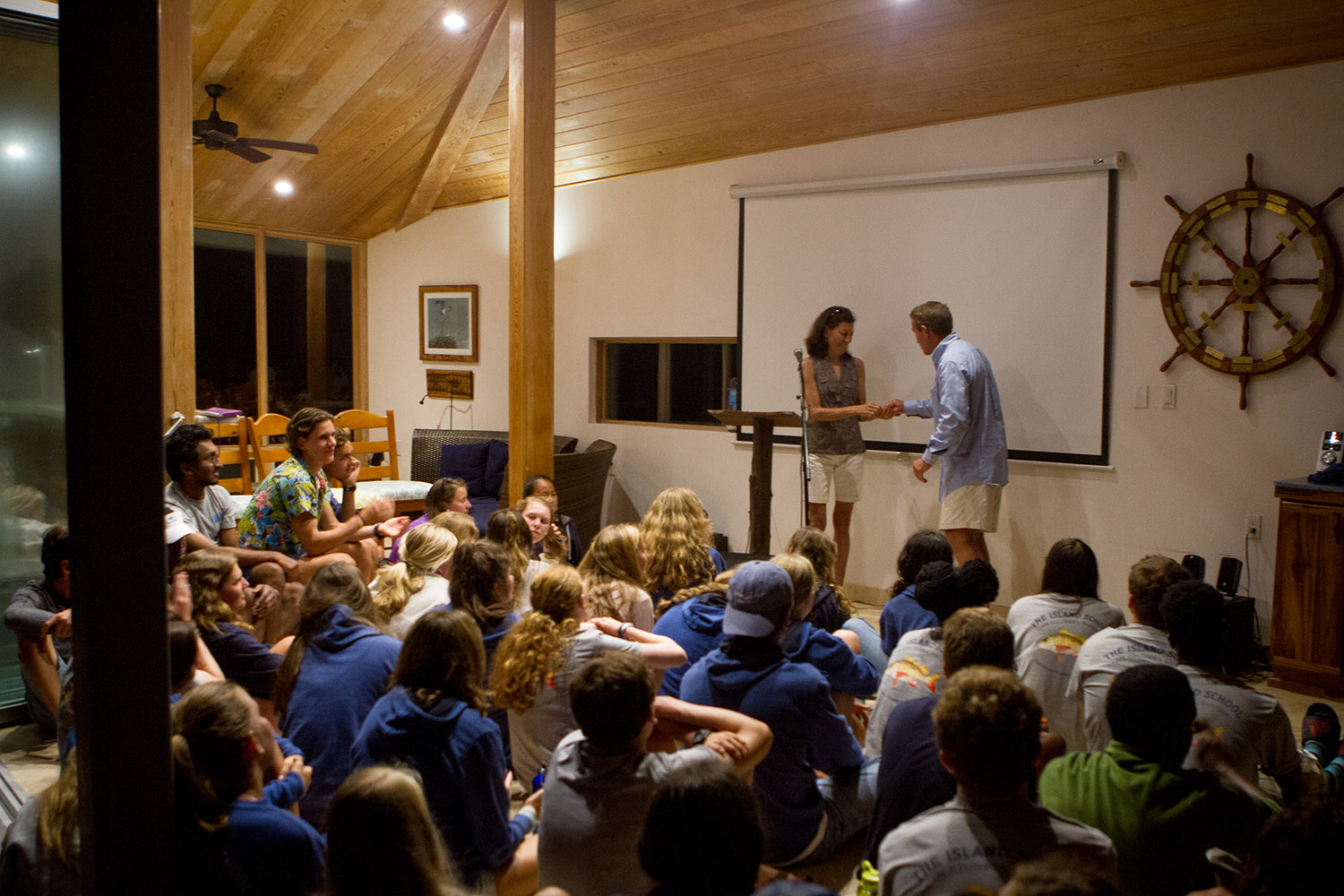
Maxey presents Ambassador Hamamoto with an Island School pin

Chris Maxey closed with words about the importance of family.  Ambassador Hamamoto’s husband and two children were in attendance, and clearly were a strong support system to her demanding and integral position in world diplomacy.  Maxey connected the concept of support back to the Island School family and how these students will always be able to rely on their ties to Eleuthera and the Island School.

Thank you, Ambassador Hamaomto, for your inspirational words and time taken to ensure our students know their potential and opportunities.


Alumni Spotlight: Anna Carrol (Sp’09)

anna 1

The Island School recently had a chance to catch up with Anna Carrol from the Spring 2009 semester. She has moved out west to join a Military Veterans rehabilitation program called Heroes and Horses, as their Administrative Director. We wanted to know the story of how she got there, so we asked! Like most alumni who return from The Island School, Anna spent her “senior year of high school missing the Island School, applying to colleges, and dreaming of run swims.”  Anna was accepted into Middlebury which has a strong community of Island School alumni and began to create a “family away from family” during her years there while studying as an English and Creative Writing major along with the pre-reqs for veterinary school. While attending Middlebury, Anna took a semester off to work in Morocco at a free, large animal veterinary clinic called the American Fondouk. The American Fondouk provides free care to thousands of animals each year in Morocco, and as Anna had spent a large amount of time working with and writing about horses at Middlebury, the work there resonated with her. Once Anna was home again, she was inspired to move out west to follow through on her dreams. Upon graduation she said goodbye to her friends and family and moved out west to Bozeman, Montana to work at Heroes and Horses “living in paradise at Good Dog Farm, with my wolf dog Shota, two horses, and three best buds.”

Many teenagers go through a period of their lives when they feel as if they are at a crossroads. For Anna, that crossroads occurred during her time at The Island School when she “was on the cusp of trying to live my dreams, but was definitely scared out of my mind and letting that hesitance hold me back.” The Island School and the Spring 2009 semester made her “a brave person at a time when I really needed bravery.” At one point during the semester, Chris Maxey talked “about returning from Eleuthera and becoming ‘Island School Heroes.’ Whether it was in our personal or professional lives, he was always inspiring us to change the world for the better and to never give up the fight.” Better still, it was not just Chris Maxey supporting Anna to follow her dreams, but the entire community of the school which “made it feel like anything was possible, each day.” If you believe it, it becomes true.

Anna has always had a love for horses, so it was no surprise that when she interviewed Micah Fink, the Executive Director of Heroes and Horses, for a feature article that she was working on as a writer, the two of them would begin a lasting friendship. They quickly discovered that each one shared “a lot of core values about how horses and wilderness heal the body and the mind.” So when Micah asked Anna to join the team, it was a natural fit. For Anna, this was a dream come true as she “couldn’t believe that a job like that would be possible.” When asked about a typical day in the office at Heroes and Horses, Anna’s easy answer was, “basically…there is no typical day, which I love!” Heroes and Horses is a small organization so everyone multi-tasks constantly between work in the office and work outside with the horses and veterans. Just like at The Island School, unexpected events can and do happen all the time. Anna could be “writing an email to a volunteer group but then I get a call that Julia the mule busted out of the pasture fence. The computer closes, and we grab our boots to go take care of the herd.” The work and the program as a whole is heavily experiential as exhibited by what happens when you call the office on a Friday:

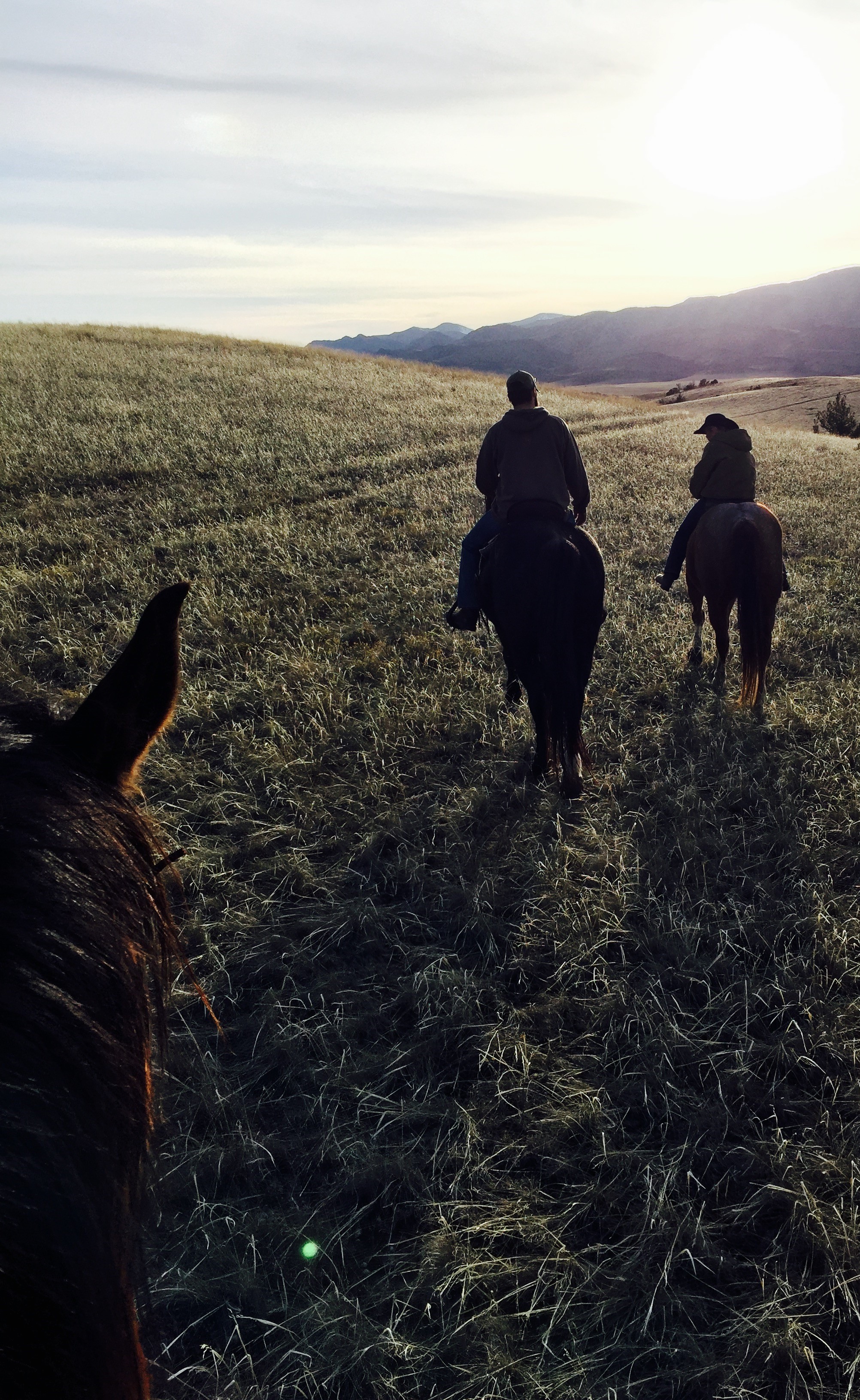
“You will get a voicemail reminding you that we are at the ranch because that’s the day we ride and train. We also have off-season and trip season. May-September, I will be running 10-day long pack trips with the veteran participants every two weeks. The horses and I will go a lot of miles in the mountains. In the off-season, we are fundraising, developing programs, and strategizing about how to serve better.”

anna 2

For Anna, being hired at Heroes and Horses was a major moment. In her words, “the trajectory of my outlook on life completely changed.” Suddenly, Anna had transitioned from the life of a college student to a job where “I got to help people, ride in the mountains, and share with others in need the power of horses to heal and challenge the human spirit–all things I had dreamed of spending my days doing, but never dared to hope that it might become reality.” Similar to at The Island School where everyone is on the island because they want to be here and love what they do, Anna loves “that I work with people who love what they do every day. It fires me up.” Anna now spends her days in a situation she believes is “the best of both worlds” where she is working and communicating with the people who love what they do and the other is working and communicating with the animals that she has spent her entire life loving.

If Anna’s work is inspiring to you, or if you have further questions for her, Anna can be reached at: anna@heroesandhorses.com

To wrap up The Island School’s conversation with Anna, she had a shout out to the entire Spring 2009 semester:

“Spring 09, I hope you still take the time to play “She’s Royal” whenever you just feel like cranking the tunes. I also hope everybody still rocks their Island School SWEATER. I know I do. Love to all, and nothing but the best wishes for everybody. Thanks for being such a life changing crew. “