Exploration Time by Cole Gould

Thus far, my experience at the Island School has been nothing short of amazing. From SCUBA diving to exploring acres upon acres of untouched jungle, I couldn’t ask for much more out of a school program.
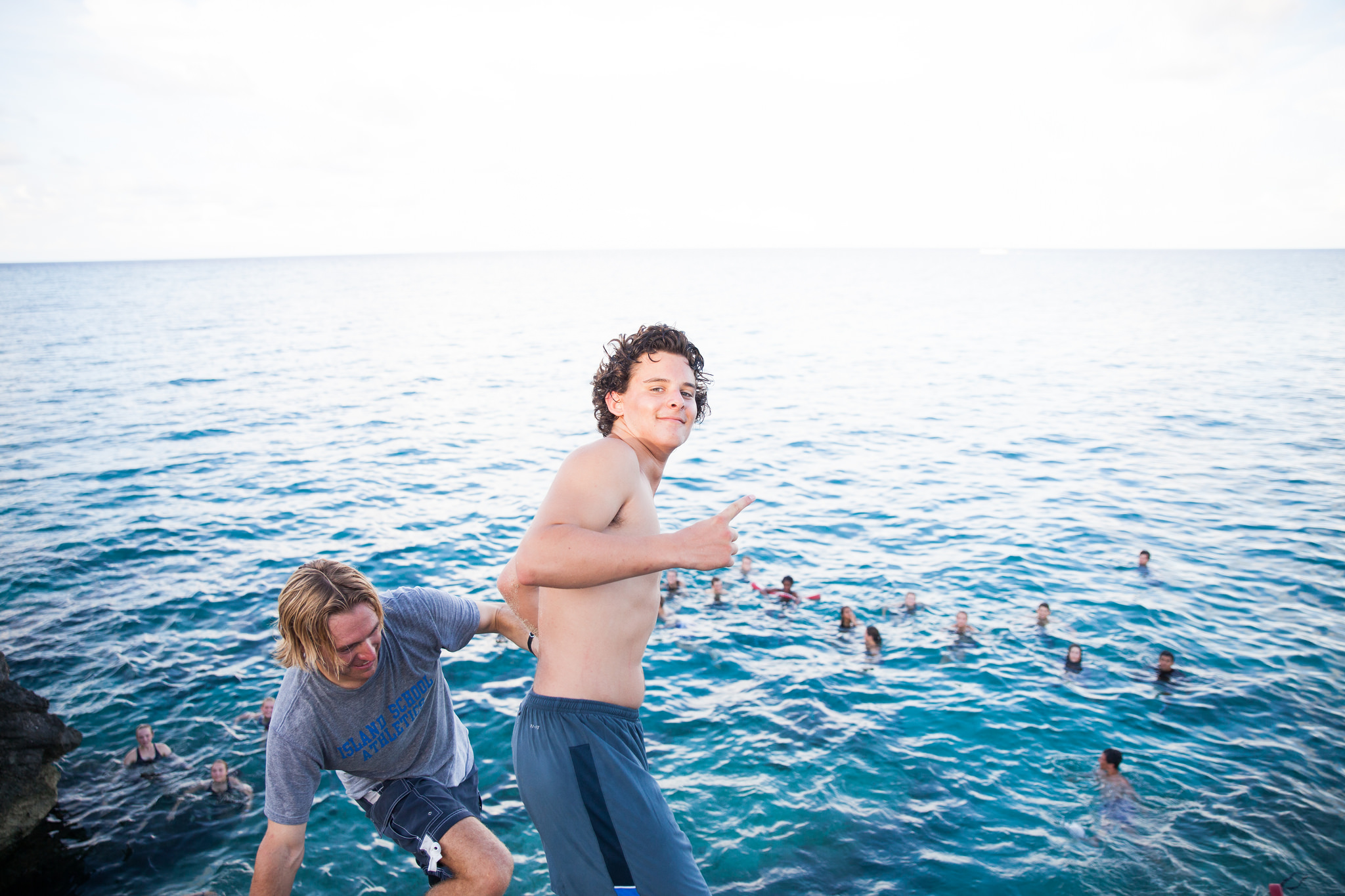
Cole's first High Rock jump
Cole’s first High Rock jump

Exploration time is easily my favorite part of the day. It makes up for waking up at 6:20 am, doing 80 minute runs, and having at least 6 hours of classes every day. For exploration time, there is a myriad of activities to do. When I can, I go to the Marina Store at the Cape Eleuthera Resort to get my fixing of sugary goods that we can’t get on campus. Typically, I get Nutter Butters, Cracker Jacks, and a yellow Gatorade.

On weekdays, after the Marina Store excursion, I go to Sunset Beach. Sunset Beach is a beautiful beach where many Island School students go. We relax, swim, and eat our sweets. Although there are no waves, it is awesome to chill in the water for an hour with no worries in the world. Also, there are beach lounge chairs, supplied by the resort, which are always nice to lay on and sun bathe after getting out of the ocean. Sunday, however, is a totally different story.

On Sunday the students are granted a full day of exploration time. I usually wake up at around 8:30 on Sundays and go to the local restaurant “Pascals.” Pascals is a nice, quaint breakfast place where most students spend at least an hour on Sunday morning. I usually get a loaded omelet and a couple cups of coffee; both of which are amazing. Another plus of Pascals is that it is air conditioned, which is always a treat. After Pascals, it is time to explore.

There is always a new place to explore. For instance, I went to High Rock last week. Many students go to High Rock to jump off the mini cliff with their friends and a faculty member, but I went to explore the under water caves. I walked approximately 200 yards from the opening of High Rock to these legendary caves. Jack, Mikey, Alex, and I climbed down the rocks into the beautiful blue water. After observing several fish, we swam under some large rocks into these caves. First, I was afraid to swim under the rocks but my friends encouraged me. After swimming for a few seconds I began to see a bluish light above me. We were inside an air pocket in this cave. I, along with my buddies, were amazed. Also, it is very fun to take a bike ride, off trail, into the jungle.

I just want to let Mom, Dad, Kackie, Grant, Weebee, and Fuff know that I am having an amazing, once in a lifetime experience here and I absolutely love it. I just want to thank you all for allowing me to partake in this amazing experience. I love you guys and I miss you greatly.

Edward, Eddie, Liam, Will, Andrew, Jack, Nick, Markar, and Chase, I am really missing hanging out with the boys and can’t wait to hang out with you guys when I get home.

Dakota, thank you for telling me about this place and persuading me to apply. Everything you said was right.

Overall, the Island School is an amazing place and I am dreading the fact that I only have 40 days left. This place is unlike anywhere else.
Island School Research Projects by Andrieka Burrows

All nine research groups here at The Island School have different components that make them unique to their purpose of study, and very interesting to those who are partaking in them. Island School students team up with CEI researchers and interns who come from international backgrounds and strive for excellence in their particular fields of study.

From gathering information on a diverse range of landlocked anchialine ponds to catching deep sea sharks five kilometres offshore, research at the Island School doesn’t only provide answers to unsolved scientific mysteries, but also allows Island School students to develop an intimate relationship with science research as it coincides with “hands on education.”

Ponds Assessment

There are approximately 200+ Anchialine ponds on Eleuthera, yet, there is very little information about these ponds in scientific publications. The inland ponds are unique in their structure and thriving ecosystems that often contain endemic life. The large number of unique species in the ponds are a result of the isolation and the environmental conditions of each ecosystem. Inspired by the seahorses found in one pond, researchers at CEI set out to explore the other ponds on the island. In this research project, baseline information on the water quality, the level of human disturbance and the life present is collected at each pond site. This information will help to support future conservation efforts.

Deep Sea Sharks

Deep-sea shark populations are under global threat due to human activity such as fishing and mining. Therefore studies must be conducted in an attempt to understand deep sea sharks. The group aims to investigate vertical habitat use in Exuma Sound’s deep-sea sharks using satellite tags which record 2 minute resolution, temperature and depth data for each subject. The three target species are Cuban dogfish, Bigeye Sixgills, and Gulper Sharks. Animals are caught on 800 – 850 meter longlines before being brought up to the boat, at which time a satellite tag is attached through the animal’s dorsal fin.The animals are then released in an anti-predation release cage. This work will identify depth boundaries and vertical habitat use in cosmopolitan deep-sea sharks providing useful baseline data for management and policy.

Bonefish

It is obvious that when a fish is captured multiple times it can begin to experience physiological behavioural changes. This research group has set out to study the physiological and behavioral effects of multiple captures and angling events on bonefish. The group also studies how bonefish can recognize and potentially avoid hooks. This study aims to determine how increasing angling pressure and the resulting repeated capture events can affect individual bonefish.

Lemon Shark Physiology

This group of researchers is concerned with how longline gear modifications affect lemon sharks’ stress levels and behavior. To study this, the lemon shark team goes to tidal mangrove creeks to collect juvenile lemon sharks using block/spot seining techniques. After capture, the lemon sharks are brought back to the wet lab at CEI where they are caught in experimental longline tanks. The shark’s stress and behavior are measured by drawing blood and using accelerometer tags, respectively. It is hypothesized that giving sharks more room to swim when caught will affect their stress levels and behavior to a lesser degree.

Bahamian Knowledge of Turtles

There are two sea turtle projects that are conducted here at the Cape Eleuthera Island School. The first examines the social relationship between Bahamians and sea turtle. This is a new project in which the research team speaks with Bahamians to get a better understanding of Bahamian knowledge on sea turtles, sea turtle conservation, and understanding Bahamians’ perceptions of sea turtles and sea turtle conservation, particularly in regards to the 2009 ban on harvesting sea turtles. This involves interviewing Bahamians across different settlements on Eleuthera and recording their responses. This team also conducts in-water abundance surveys to align Bahamian knowledge with sea turtle abundance in different creeks across South Eleuthera.

Green Turtle Habitat Use

In this turtle group, researchers focus on tracking tagged juvenile green sea turtles in an attempt to map each turtle’s home range based on size class. Each tag emits a beeping pattern, unique to each individual, that allows researchers to monitor their movements using a technique called acoustic telemetry. Once individual turtles are located and spotted, a GPS point is recorded in order to create a map that indicates the individual home range area of each turtle. This work will help us better understand juvenile green sea turtles habitat use and help managers more effectively protect this endangered species.

Stingrays

The Stingray Research Team is one of the most intense, exciting research groups here on campus. This could be because the team is constantly in the field chasing and catching stingrays to assess their occupation of space and the differences in habitat specificity of two co-occurring species. When the stingrays are caught, measurements and tissues samples are taken and the animals are tagged to determine long-term site fidelity. The study is vitally important to The Bahamas since this information is not yet known and many habitats critical to life-history of stingrays are degraded or encroached upon. This work will highlight the importance of coastal and nearshore ecosystems to this meso-predator and provide frameworks for conservation and management.

Queen Conch

The queen conch, is a culturally, economically and ecologically important species. There is a need for an up-to-date assessment of conch nursery grounds locally as data collected by CEI & Island School shows declines in adult mating pairs and an increase in the harvest of juveniles. In an effort to produce this information the conch team goes out on a boat and tows two people behind, students count the conch and determine their life stage. This research is important as it will help inform future marine resource management decision making.

Plastics

Last but not least we have the plastics research group. This team normally goes to sea on “The Cobia” to quantify plastic pollution from the Exuma Sound, as well as whether or not fish, such as dolphinfish, tunas, and wahoo, are ingesting plastics. The team pulls a trawl, or a net, behind the boat to collect macro and micro plastics alike. In addition to collecting plastic from the sea, the team also collects fish from local fishermen or from trolling for subsequent dissection and analysis of their stomach contents in order to identify whether fish commonly harvested for human consumption ingest plastic. It is obvious that marine organisms are negatively affected by pollution, but this team is on a mission to find out whether or not plastic pollution is making its way onto our dinner plates!

Fifty Best Friends are Better than One by Paityn Wedder

After a stressful day of traveling on August 25th, you make your way off your last Pineapple Air flight and feel the unfamiliar Bahamian sunshine against your skin. Everything around you is new; the environment, the culture, and especially the people. Although you’ve had a few conversations with students wearing the recognizable Island School uniform earlier in the airport, no matter how hard you try, it is still impossible to associate faces with names. Before you have any time to realize what’s going on, a teacher comes up to you and says, “Welcome to the Island School! Please turn in your passport and cell phone.” You reach into your pocket and reluctantly hand over what was requested. With the zip of a plastic bag, your material connection to the United States is gone.

During the first few weeks, the dorm is filled with cheerful voices and positivity, but nobody knows each other on a personal level yet. You reach your hand down into your pocket to grab your phone and text your best friend about this new lifestyle, but nothing is there and you remember the only way you’ll be able to reach her until December is by mail. Sending a letter takes about a month, and receiving one takes another. This is discouraging; you miss having meaningful conversations and the sense of security that comes with an established friend group. On top of that, living in a dorm with twenty-eight other girls is nowhere near similar to living in your house with your parents and siblings. A wave of homesickness begins to form, and even though you are constantly surrounded by people, you start to feel alone. You look around at the people who will be your new classmates for the next three and a half months, and then it hits you. These students came from all over the United States and The Bahamas; everyone is in the same position you are in. Everybody was accepted into this semester for a reason.

Once you have this realization, you begin to feel more comfortable and reassured. No distinct friend groups start to form because everyone here gets along. Each individual is unique in his or her own way; getting to know everybody, therefore, is worth your time. The entire community immediately becomes close, and those down to earth conversations you’ve been craving for so long now happen on a daily basis. The adventures you experience together create memories that simply seem like a fun time now, but will become lifelong memories once the semester ends. Soon, you forget about your phone and in some odd way, don’t want to be connected to the outside world anymore. You’ll have the life you’ve always lived waiting for you in December, but in less than one hundred days, you’ll be separated from the most interesting people you’ve ever met by thousands of miles… No matter what, these friendships will always be worth the distance; fifty best friends will always be better than one.

Gotcha by Vanessa Pinney

Last week I organized a game of “Gotcha” with another student, Rob Zintl. The rules of the game are fairly simple: everybody playing receives a target that they will then try to “get” and in the chance they are successful in this, their target is out of the game, and their new target is the one their previous target was trying to “get.” To win the game, you either want to have gotten the most people, or to be the last person not “gotten.”

Past these basic rules, there are infinite variations of the game. For this specific version, we decreed that to get a person out, a target must be further than 5 feet away from someone else, and to “get” your target you need to be within a foot of them and say “Gotcha.” Dorm wings, classrooms during class and study hours, dish crew and the med room were safe, but all else was fair game. Finally, each day a safety item was announced, something to protect its carrier, as long as its full weight was being supported by that person’s hands. We decided to try out this game during kayak rotations, when campus is much less populated than it normally is. The game began on Tuesday, October 13th at lunch time, with 34 participants, both students and faculty.

As soon as the game started, there was chaos. The first person was out within 10 minutes. People were getting out so fast that it was hard to keep track, and Rob and I had to sort out many arguments on rules, as many people were unwilling to accept being “gotten.” The safety item for the first day was a coconut, and it was very funny to see people carrying them around along with their bags. People actually got rather aggressive on this part, and I witnessed many people stealing and hiding other people’s coconuts. It was also funny seeing people trying to figure out who had them, when I had a complete list in front of me.

As numbers dwindled and people started to figure out who had them, I saw many complex plots unfolding. One girl, who was trying to “get” a researcher at CEI, actually convinced her own research advisor to help draw away her target from other people, and then run, so that the target was alone. Another boy was able to get 4 people out all before morning chores.

However, as the number of surviving players dipped down to 6, everybody had figured out who had them, so everybody knew who to avoid, and alliances formed. Because of this, Rob and I decided to make a change to the rules. We switched up the order of targets, intentionally to break up alliances. There was a lot of confusion at first, but as another person or two got out, people figured out the new order. As the final day or two went by, we began dropping more and more rules, to make the game even harder.

The game finally finished on October 19th, a day before trip rotations shifted. In first place was Menat Bahnasy, and in second was Paityn Wedder. The most “gots” went to Sam Palmisano, with 5 total “Gotchas.” When I asked Menat how she felt after the game, all she said was, “It’s so nice to not have all that stress on me anymore.”

Evan Wood (Sp’11) – the Face of the 2015 NYC Marathon

After his first half marathon at The Island School, alumnus Evan Wood (Sp’11) went on to triumph in many more long running competitions. Here is Evan’s story about battling disease and overcoming personal struggles to end up the face of the 2015 NYC Marathon:

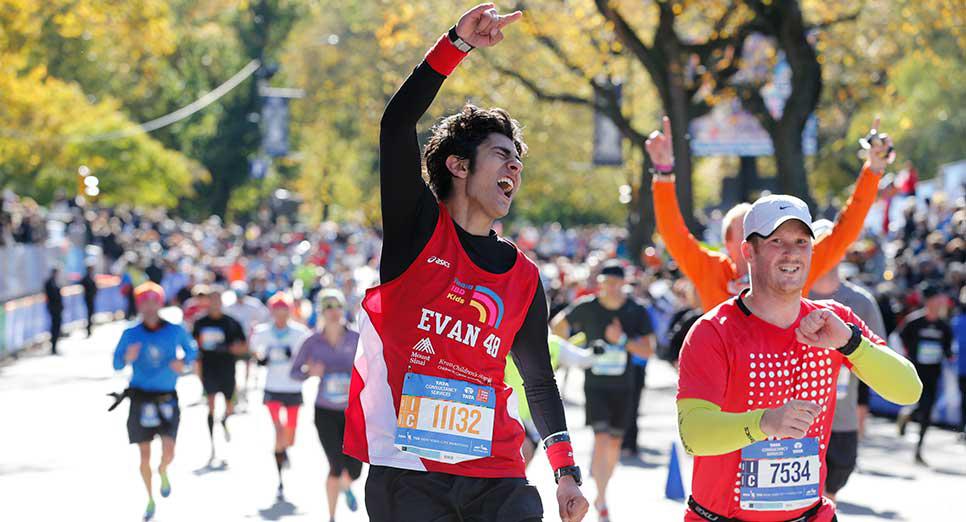
Alumnus Evan Wood (Sp'11) completes the NYC Marathon
Alumnus Evan Wood (Sp’11) completes the NYC Marathon

I came to The Island School as an escape from a series of personal tragedies back home. In my early teenage years, I lost my father, Erik Wood, to cancer. Then, after a year of intense stomach pain, I was diagnosed with Crohn’s disease. And then my doctor, Kena Valentine, suddenly passed away. For years, I was very underweight and in constant pain, yet I did my best to maintain as normal a life as I could, keeping up with all of my school work and my extracurriculars. Though I was always an active kid (I loved to play tennis with my brother and had a short stint on my elementary school track team), I had no background in running whatsoever—in fact, I spent much of my childhood on a nebulizer because I also suffered from asthma.

Then came the unique opportunity to attend The Island School—an academically and physically rigorous semester-long program in The Bahamas featuring kayaking expeditions, SCUBA certification, and a climactic end-of-semester Half Marathon.

So, normally, you might ask yourself, how on earth did anyone (including myself) think that isolating myself from my family and my doctors to take part in a physically rigorous academic program in another country was a good idea? What exactly did I see in The Island School?

What I saw in The Island School were challenges that would reward me for my hard work and dedication. My struggles at home would become more manageable with time, but in the turbulence of my adolescence, it was very difficult to deal with problems that were out of my control. At The Island School, I could confront well-defined challenges, be a part of a team, and overcome obstacles—if I willed myself. When I arrived, I had difficulty learning how to SCUBA dive, I could barely jog the 4-mile loop without using my inhaler—heck, I didn’t even know how to ride a bike! But these were challenges that I could work toward—each with their own small goals that would lead to small victories. The challenge that would present the greatest opportunity for me in the long run (no pun intended) was the Half Marathon.

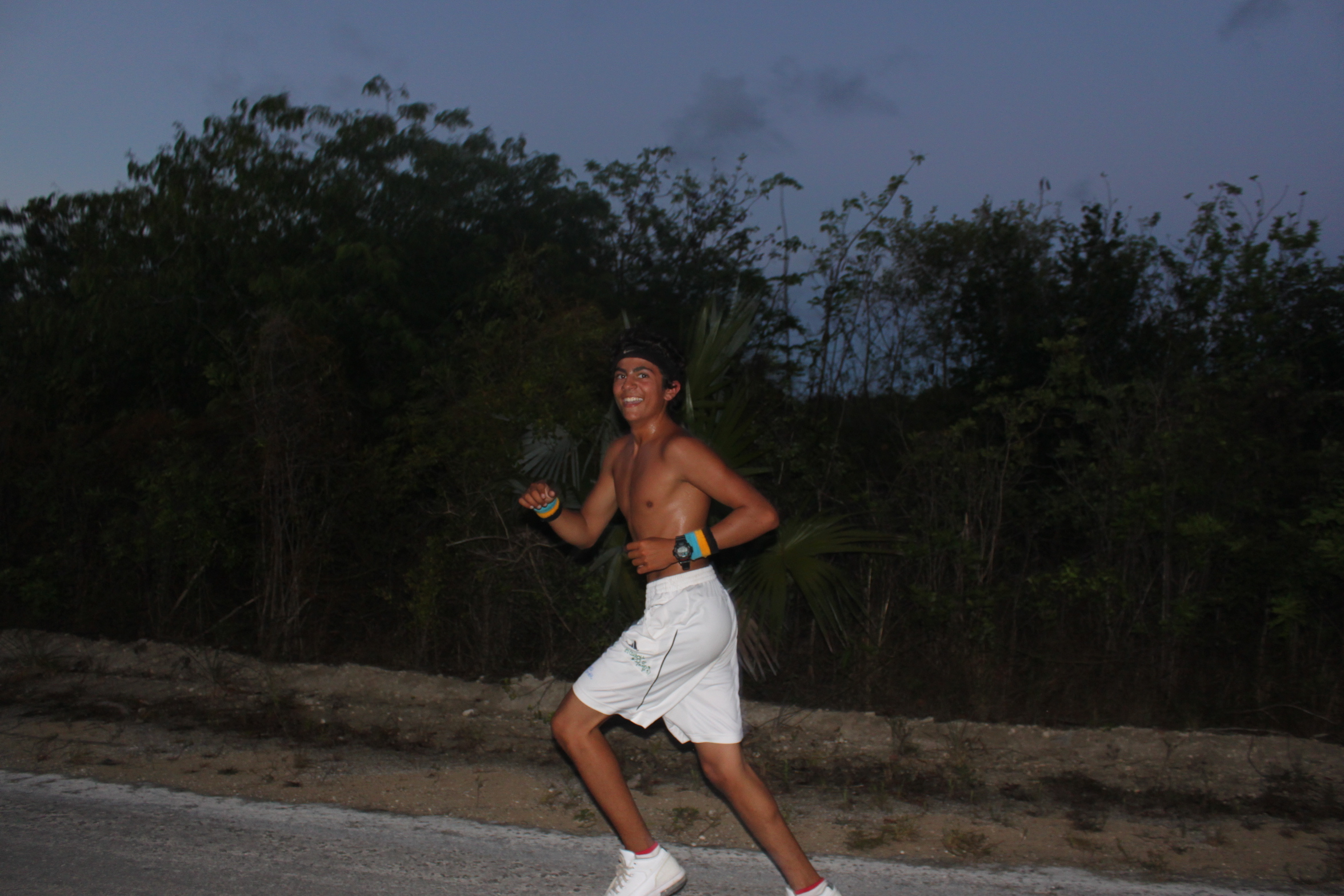
Evan running during run track at The Island School, Spring 2011

When I was at The Island School, I struggled to get the miles in, but every time I laced up, I made it my mission to leave nothing on the pavement. I pushed myself as hard as I could, which was foolhardy at times, but I sought to improve with every run. Even if it was difficult—even if it was painful, it was nothing compared to the pain that I had already been going through. And over time, I did improve—I slowly but steadily climbed from the back of the pack to the front, and as the semester continued I was becoming stronger and healthier, relying less on my inhaler, and my confidence grew. I had also entered a state of remission from Crohn’s disease for the first time, becoming symptom-free. At the end of the semester, I was the third student to finish the Half Marathon in 1 hour and 46 minutes—a surprise to myself and just about everyone!

Shortly after returning from Island School, my life began to improve dramatically—I regained my health, gained over half of my bodyweight in less than a year, got accepted to the film school of my dreams, NYU Tisch, on a full scholarship, and remained mostly pain-free for the longest time since before my diagnosis. I fell in love with running, considered it a part of my treatment, and continued to train back home. I was winning against my disease, but I wasn’t finished just yet—I was determined to run the NYC Marathon for Team IBDkids, a pediatric Crohn’s and Colitis charity led by my doctor Keith Benkov, who would also become my coach. I trained with the same vigor that I had at Island School, and even though my first outing was cancelled by Hurricane Sandy, I met my fundraising goal and joined thousands of other runners to run the distance in Central Park anyway. When I had finished, I was overcome with emotion and fulfillment—I had come a long, long way since the sleepless nights, doubled over in pain. Life didn’t have to be a constant repeat of “woe is me”—not if I had any say in it.

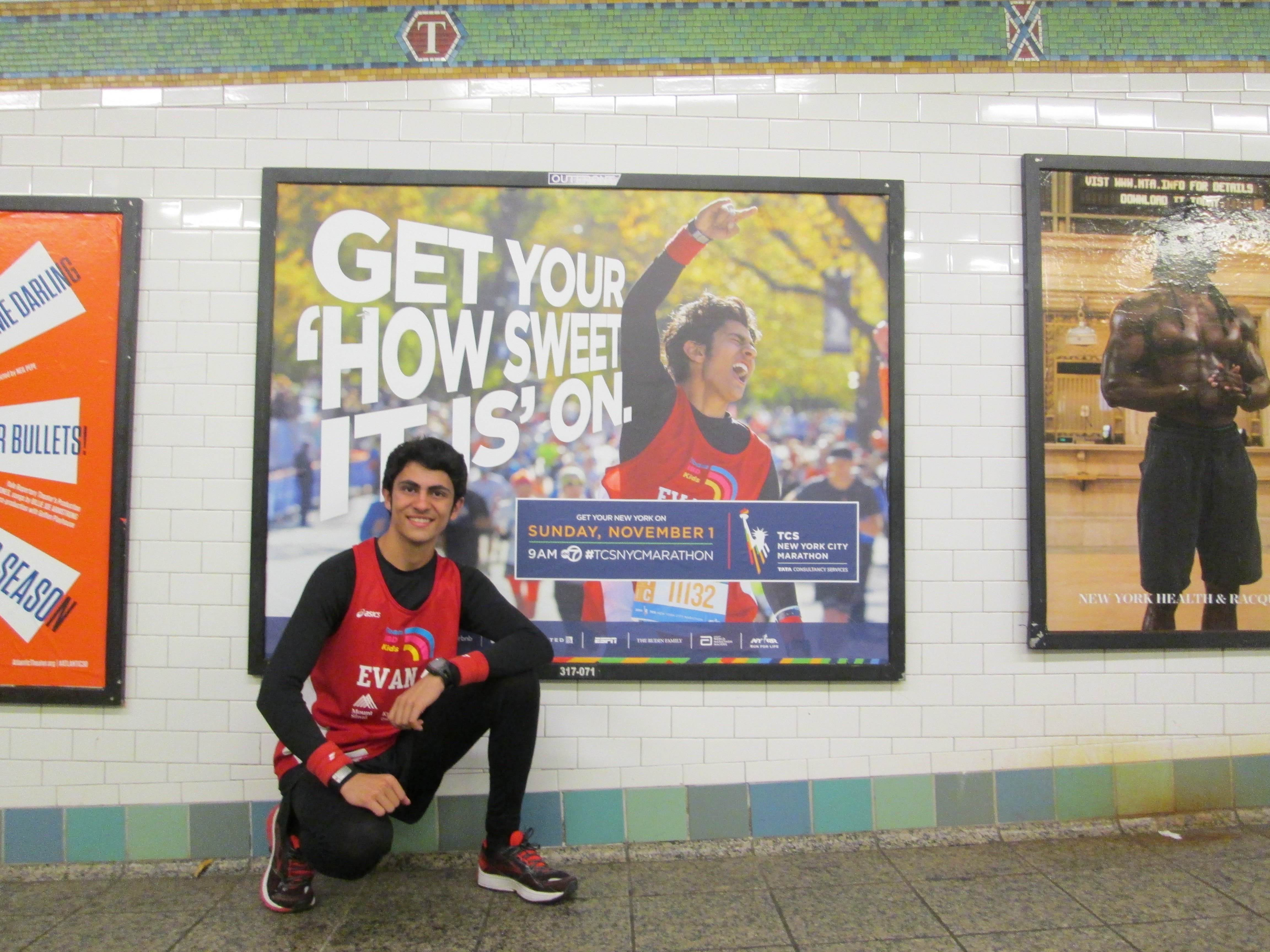
Evan in front of a New York Road Runners subway advertisement for the NYC Marathon

Still, Crohn’s disease isn’t something that I had. It’s something I have, and it’s something that I will be constantly battling for the rest of my life, whether I like it or not. Since my time at Island School, I’ve still been confronted with occasional relapses and flare-ups, emergency room visits and bad spells, but because of the mindset Island School helped me realize, the tough times have only fanned the flames of motivation. Since then, I have run the (official) NYC Marathon twice, will be running it for the third time this year, and have run eight Half Marathons—my personal best is now 1 hour and 27 minutes. Every finish line I cross evokes the same triumphant emotion that I once felt when I touched that iconic flagpole on Eleuthera. I always belt out a battle cry and leap as high as I can to release the physical and emotional pain that I once internalized for far too long. At last year’s NYC Marathon, New York Road Runners decided to make my picture the cover of their official finisher photo album—and in the year since, they’ve used my photo on their website, their ad campaigns, and most recently on billboards, in the subway and on the sides of buses! To me, my journey is just one of over 50,000 who run the marathon every year—but thanks to Island School and the support of my family, friends and Dr. Benkov, I have been able to bite Crohn’s back and send a message to others that no matter how difficult and out of control life can be, we can choose to work hard and will ourselves to reach even our greatest goals.

Purple Ferns by Owen Ryerson

Once a week for Marine Ecology class we go SCUBA diving at Tunnel Rock. At the beginning of the semester each student was assigned a part of the larger reef to observe for the entire semester. While down close to 30 feet under water, each student is tasked with taking notes while under water on any species in a specific group. The night after the dive each student has to write a creative writing piece on the species they took notes on. Below is one of my Deep Sea Diaries:

30 feet down, waving in the current and attached to the underside of a patch reef sat a Bipinnate Sea Plume or Antillogorian bipinnata (Humann, Deloach, 59). The water around it was moving steadily in the current and full of sand, algae, and dead plants, making small details difficult to see. Small, bright colored fish swam around the drooping down and almost touching the sandy ocean floor. Growing out of the patch coral next to the sea plume was a reddish brown piece of hard coral sticking straight out like a broken stick. Each time the sea plume moved in the water it would hit the other coral and get caught on it for a second or two.

Sprouting from the base of the coral, four large, dark purple branches went out in every direction ranging in length from as long as my forearm to as short as my hand, each with numerous smaller sprouts sticking out of each side. The overall effect made the coral vividly resemble a fern. Hundreds, maybe even thousands of dirty white Polyps about the size of a small mosquito sprouted out from almost every part of the of the coral, except for the very ends of the shortest sprout, which had almost no growth on them. Since the sea plume is soft coral I was wondering whether or not it contains Zooxanthellae? I was also wondering why the polyp is not on the whole coral. My guess is that the part without polyp is younger, therefore has not had a chance to grow a polyp yet. I am also interested in learning about how other animals interact with coral. I was unable to see what usually goes on because as soon as I swam to the coral most of the fish swam away.

After staying under the water for a long time only focusing on the sea plume I started to notice things about the coral and how other organisms interacted with it that I had not seen at all in the beginning. Towards the end of the dive I started to be able to see each of the polyps had numerous individual tentacles, barely visible to the naked eye. This demonstrates how focusing on just one organism for a while can lead to new findings.

Through working in this medium, I feel that I am able to better understand the topics that I am learning about because creative writing is something that I really enjoy and I do not get to do very often at home. This assignment is a good example of how The Island School teaching style is very different than that of my school. Unlike a normal science class where students sit at desks all day, here we have the opportunity to be SCUBA diving for class and do creative writing for science homework.

Fishing in Exuma Sound for Plastics Research by Hannah Van Alstine

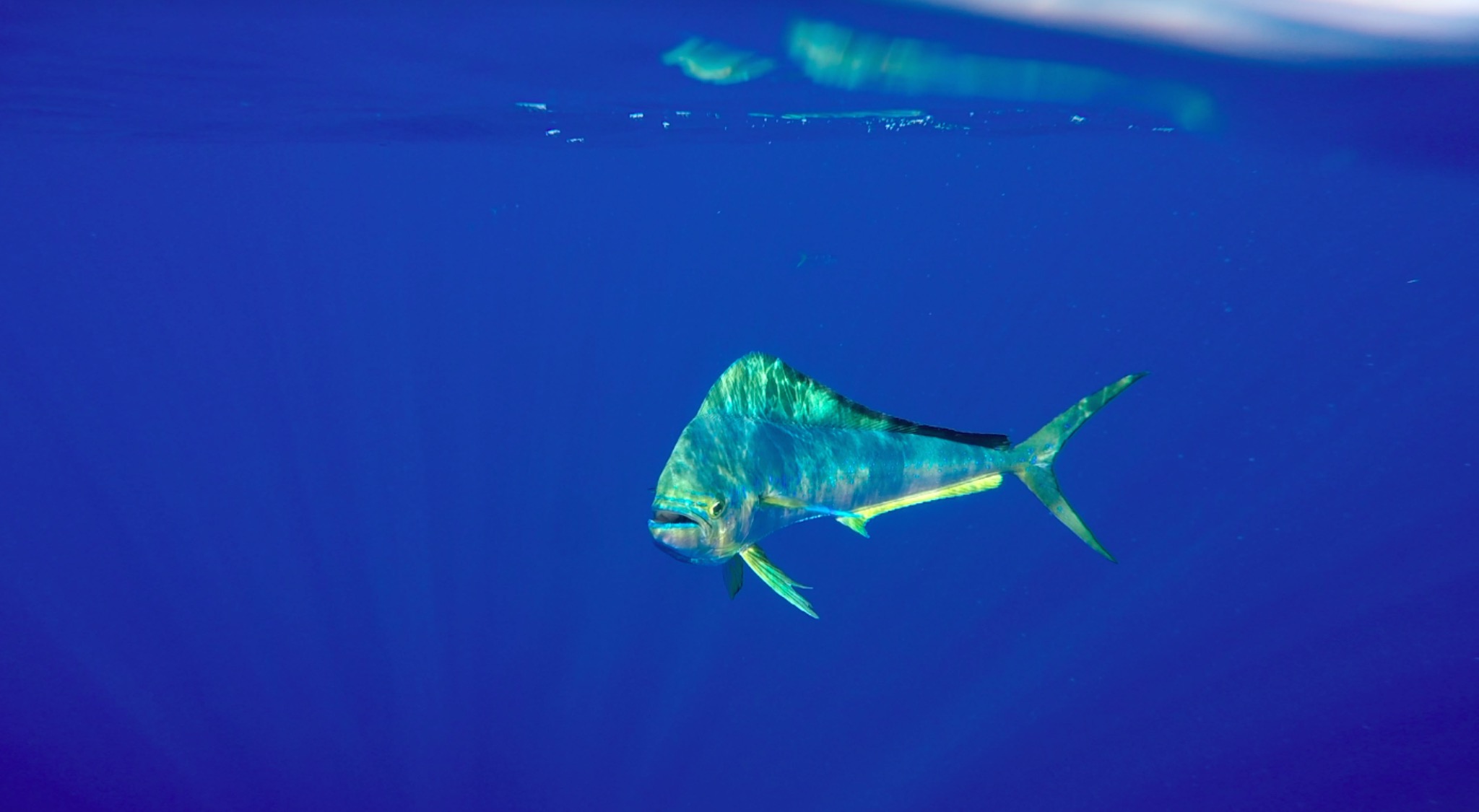
Mahi Mahi (dolphinfish) as captured by Hannah Van Alstine during Plastics Research

The sun beats down on the decks of the “Dave and Di” as the plastics research team pulls out of Boathouse Cut. The first stop is the marina store, not for its assortment of snacks that we’ve all grown to crave over the past month, but for the slightly less delectable squid to use as bait for our afternoon of fishing. With a cooler full of ice and bait, a variety of lures, four trolling rods, and the good old plastic trawl, we follow the curving coastline of Southern Eleuthera and then make a beeline for the Exuma Sound. Once we get past the wall, which drops off thousands of feet, we start looking for signs of life. This includes flying fish, birds hunting, and any other fishing boats. We continue out at top speed until we get about 25 miles off the coast, or a third of the way into the Exuma Sound. The trolling rods get equipped with squids and the “Dave and Di” putters along, bobbing up and down on the soft yet developing swells beneath. We all sit lazily at the bow, enjoying the warmth of the breeze.

With the whiz of a rod, all hands are immediately on deck. Not even 30 seconds after the initial fish-on, a second rod goes off, and then a third, and then the fourth. We scramble to grab hold of a rod, trying to keep the tension needed to keep the fish on the line. The iconic darts of lime green, neon yellow, and electric blue that identify mahi mahi (dolphinfish) flash through the clear water. Their sheer strength and power is evident in their multiple feet-high leaps out of the ocean. These fish are not alone. The four fish on the lines are accompanied by the rest of their school that is made up of at least six other mahi mahi. A flurry of excited shouts echo as we struggle to pull the fish up on deck in order to get more on the line. The fish that are of proper size, we save for later research, but the majority of the fish caught are strictly catch-and-release.

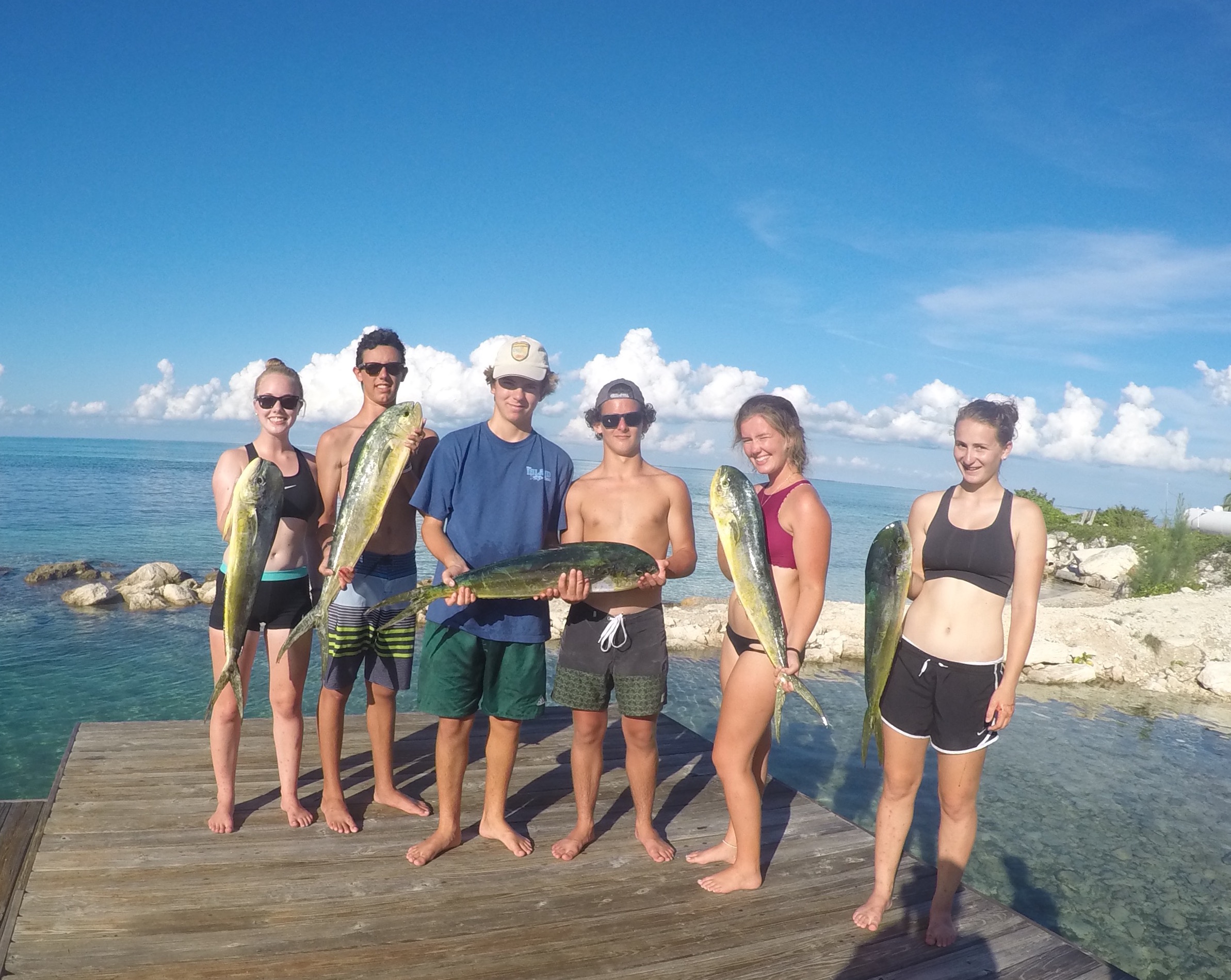
My first instinct throughout all of this chaos is to grab my GoPro to document the experience for fun as well as for research purposes. I make sure to snap photos of the fishing action on deck as well as the equally crazy action going on beneath the surface. However, I too got my chance to reel in a fish of my own. I grabbed hold of a rod that a mahi had just been released from and send a soaring cast into the blue. Attempting the jerking motions with the rod that I’d observed other group members doing, I did my best to allure a potential catch. When a fish hooked on, my entire body lurched forward with the pure force of the tug. I began to reel in my catch, keeping the tension on the fish all the while. After the madness, our total catch count was 12 mahi mahi, 5 of which we kept for our research project.

Hannah, Max, Jack S., Cole, Melanie and Anneke, student members of the Plastics Research group
Hannah, Max, Jack S., Cole, Melanie and Anneke, student members of the Plastics Research group with their catch of mature dolphinfish

Why is the plastics research team out sport fishing you may ask? Our plastics study for this semester has three main objectives: to quantify plastics, especially micro-plastics, in the Exuma Sound, to catch and dissect the stomachs of pelagic fish to see if fish are consuming plastics, and if this is the case, if the fish are preferentially or incidentally feeding on the plastics. In order to conduct the latter two components of our study, it is necessary that we actually have fish from the Exuma Sound to dissect. There is a critical need for our micro-plastic study because the ingestion of plastics by fish has potential deadly effects on them. When a fish consumes micro-plastic, the plastic can stick to the fish’s stomach and make them feel full, thus acting as a “filler.” This means that the fish will then not eat actual food and can starve.

The Exuma Sound is a good place for this study on plastics because it may be a sink, meaning a place for plastics to come in and never leave. This is because the sound is restricted due to the surrounding islands, because of the way the currents run here, and the way that the Atlantic gyre may be driving plastics right to this area. Though our study is not focusing on it, it is also important to note that pelagic sport fish in the Bahamas play a large role in the economy and are being frequently caught, sold, and consumed by humans. The health effects of consuming micro-plastics through fish are still being studied, however, the outcome does not look good.

Studies like the one we are conducting over the course of this semester are important for many more reasons then an awesome afternoon of fishing. The research that is being done can be added to the work that other scientists have done so that a broader background can be established on the topic and so that there is an increase in what we know about it. Especially with plastics, if we can figure out what the relationship between fish and micro-plastics is in the Exuma Sound, future studies can use our results to conduct studies relating more directly to humans. It also gives me as well as the five other Island School students in my group the incredible opportunity to be a part of a real scientific study and gain insight into what it really means to be a researcher in this field. An afternoon boating in thousands of feet deep water, catching sport fish, and using it all for research that really matters. Just another day at the Island School.

Shark Explorers Internship in South Africa by Chris Teufel, F’13

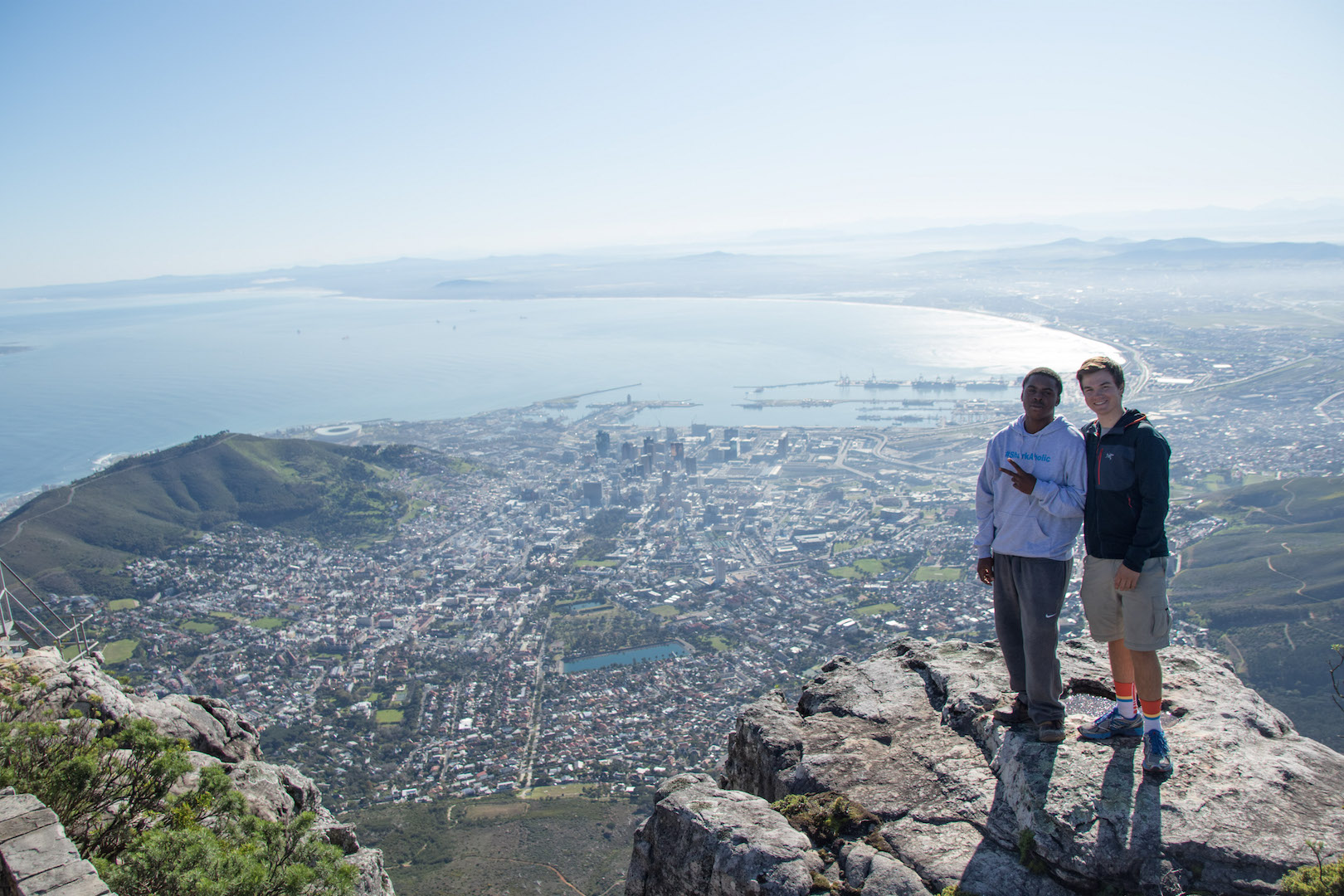
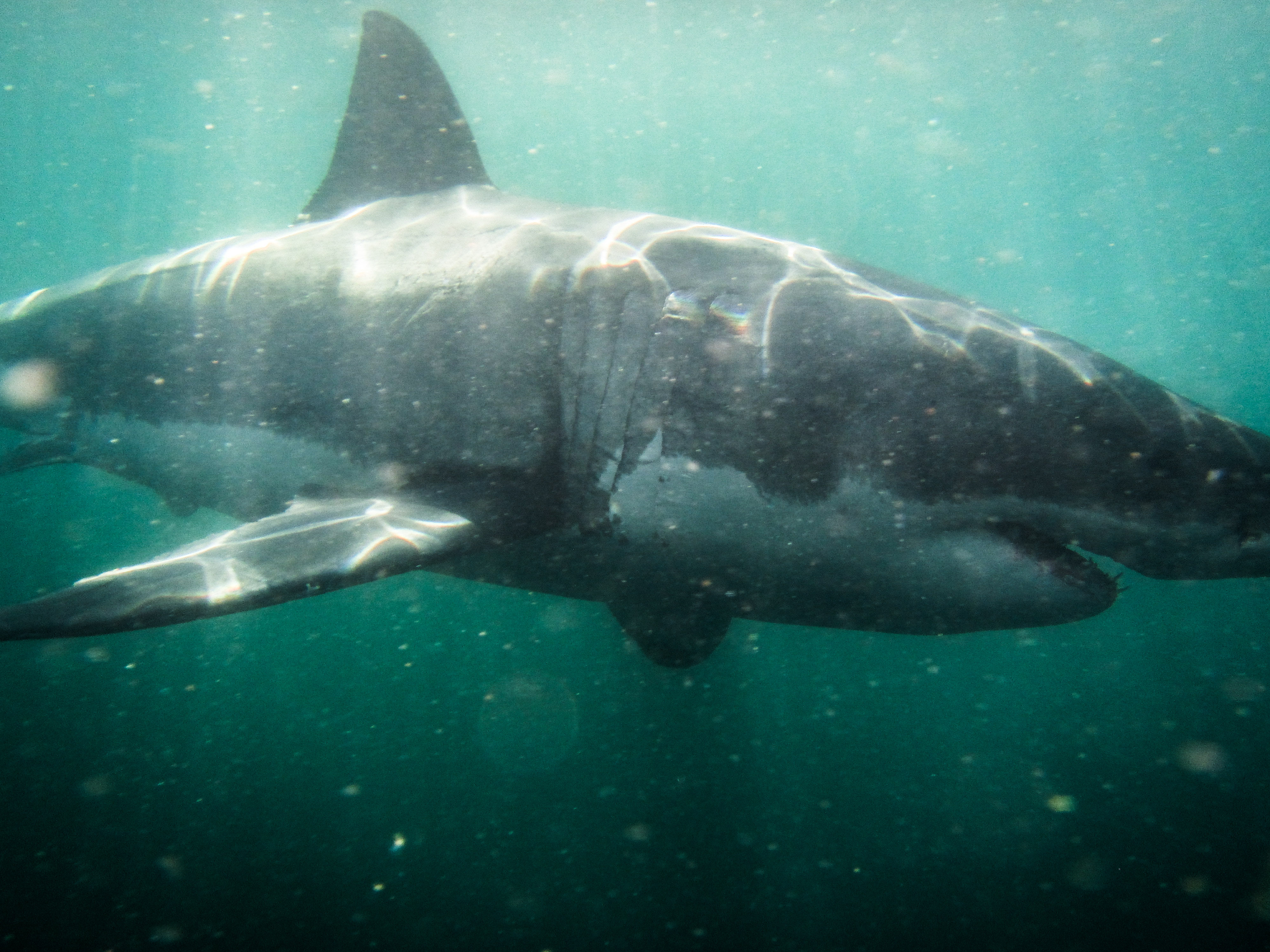
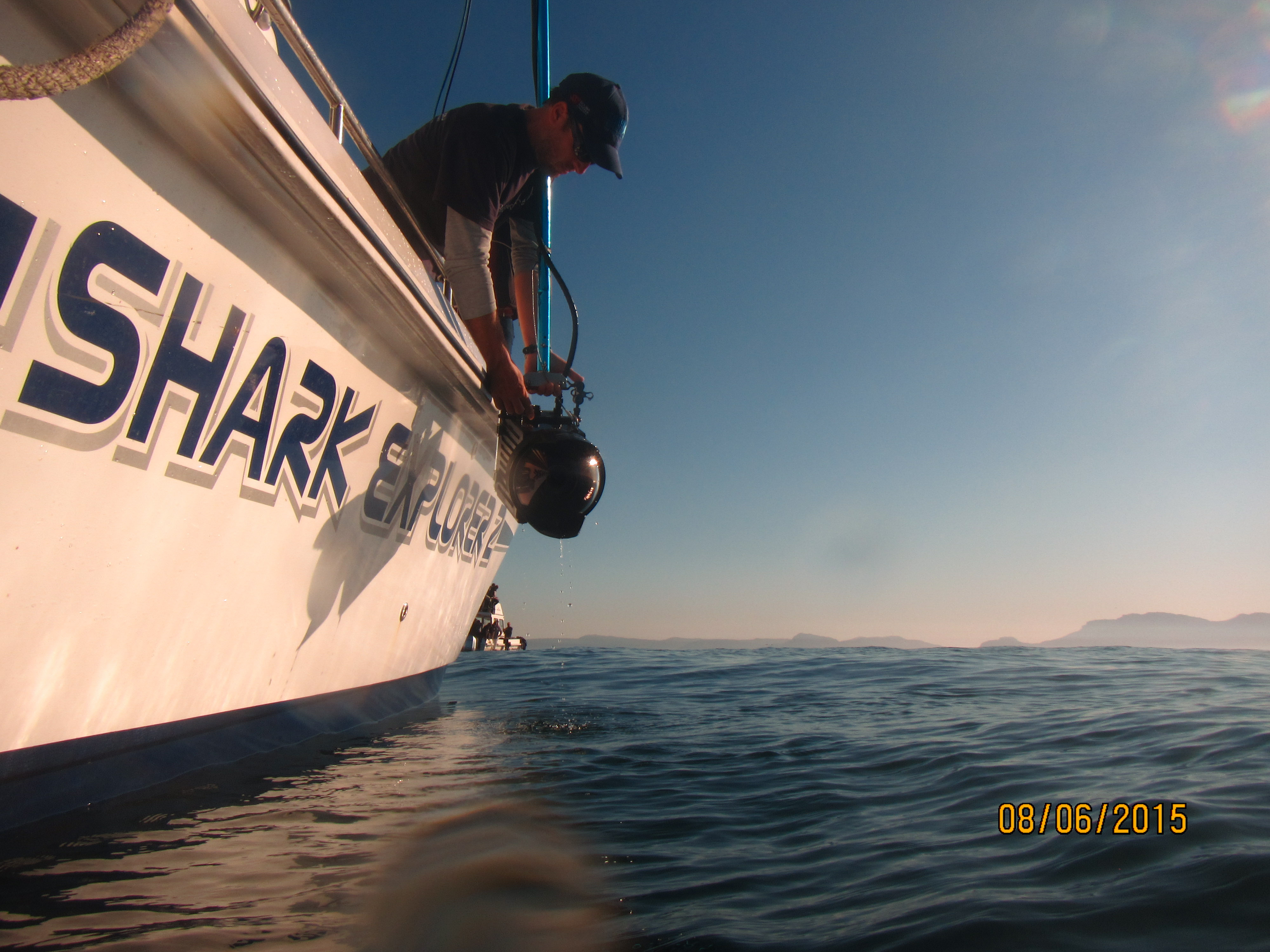
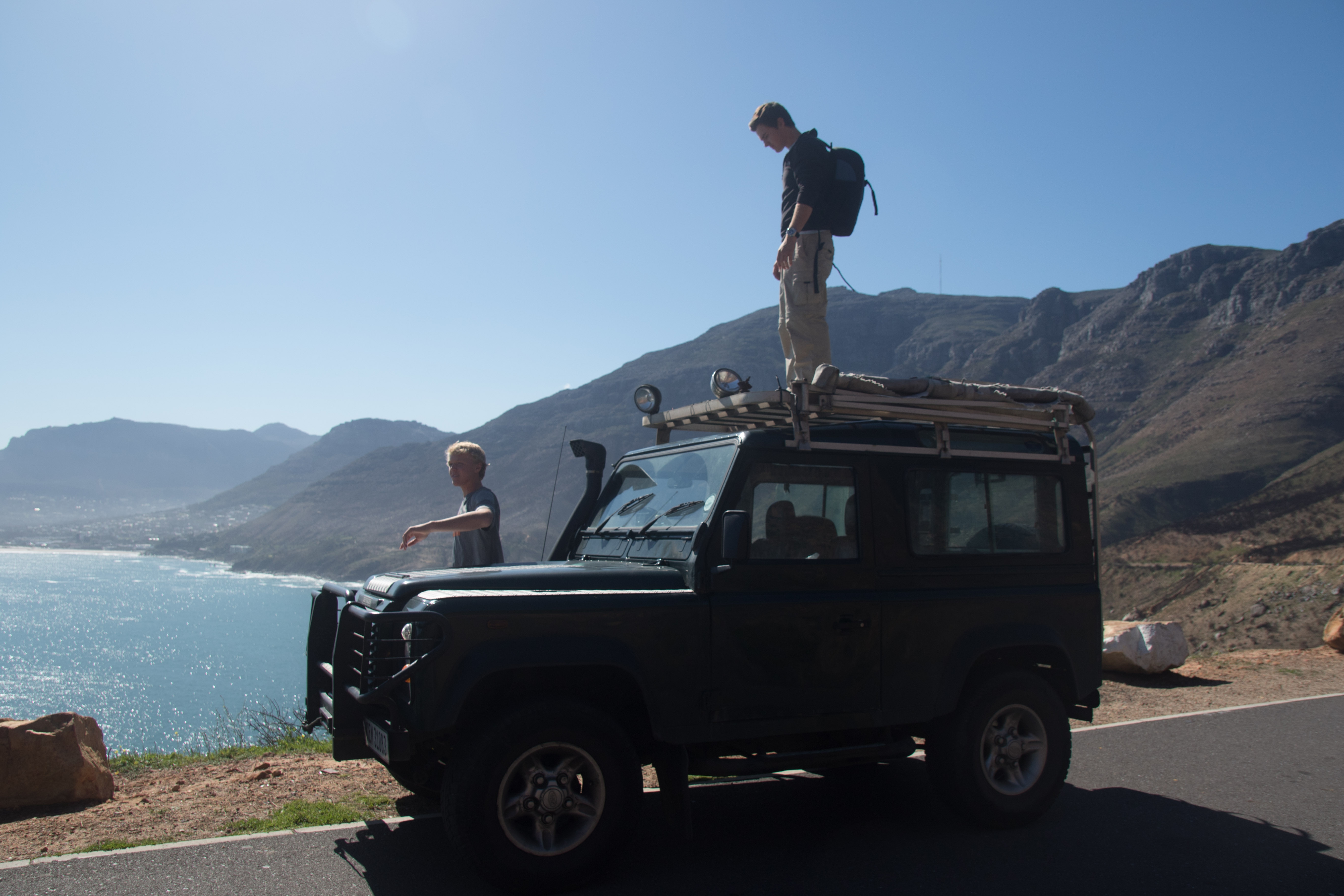
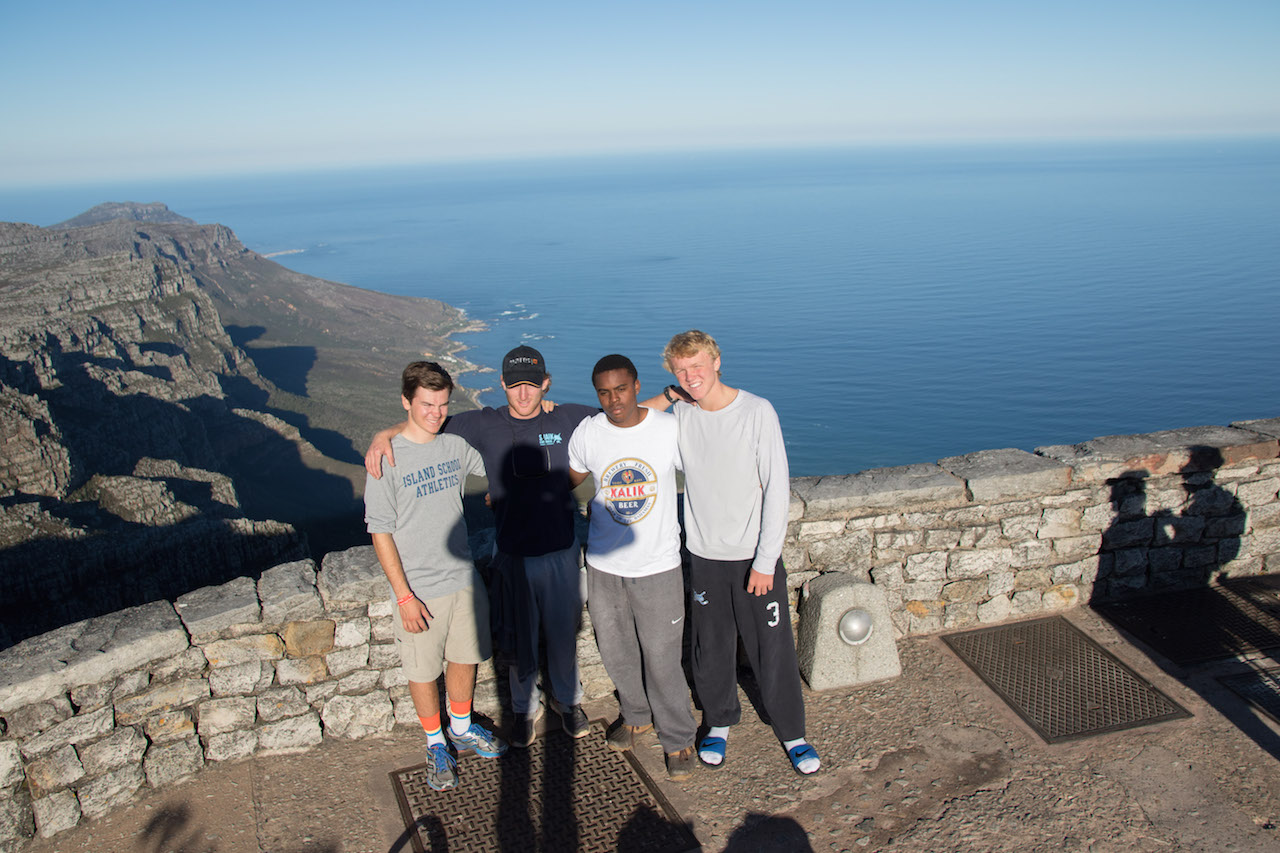
SEInternship (14 of 14)This past August, Scott Voigt (S’14), Danaldo ‘stayin motivated’ Pinder (S’15) and myself, Chris Teufel (F’13) had the incredible opportunity of joining Brocq Maxey and the Shark Explorers team at their home base in Cape Town, South Africa. All three of us were captivated by Brocq’s presentation he gave to our semesters about what it is he does for a living. So, in turn each of us contacted Brocq expressing these interests and were able to join the team from August 1st – August 21st for the internship experience of a lifetime.

SEInternship (2 of 7)Our day to day activities ranged from waking up at the crack of dawn to go out on the boats as actual members of the Shark Explorers crew and experience the raw power that is a 12 foot great white shark quite literally flying out of the water, to leisurely diving in the kelp forests with everyone’s favorite pajama cat sharks. SEInternship (3 of 7)At night, the team made sure to assimilate us into the Captonian subculture, be it having dinner and shopping at one of the open air markets, or getting together for a Braii (barbecue) and watching some rugby.

However, it was quite evident that the trip was not all fun and games, we also learned an immense amount about what it takes to actually have this as a day to day job. While on the job, we were also exposed to the vast bank of knowledge that each and every member of the crew possessed. Whether it was dive tips from Ernest, or a lesson in streaming live video to the boat from Mark, the tools we gained through this internship are not only applicable to a future career in marine science but to life in general.

I speak on behalf of all three of the interns when I say that this experience was a once in a life time opportunity, and that if any other Island School Alums are out there reading this, we strongly encourage you to shoot Brocq an email and inquire about next summer’s internship.

For direct inquiries about the internship program e-mail brocq@sharkexplorers.com and for more information on Shark Explorers e-mail info@sharkexplorers.com

Can I Borrow That? By Lizzy Soranno

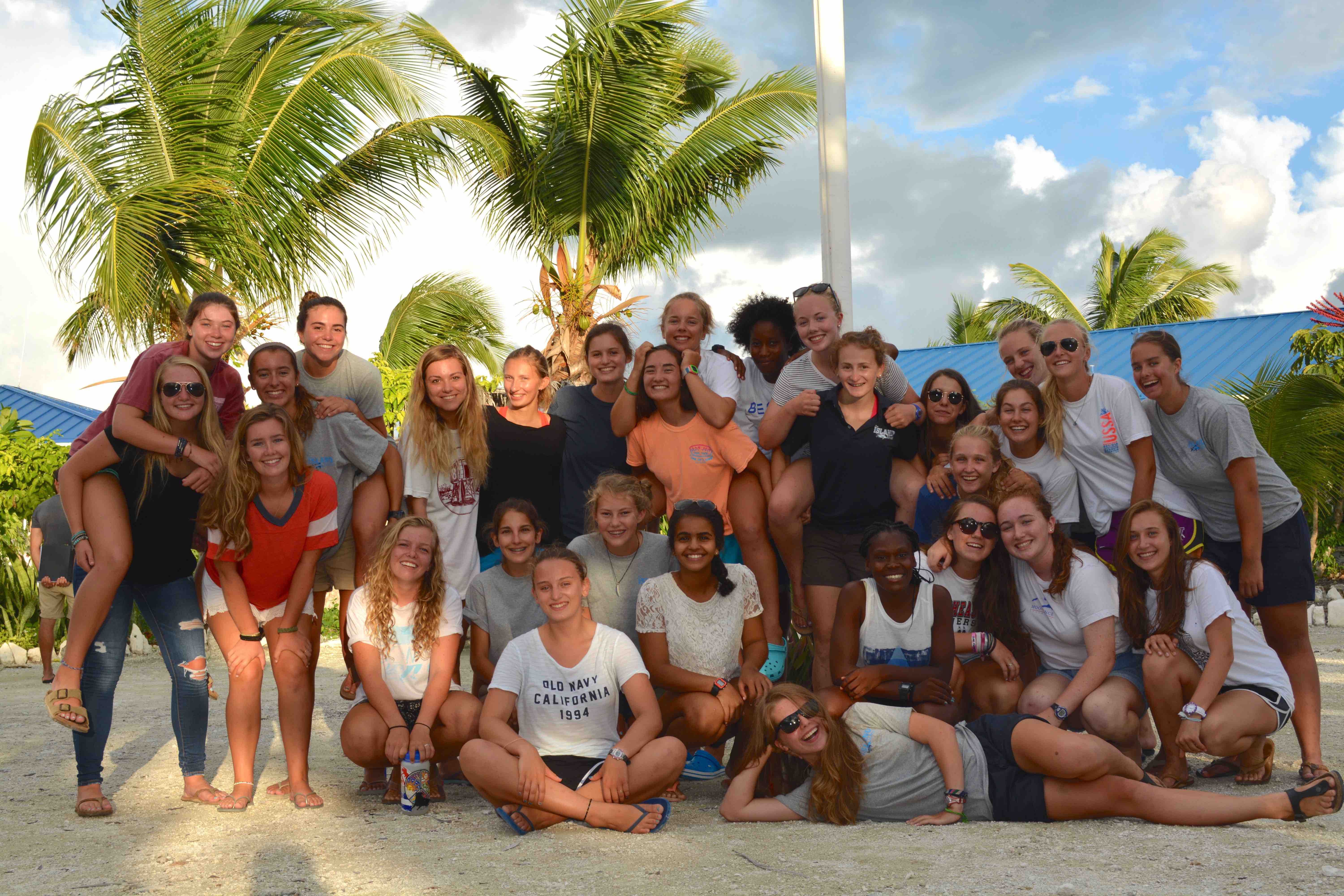
When you hear about college life, you may think about the food, or how hard you have to study, the freedom you have, or even the memories you’ll make. But a lot of people seem to forget the “Dorm Life,” that quintessential time in your life where you share everything (no kidding) with your roommates and grow together as a single functioning team. Here at the Island School, you don’t just get to share your life with a couple kids like in college, but rather 29 kids for three months in two huge rooms! And the best part about sharing every moment with them is the memories you make.

“We never chose the dorm life, but the dorm life chose us!” -Girl’s Dorm Fall 2015

I’ve never spent any moment of my life in a dorm. I’ve always woken up at home and slept at home. I heard about these kids at boarding schools and sleep-away camps and really wondered, how on earth do you even get a moment of peace and quiet with everyone watching your every move? But, to be honest, why would you ever want peace and quiet when you have 27 of your best friends not even five feet away from you? They’ll always be there for you when you’re having an issue, and have your back when things get rough. You can absolutely always count on them!

Another awesome aspect of dorm life that I’ve come to love is the fact that you can share anything and everything, whether it be clothes, sports, or beauty tips, if you’re missing something, chances are your dorm mates have it for you! Along with that, is their willingness to share their support. They’ll never let you down, whether it be jumping off of High Rock together for the perfect group picture shot, or pushing you to get up The Wall. I’ve never seen a more cheerful and supportive group of kids than the one’s I get to share 100 days worth of memories with.

In the end, after the Island School semester has long passed and the memories have been written down in our place books and journals, when the sunburns have faded (as well as the abs), and the tan lines have evened out, one thing will always remain: the bond you have with your dorm mates. I recently got the privilege to meet and speak to the alumni, all the way from 2002, who came to visit the Island School for a trip down memory lane. I never saw an alumnus without a smile on their face while they were visiting. The same smiles they had when they were high school sophomores and juniors hanging out with their best friends down in the best place on earth, were the same smiles I saw today. I know that the friends I make now are the friends I make for a lifetime.

Updates from Eleuthera

To The Island School and CEI family and friends,

Thank you for staying in close touch with us. We very much appreciate your concern and will continue to do our best to keep everyone updated.

Last night we had a beautiful sky and brisk breeze. We have 104 students, employees, volunteers and interns, and visitors in our direct care on campus and in Deep Creek. We are focused on their safety, and everyone is ok, and has a designated place to be for the weather later this afternoon.

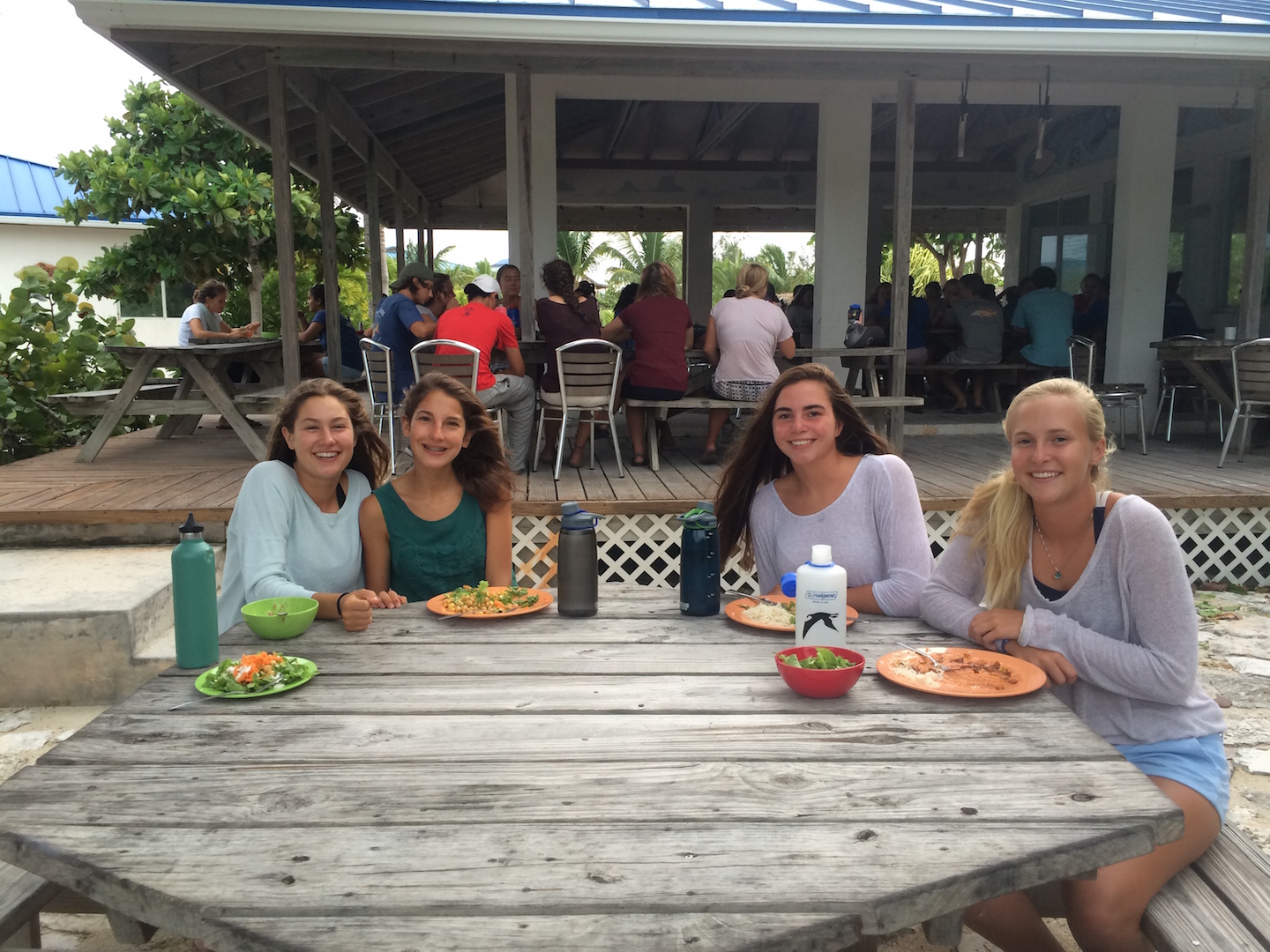
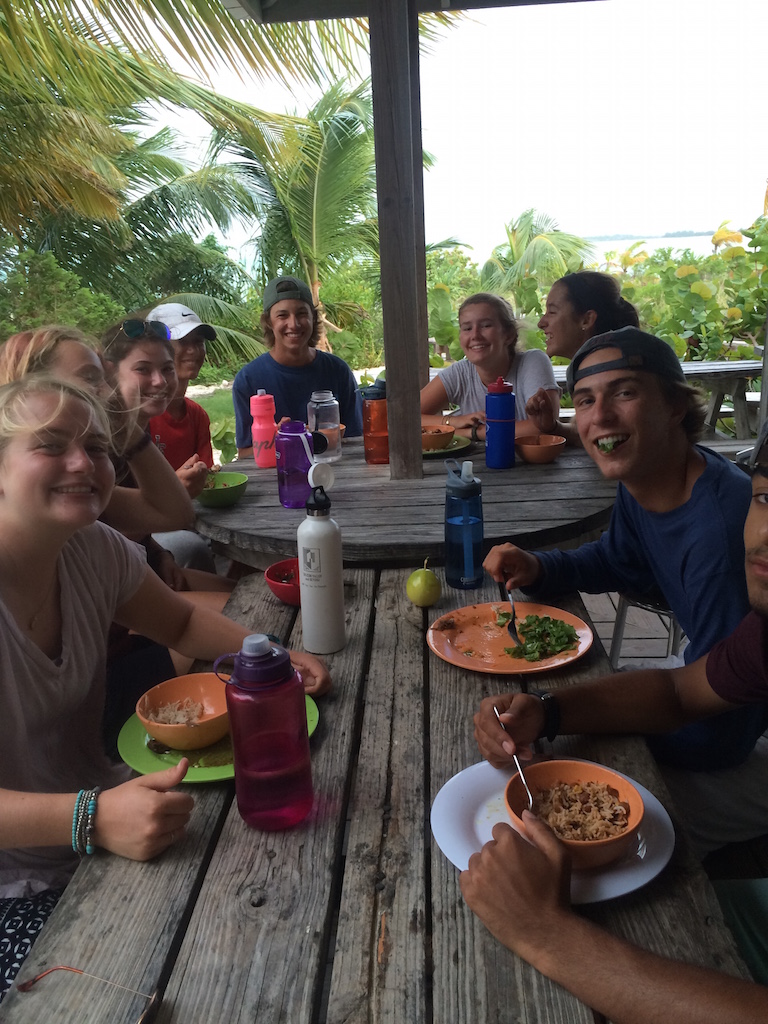
Students enjoy a chili dinner - fitting for the "cold" and windy evening last night
Students enjoy a chili dinner – fitting for the “cold” and windy evening last night

image5

In terms of property protection, wind and storm surge are the primary concerns we are monitoring. The information we have right now supports our preparations and precautions taken, but also gives reason to believe that the worst effects of the storm may not be taken out on our particular location.

This NOAA probability map shows campus being exposed to 74mph sustained winds (hurricane force) only within the 5% probability in the next 5 days. Which reinforces the efforts of our staff to prepare thoroughly in the case (1 in 20 chance or so) of that happening.

We are monitoring highest tides and expecting weather to increase this afternoon. Our main source of updated forecasts for this track and intensity of the storm is through the link here; the most recent forecasts do not have the center of the storm passing over Eleuthera.

NOAA modeling on likely storm surge effects provided by Weather Underground is here and, according to this, we may have storm surge of 3 to 6 feet maximum surge at high tide.

These surge levels, low compared to many other places in the Bahamas, would not infiltrate our living spaces or damage infrastructure. We don’t take the need for precaution less seriously based on these predictions or models, but they again give context to the overwrought hype on TV, or reports from other parts of north Eleuthera on the western side of the island where storm surge is modeled under the same conditions to reach over 15 feet based on the local topography and bathymetry.

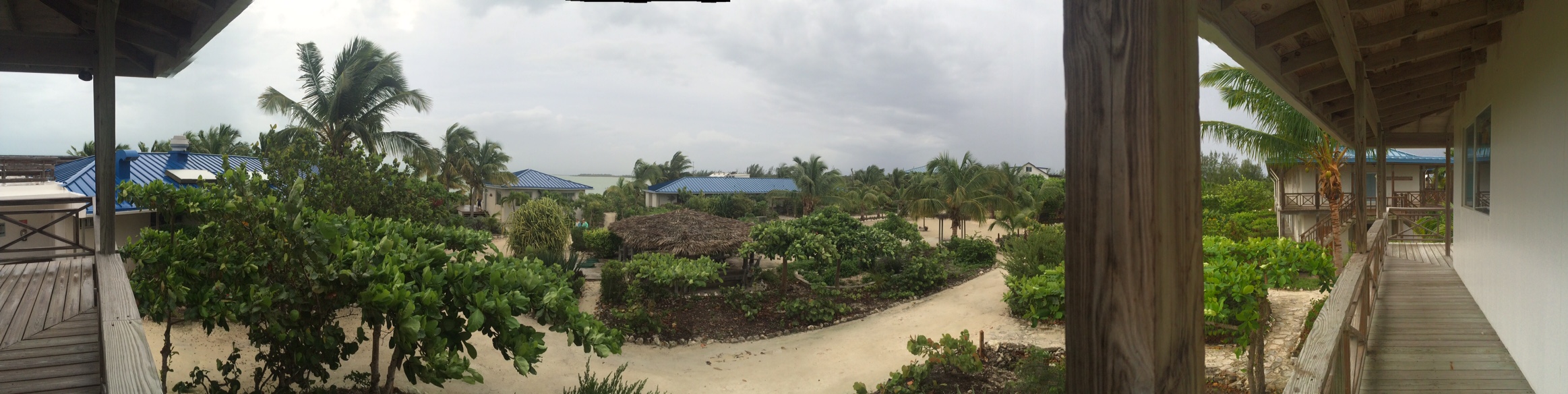
Campus at 8:45am today

Thank you all for the support and positive energy you’re sending our way and, as always, feel free to reach out with any particular questions or concerns.