After his first half marathon at The Island School, alumnus Evan Wood (Sp’11) went on to triumph in many more long running competitions. Here is Evan’s story about battling disease and overcoming personal struggles to end up the face of the 2015 NYC Marathon:
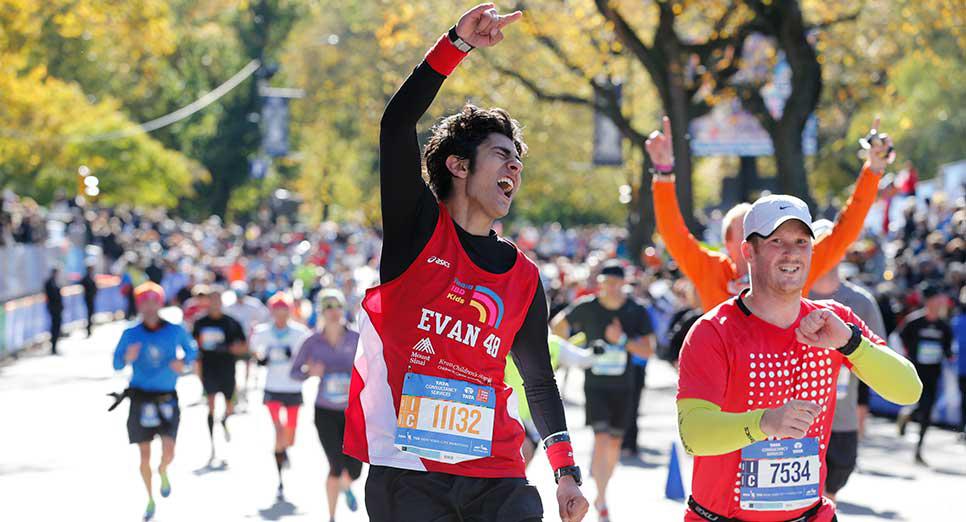
Alumnus Evan Wood (Sp’11) completes the NYC Marathon
I came to The Island School as an escape from a series of personal tragedies back home. In my early teenage years, I lost my father, Erik Wood, to cancer. Then, after a year of intense stomach pain, I was diagnosed with Crohn’s disease. And then my doctor, Kena Valentine, suddenly passed away. For years, I was very underweight and in constant pain, yet I did my best to maintain as normal a life as I could, keeping up with all of my school work and my extracurriculars. Though I was always an active kid (I loved to play tennis with my brother and had a short stint on my elementary school track team), I had no background in running whatsoever—in fact, I spent much of my childhood on a nebulizer because I also suffered from asthma.
Then came the unique opportunity to attend The Island School—an academically and physically rigorous semester-long program in The Bahamas featuring kayaking expeditions, SCUBA certification, and a climactic end-of-semester Half Marathon.
So, normally, you might ask yourself, how on earth did anyone (including myself) think that isolating myself from my family and my doctors to take part in a physically rigorous academic program in another country was a good idea? What exactly did I see in The Island School?
What I saw in The Island School were challenges that would reward me for my hard work and dedication. My struggles at home would become more manageable with time, but in the turbulence of my adolescence, it was very difficult to deal with problems that were out of my control. At The Island School, I could confront well-defined challenges, be a part of a team, and overcome obstacles—if I willed myself. When I arrived, I had difficulty learning how to SCUBA dive, I could barely jog the 4-mile loop without using my inhaler—heck, I didn’t even know how to ride a bike! But these were challenges that I could work toward—each with their own small goals that would lead to small victories. The challenge that would present the greatest opportunity for me in the long run (no pun intended) was the Half Marathon.
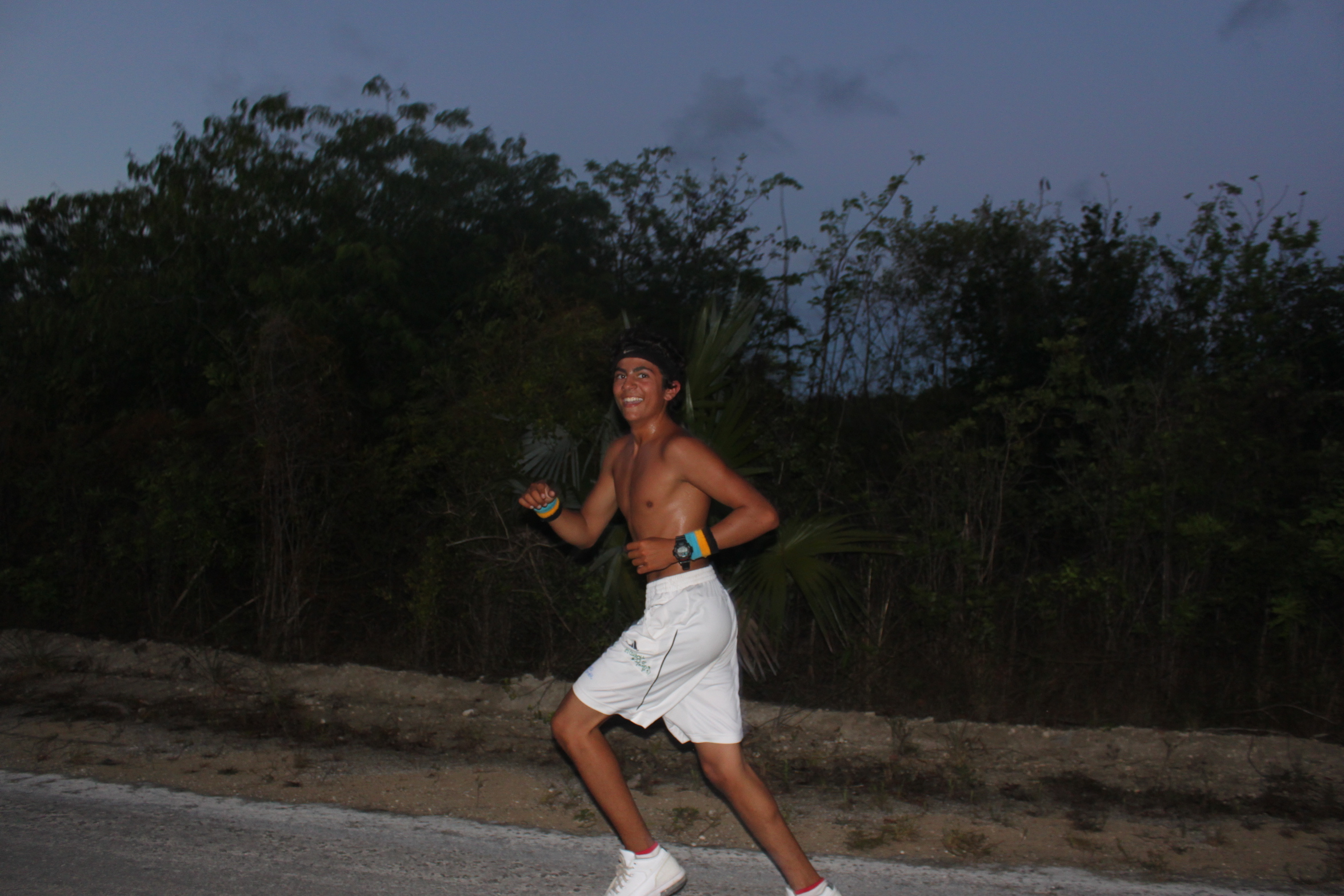
Evan running during run track at The Island School, Spring 2011
When I was at The Island School, I struggled to get the miles in, but every time I laced up, I made it my mission to leave nothing on the pavement. I pushed myself as hard as I could, which was foolhardy at times, but I sought to improve with every run. Even if it was difficult—even if it was painful, it was nothing compared to the pain that I had already been going through. And over time, I did improve—I slowly but steadily climbed from the back of the pack to the front, and as the semester continued I was becoming stronger and healthier, relying less on my inhaler, and my confidence grew. I had also entered a state of remission from Crohn’s disease for the first time, becoming symptom-free. At the end of the semester, I was the third student to finish the Half Marathon in 1 hour and 46 minutes—a surprise to myself and just about everyone!
Shortly after returning from Island School, my life began to improve dramatically—I regained my health, gained over half of my bodyweight in less than a year, got accepted to the film school of my dreams, NYU Tisch, on a full scholarship, and remained mostly pain-free for the longest time since before my diagnosis. I fell in love with running, considered it a part of my treatment, and continued to train back home. I was winning against my disease, but I wasn’t finished just yet—I was determined to run the NYC Marathon for Team IBDkids, a pediatric Crohn’s and Colitis charity led by my doctor Keith Benkov, who would also become my coach. I trained with the same vigor that I had at Island School, and even though my first outing was cancelled by Hurricane Sandy, I met my fundraising goal and joined thousands of other runners to run the distance in Central Park anyway. When I had finished, I was overcome with emotion and fulfillment—I had come a long, long way since the sleepless nights, doubled over in pain. Life didn’t have to be a constant repeat of “woe is me”—not if I had any say in it.
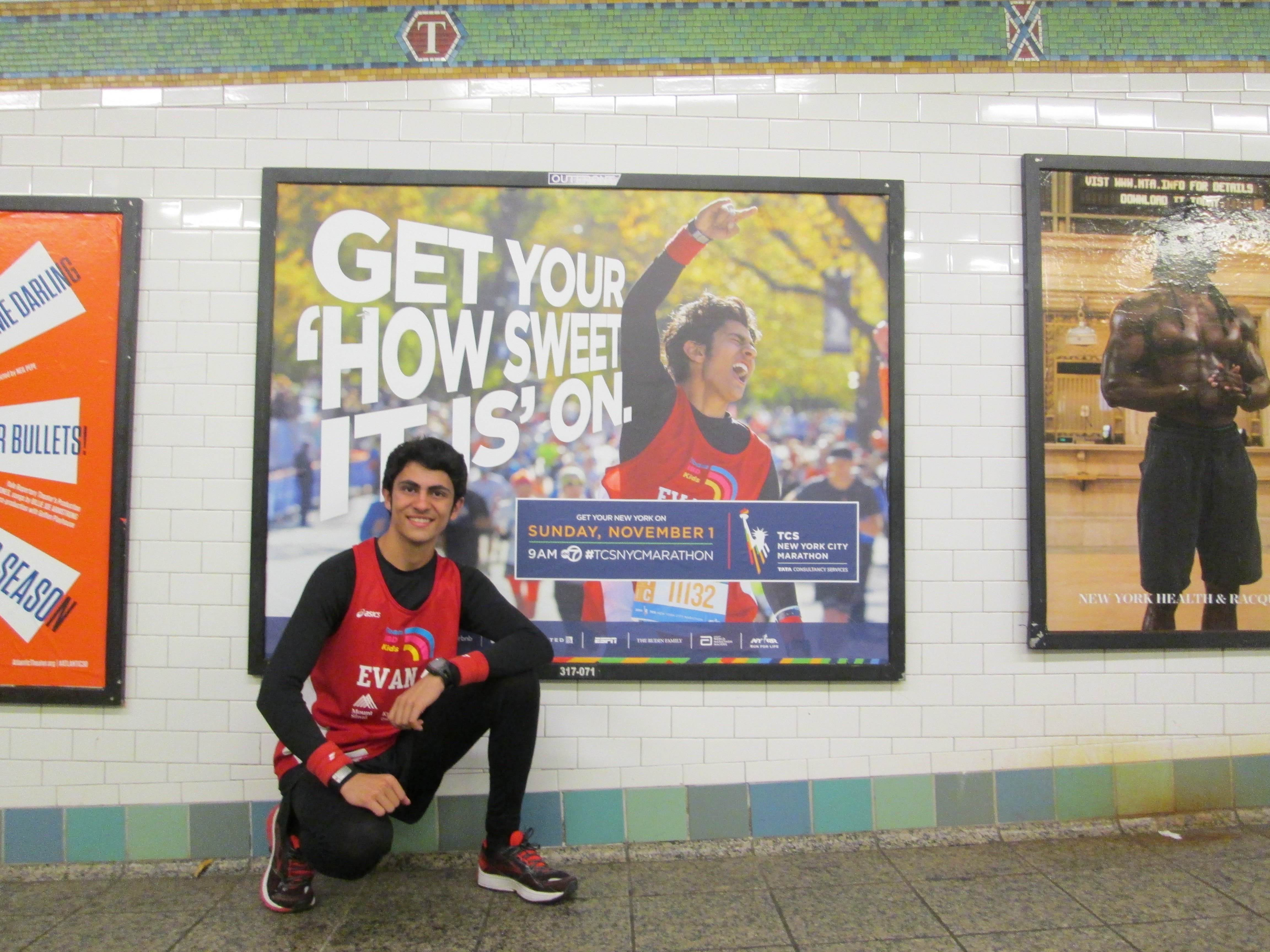
Evan in front of a New York Road Runners subway advertisement for the NYC Marathon
Still, Crohn’s disease isn’t something that I had. It’s something I have, and it’s something that I will be constantly battling for the rest of my life, whether I like it or not. Since my time at Island School, I’ve still been confronted with occasional relapses and flare-ups, emergency room visits and bad spells, but because of the mindset Island School helped me realize, the tough times have only fanned the flames of motivation. Since then, I have run the (official) NYC Marathon twice, will be running it for the third time this year, and have run eight Half Marathons—my personal best is now 1 hour and 27 minutes. Every finish line I cross evokes the same triumphant emotion that I once felt when I touched that iconic flagpole on Eleuthera. I always belt out a battle cry and leap as high as I can to release the physical and emotional pain that I once internalized for far too long. At last year’s NYC Marathon, New York Road Runners decided to make my picture the cover of their official finisher photo album—and in the year since, they’ve used my photo on their website, their ad campaigns, and most recently on billboards, in the subway and on the sides of buses! To me, my journey is just one of over 50,000 who run the marathon every year—but thanks to Island School and the support of my family, friends and Dr. Benkov, I have been able to bite Crohn’s back and send a message to others that no matter how difficult and out of control life can be, we can choose to work hard and will ourselves to reach even our greatest goals.
Once a week for Marine Ecology class we go SCUBA diving at Tunnel Rock. At the beginning of the semester each student was assigned a part of the larger reef to observe for the entire semester. While down close to 30 feet under water, each student is tasked with taking notes while under water on any species in a specific group. The night after the dive each student has to write a creative writing piece on the species they took notes on. Below is one of my Deep Sea Diaries:
30 feet down, waving in the current and attached to the underside of a patch reef sat a Bipinnate Sea Plume or Antillogorian bipinnata (Humann, Deloach, 59). The water around it was moving steadily in the current and full of sand, algae, and dead plants, making small details difficult to see. Small, bright colored fish swam around the drooping down and almost touching the sandy ocean floor. Growing out of the patch coral next to the sea plume was a reddish brown piece of hard coral sticking straight out like a broken stick. Each time the sea plume moved in the water it would hit the other coral and get caught on it for a second or two.
Sprouting from the base of the coral, four large, dark purple branches went out in every direction ranging in length from as long as my forearm to as short as my hand, each with numerous smaller sprouts sticking out of each side. The overall effect made the coral vividly resemble a fern. Hundreds, maybe even thousands of dirty white Polyps about the size of a small mosquito sprouted out from almost every part of the of the coral, except for the very ends of the shortest sprout, which had almost no growth on them. Since the sea plume is soft coral I was wondering whether or not it contains Zooxanthellae? I was also wondering why the polyp is not on the whole coral. My guess is that the part without polyp is younger, therefore has not had a chance to grow a polyp yet. I am also interested in learning about how other animals interact with coral. I was unable to see what usually goes on because as soon as I swam to the coral most of the fish swam away.
After staying under the water for a long time only focusing on the sea plume I started to notice things about the coral and how other organisms interacted with it that I had not seen at all in the beginning. Towards the end of the dive I started to be able to see each of the polyps had numerous individual tentacles, barely visible to the naked eye. This demonstrates how focusing on just one organism for a while can lead to new findings.
Through working in this medium, I feel that I am able to better understand the topics that I am learning about because creative writing is something that I really enjoy and I do not get to do very often at home. This assignment is a good example of how The Island School teaching style is very different than that of my school. Unlike a normal science class where students sit at desks all day, here we have the opportunity to be SCUBA diving for class and do creative writing for science homework.
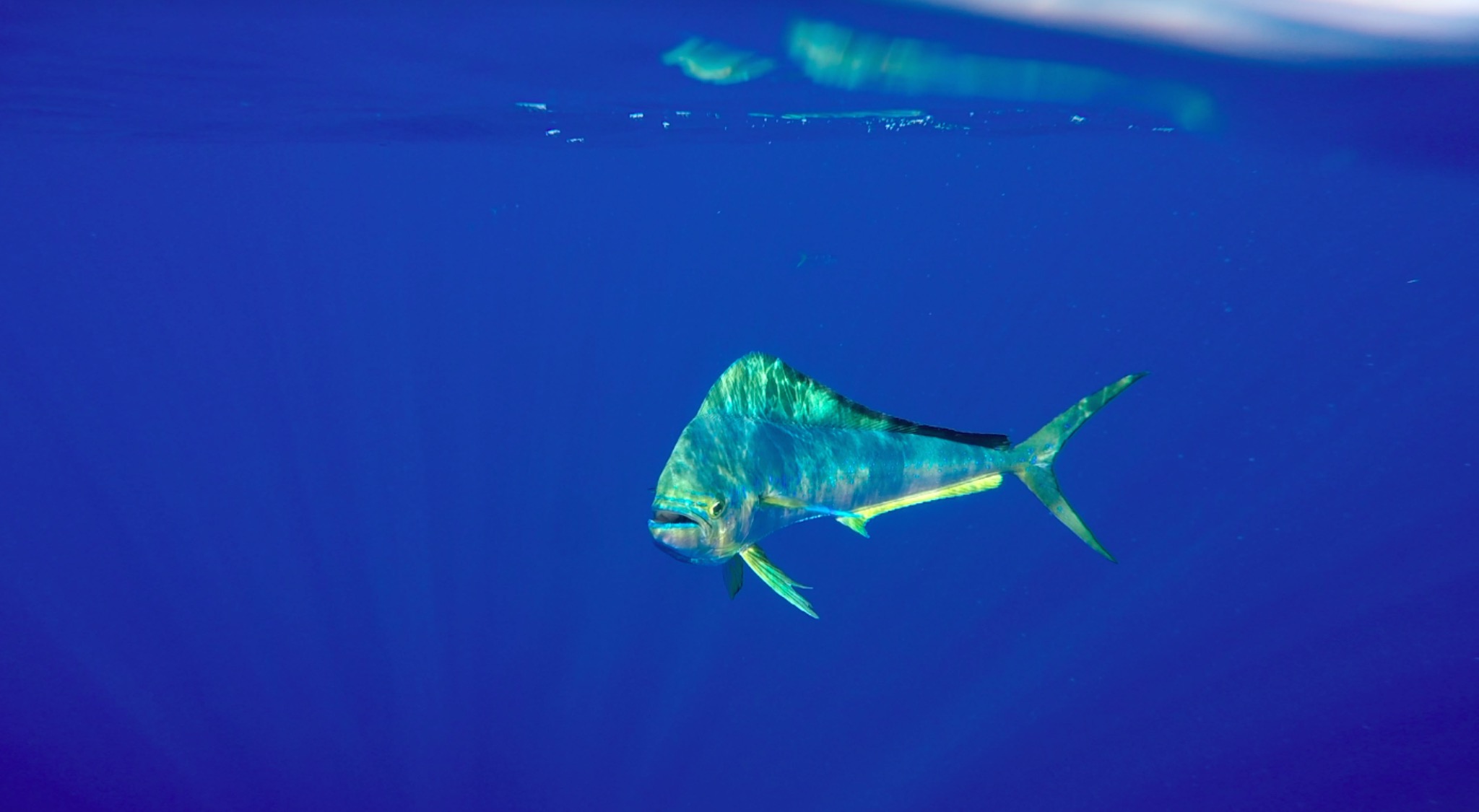
Mahi Mahi (dolphinfish) as captured by Hannah Van Alstine during Plastics Research
The sun beats down on the decks of the “Dave and Di” as the plastics research team pulls out of Boathouse Cut. The first stop is the marina store, not for its assortment of snacks that we’ve all grown to crave over the past month, but for the slightly less delectable squid to use as bait for our afternoon of fishing. With a cooler full of ice and bait, a variety of lures, four trolling rods, and the good old plastic trawl, we follow the curving coastline of Southern Eleuthera and then make a beeline for the Exuma Sound. Once we get past the wall, which drops off thousands of feet, we start looking for signs of life. This includes flying fish, birds hunting, and any other fishing boats. We continue out at top speed until we get about 25 miles off the coast, or a third of the way into the Exuma Sound. The trolling rods get equipped with squids and the “Dave and Di” putters along, bobbing up and down on the soft yet developing swells beneath. We all sit lazily at the bow, enjoying the warmth of the breeze.
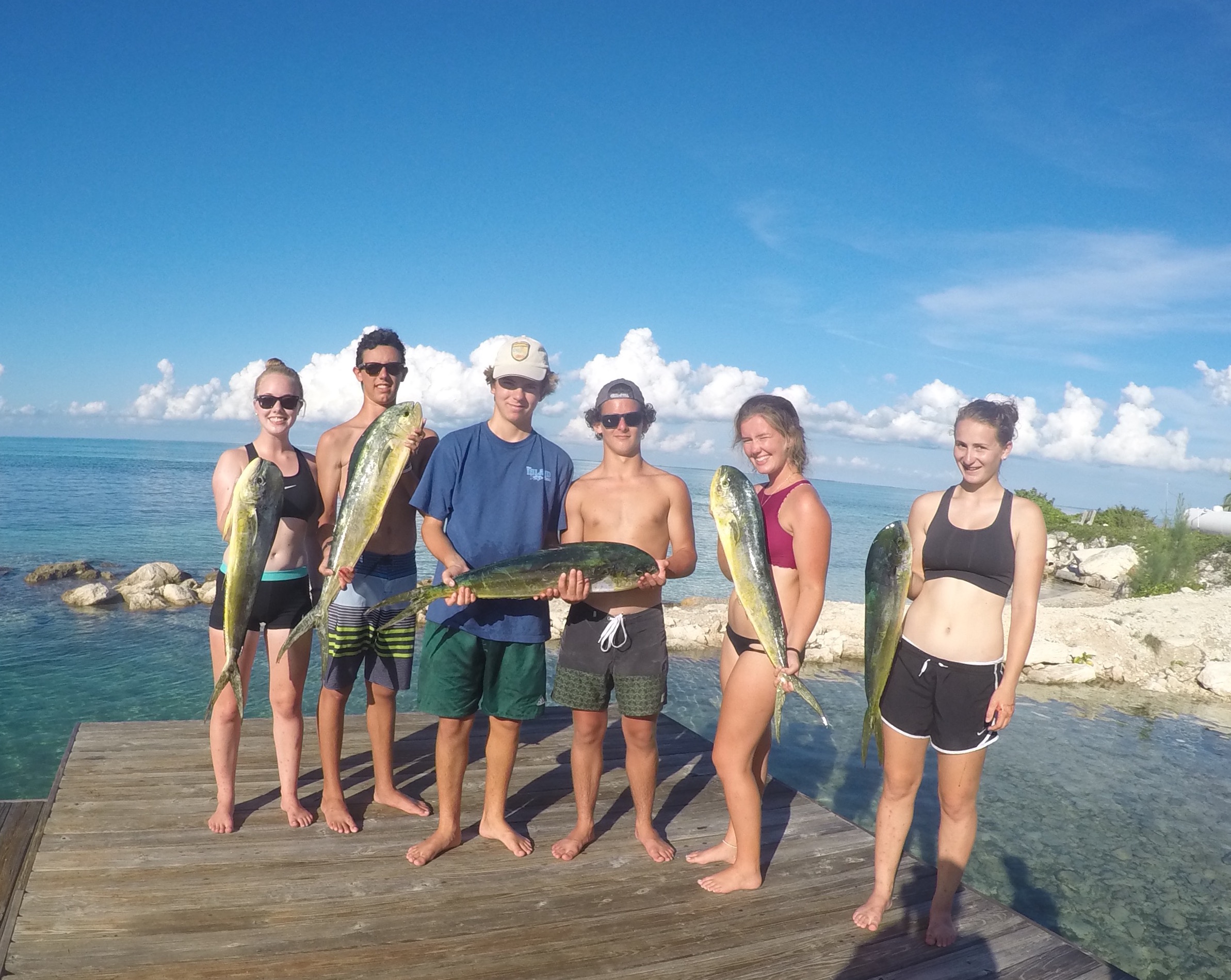
With the whiz of a rod, all hands are immediately on deck. Not even 30 seconds after the initial fish-on, a second rod goes off, and then a third, and then the fourth. We scramble to grab hold of a rod, trying to keep the tension needed to keep the fish on the line. The iconic darts of lime green, neon yellow, and electric blue that identify mahi mahi (dolphinfish) flash through the clear water. Their sheer strength and power is evident in their multiple feet-high leaps out of the ocean. These fish are not alone. The four fish on the lines are accompanied by the rest of their school that is made up of at least six other mahi mahi. A flurry of excited shouts echo as we struggle to pull the fish up on deck in order to get more on the line. The fish that are of proper size, we save for later research, but the majority of the fish caught are strictly catch-and-release.
My first instinct throughout all of this chaos is to grab my GoPro to document the experience for fun as well as for research purposes. I make sure to snap photos of the fishing action on deck as well as the equally crazy action going on beneath the surface. However, I too got my chance to reel in a fish of my own. I grabbed hold of a rod that a mahi had just been released from and send a soaring cast into the blue. Attempting the jerking motions with the rod that I’d observed other group members doing, I did my best to allure a potential catch. When a fish hooked on, my entire body lurched forward with the pure force of the tug. I began to reel in my catch, keeping the tension on the fish all the while. After the madness, our total catch count was 12 mahi mahi, 5 of which we kept for our research project.
Hannah, Max, Jack S., Cole, Melanie and Anneke, student members of the Plastics Research group with their catch of mature dolphinfish
Why is the plastics research team out sport fishing you may ask? Our plastics study for this semester has three main objectives: to quantify plastics, especially micro-plastics, in the Exuma Sound, to catch and dissect the stomachs of pelagic fish to see if fish are consuming plastics, and if this is the case, if the fish are preferentially or incidentally feeding on the plastics. In order to conduct the latter two components of our study, it is necessary that we actually have fish from the Exuma Sound to dissect. There is a critical need for our micro-plastic study because the ingestion of plastics by fish has potential deadly effects on them. When a fish consumes micro-plastic, the plastic can stick to the fish’s stomach and make them feel full, thus acting as a “filler.” This means that the fish will then not eat actual food and can starve.
The Exuma Sound is a good place for this study on plastics because it may be a sink, meaning a place for plastics to come in and never leave. This is because the sound is restricted due to the surrounding islands, because of the way the currents run here, and the way that the Atlantic gyre may be driving plastics right to this area. Though our study is not focusing on it, it is also important to note that pelagic sport fish in the Bahamas play a large role in the economy and are being frequently caught, sold, and consumed by humans. The health effects of consuming micro-plastics through fish are still being studied, however, the outcome does not look good.
Studies like the one we are conducting over the course of this semester are important for many more reasons then an awesome afternoon of fishing. The research that is being done can be added to the work that other scientists have done so that a broader background can be established on the topic and so that there is an increase in what we know about it. Especially with plastics, if we can figure out what the relationship between fish and micro-plastics is in the Exuma Sound, future studies can use our results to conduct studies relating more directly to humans. It also gives me as well as the five other Island School students in my group the incredible opportunity to be a part of a real scientific study and gain insight into what it really means to be a researcher in this field. An afternoon boating in thousands of feet deep water, catching sport fish, and using it all for research that really matters. Just another day at the Island School.
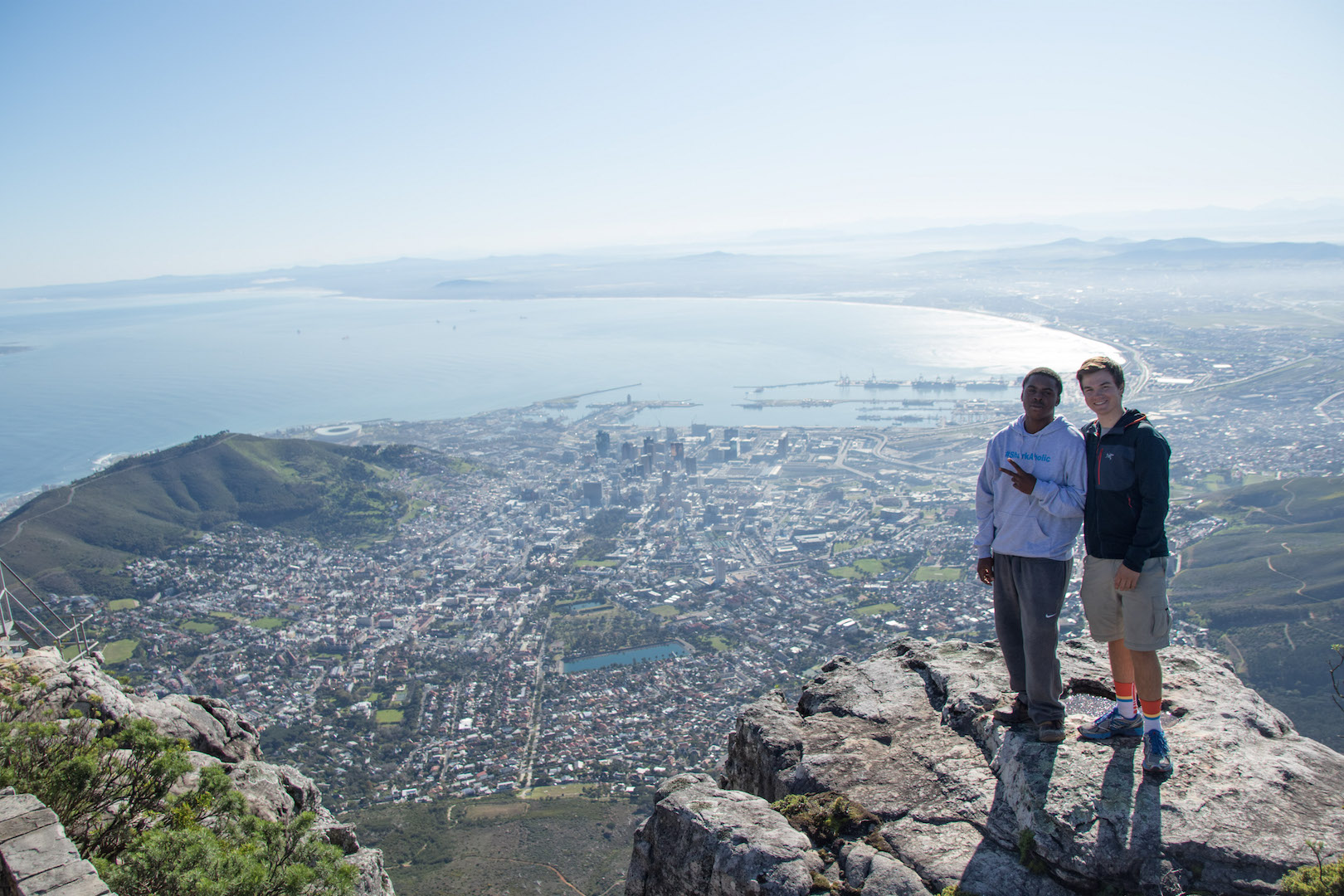
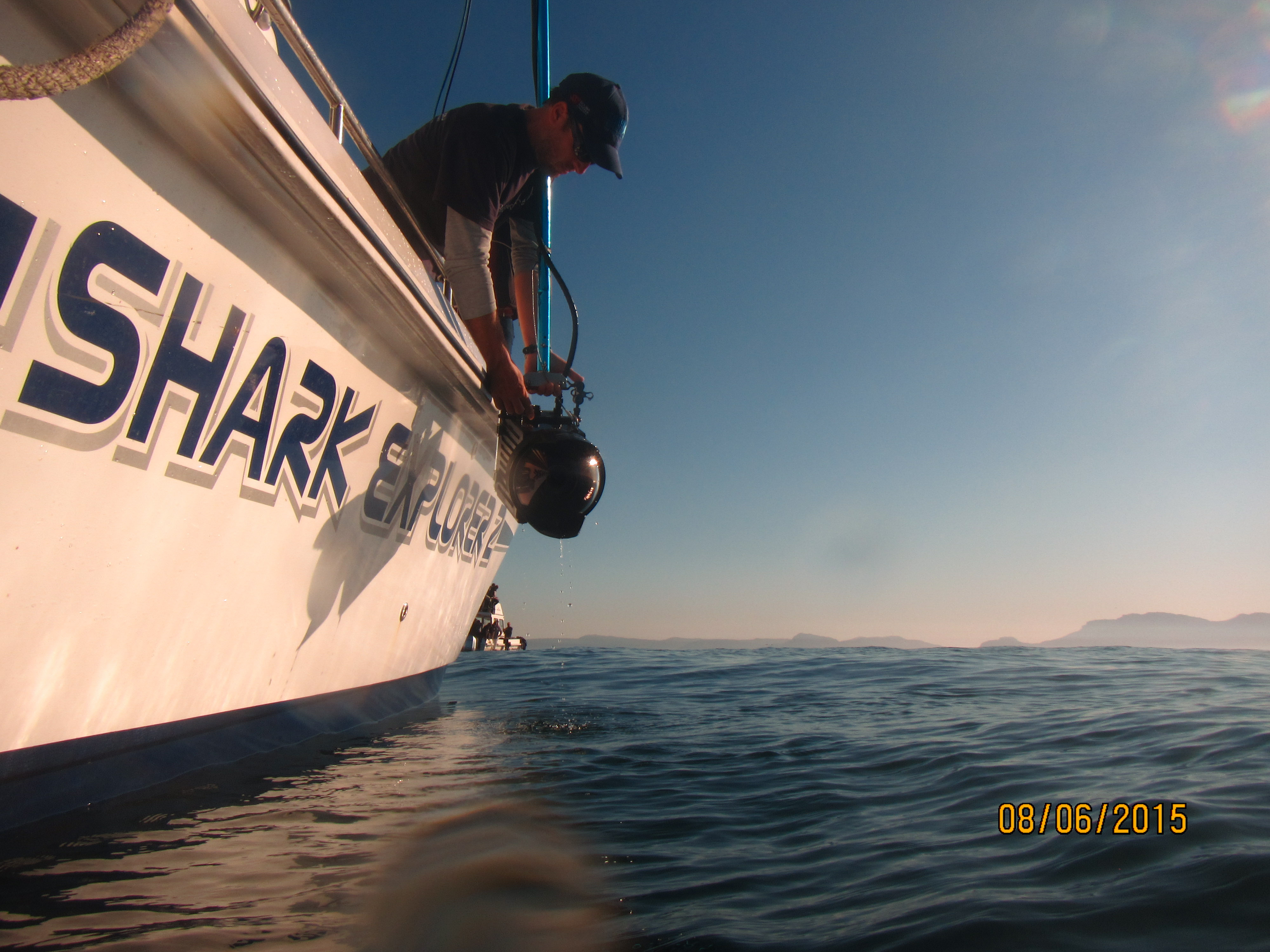
This past August, Scott Voigt (S’14), Danaldo ‘stayin motivated’ Pinder (S’15) and myself, Chris Teufel (F’13) had the incredible opportunity of joining Brocq Maxey and the Shark Explorers team at their home base in Cape Town, South Africa. All three of us were captivated by Brocq’s presentation he gave to our semesters about what it is he does for a living. So, in turn each of us contacted Brocq expressing these interests and were able to join the team from August 1st – August 21st for the internship experience of a lifetime.
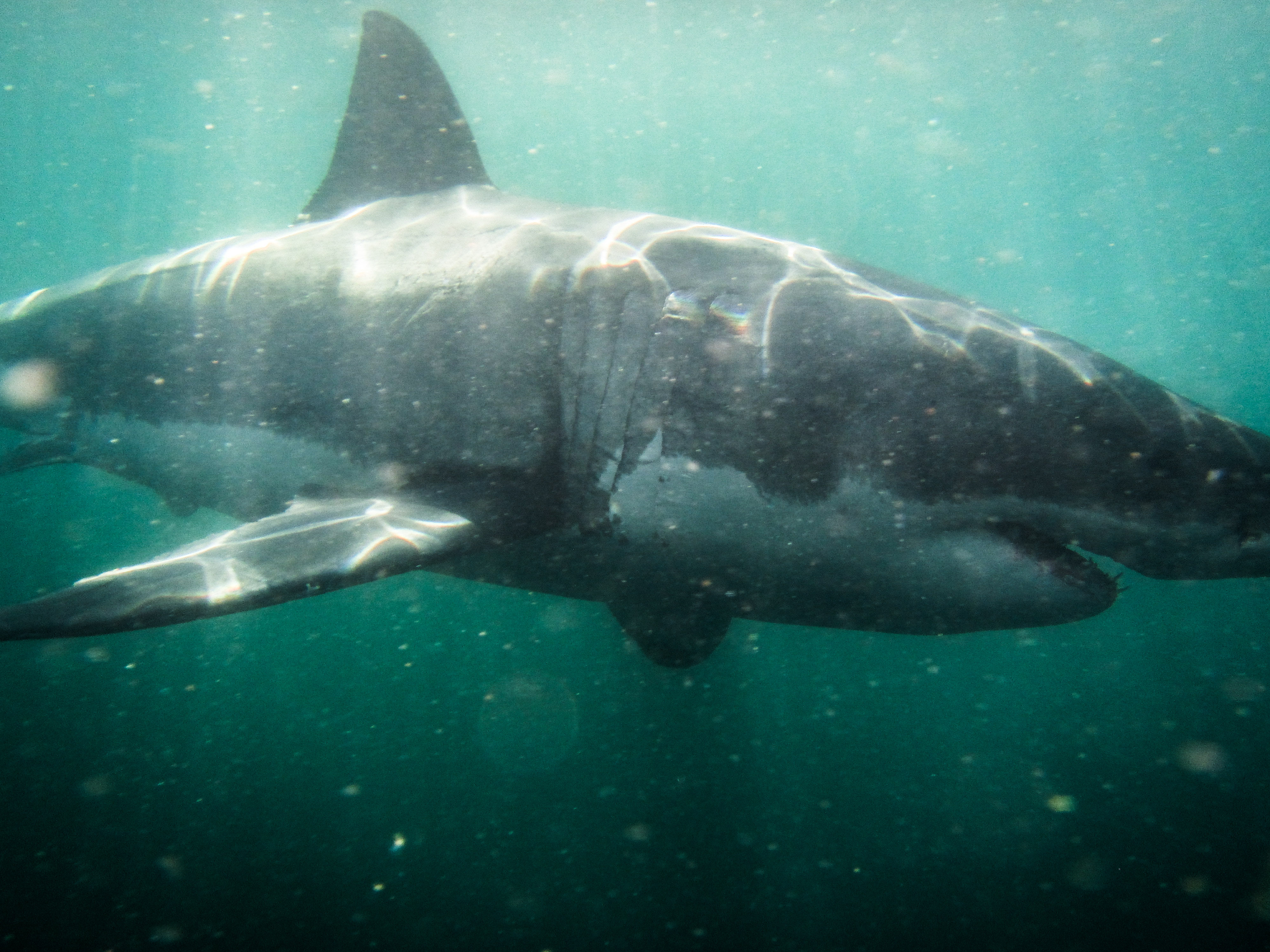
Our day to day activities ranged from waking up at the crack of dawn to go out on the boats as actual members of the Shark Explorers crew and experience the raw power that is a 12 foot great white shark quite literally flying out of the water, to leisurely diving in the kelp forests with everyone’s favorite pajama cat sharks. At night, the team made sure to assimilate us into the Captonian subculture, be it having dinner and shopping at one of the open air markets, or getting together for a Braii (barbecue) and watching some rugby.
However, it was quite evident that the trip was not all fun and games, we also learned an immense amount about what it takes to actually have this as a day to day job. While on the job, we were also exposed to the vast bank of knowledge that each and every member of the crew possessed. Whether it was dive tips from Ernest, or a lesson in streaming live video to the boat from Mark, the tools we gained through this internship are not only applicable to a future career in marine science but to life in general.
I speak on behalf of all three of the interns when I say that this experience was a once in a life time opportunity, and that if any other Island School Alums are out there reading this, we strongly encourage you to shoot Brocq an email and inquire about next summer’s internship.
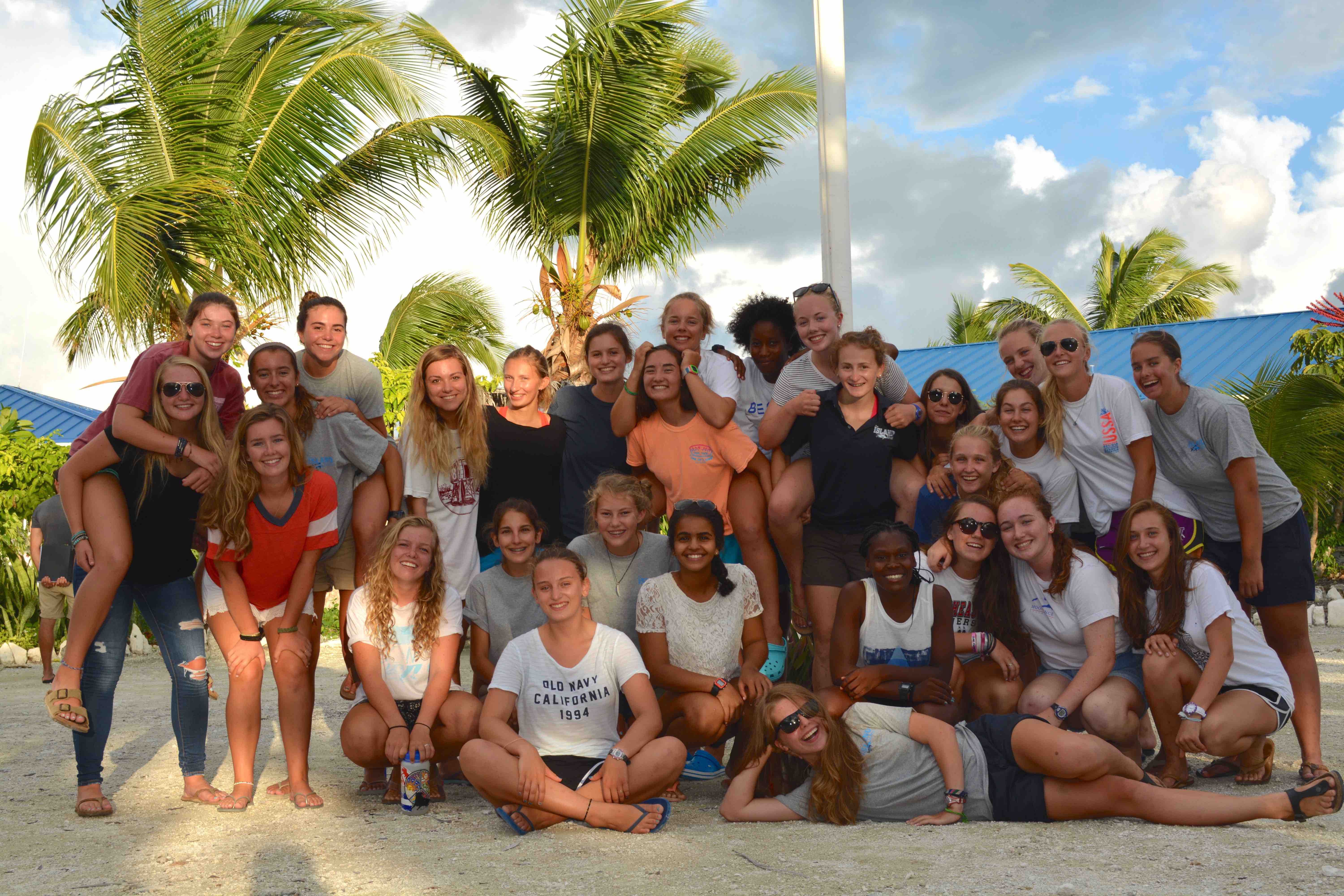
When you hear about college life, you may think about the food, or how hard you have to study, the freedom you have, or even the memories you’ll make. But a lot of people seem to forget the “Dorm Life,” that quintessential time in your life where you share everything (no kidding) with your roommates and grow together as a single functioning team. Here at the Island School, you don’t just get to share your life with a couple kids like in college, but rather 29 kids for three months in two huge rooms! And the best part about sharing every moment with them is the memories you make.
“We never chose the dorm life, but the dorm life chose us!” -Girl’s Dorm Fall 2015
I’ve never spent any moment of my life in a dorm. I’ve always woken up at home and slept at home. I heard about these kids at boarding schools and sleep-away camps and really wondered, how on earth do you even get a moment of peace and quiet with everyone watching your every move? But, to be honest, why would you ever want peace and quiet when you have 27 of your best friends not even five feet away from you? They’ll always be there for you when you’re having an issue, and have your back when things get rough. You can absolutely always count on them!
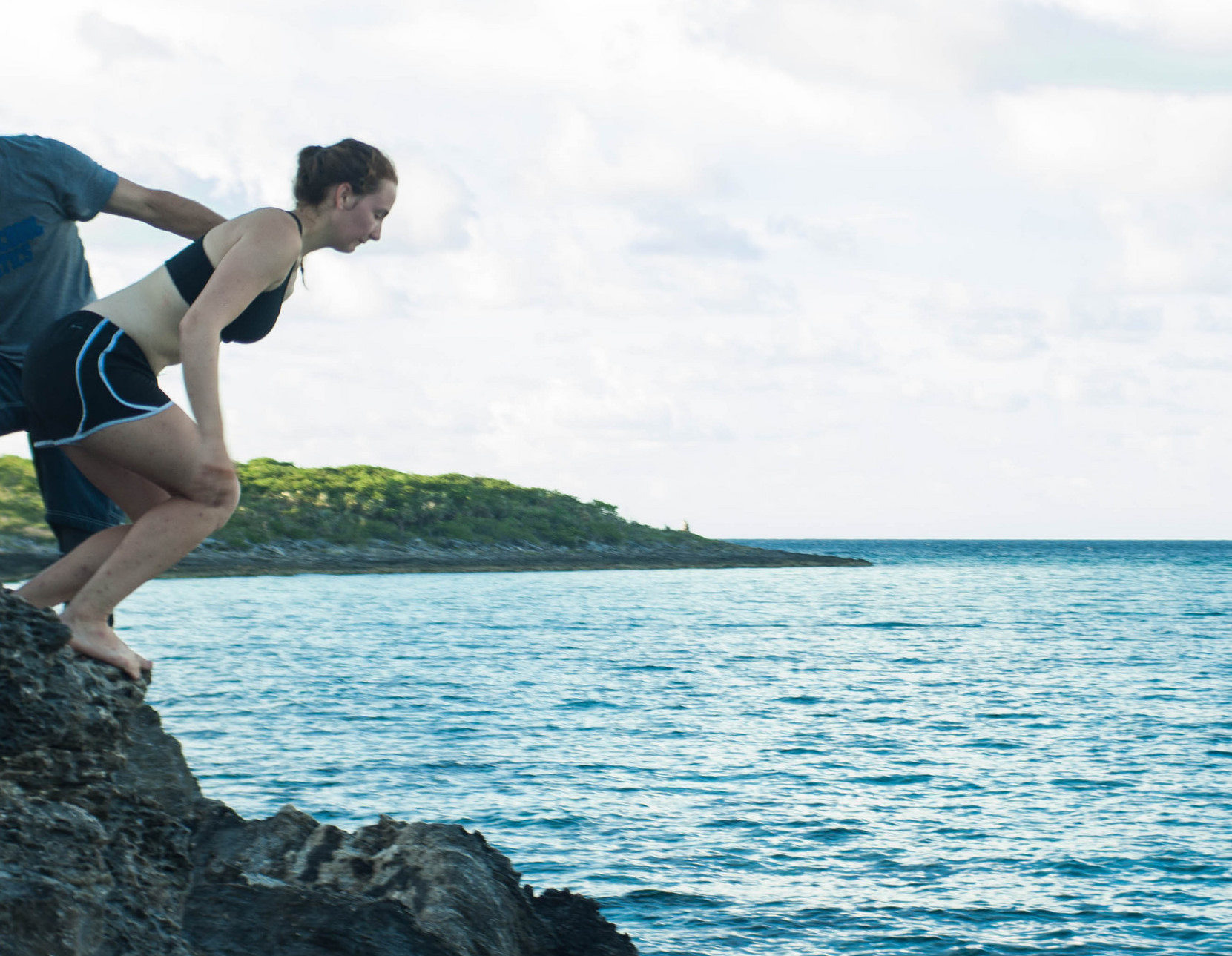
Another awesome aspect of dorm life that I’ve come to love is the fact that you can share anything and everything, whether it be clothes, sports, or beauty tips, if you’re missing something, chances are your dorm mates have it for you! Along with that, is their willingness to share their support. They’ll never let you down, whether it be jumping off of High Rock together for the perfect group picture shot, or pushing you to get up The Wall. I’ve never seen a more cheerful and supportive group of kids than the one’s I get to share 100 days worth of memories with.
In the end, after the Island School semester has long passed and the memories have been written down in our place books and journals, when the sunburns have faded (as well as the abs), and the tan lines have evened out, one thing will always remain: the bond you have with your dorm mates. I recently got the privilege to meet and speak to the alumni, all the way from 2002, who came to visit the Island School for a trip down memory lane. I never saw an alumnus without a smile on their face while they were visiting. The same smiles they had when they were high school sophomores and juniors hanging out with their best friends down in the best place on earth, were the same smiles I saw today. I know that the friends I make now are the friends I make for a lifetime.
Thank you for staying in close touch with us. We very much appreciate your concern and will continue to do our best to keep everyone updated.
Last night we had a beautiful sky and brisk breeze. We have 104 students, employees, volunteers and interns, and visitors in our direct care on campus and in Deep Creek. We are focused on their safety, and everyone is ok, and has a designated place to be for the weather later this afternoon.
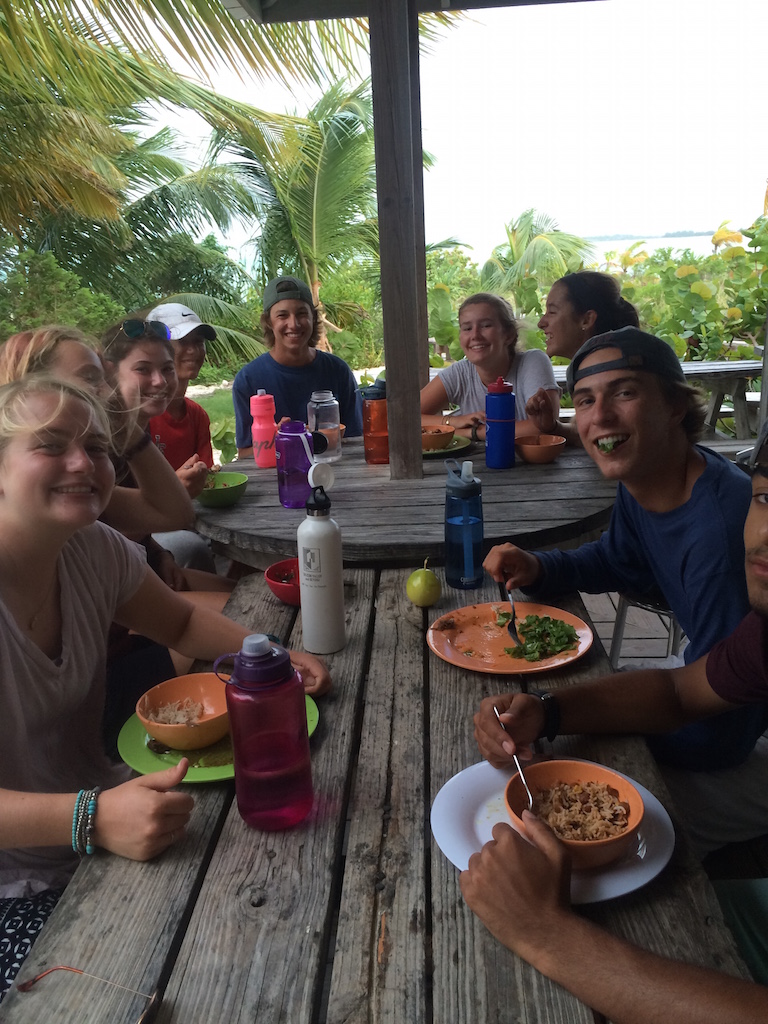
Students enjoy a chili dinner – fitting for the “cold” and windy evening last night
In terms of property protection, wind and storm surge are the primary concerns we are monitoring. The information we have right now supports our preparations and precautions taken, but also gives reason to believe that the worst effects of the storm may not be taken out on our particular location.
This NOAA probability map shows campus being exposed to 74mph sustained winds (hurricane force) only within the 5% probability in the next 5 days. Which reinforces the efforts of our staff to prepare thoroughly in the case (1 in 20 chance or so) of that happening.
We are monitoring highest tides and expecting weather to increase this afternoon. Our main source of updated forecasts for this track and intensity of the storm is through the link here; the most recent forecasts do not have the center of the storm passing over Eleuthera.
NOAA modeling on likely storm surge effects provided by Weather Underground is here and, according to this, we may have storm surge of 3 to 6 feet maximum surge at high tide.
These surge levels, low compared to many other places in the Bahamas, would not infiltrate our living spaces or damage infrastructure. We don’t take the need for precaution less seriously based on these predictions or models, but they again give context to the overwrought hype on TV, or reports from other parts of north Eleuthera on the western side of the island where storm surge is modeled under the same conditions to reach over 15 feet based on the local topography and bathymetry.
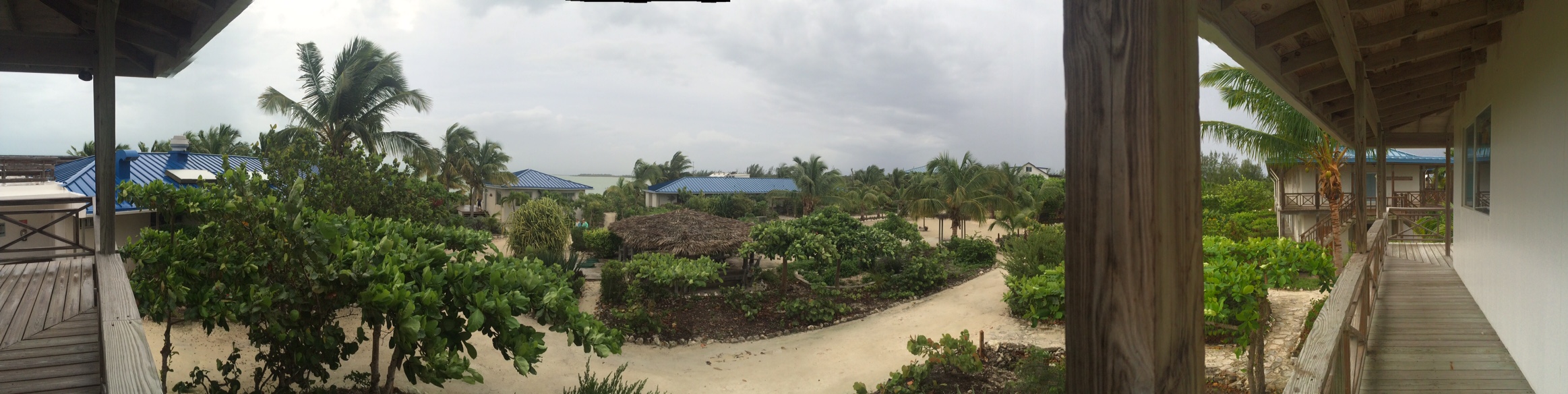
Campus at 8:45am today
Thank you all for the support and positive energy you’re sending our way and, as always, feel free to reach out with any particular questions or concerns.
We continue to prepare this week for hurricane Joaquin. Boats are out of the water, shutters are going on windows, and outdoor activities are abbreviated even as indoor classes continued Thursday morning. Our campus leadership team met again this morning to finalize plans through the weekend, which include assigning people and resources to designated buildings so everyone can shelter in place as the wind and rain intensify over the coming days.
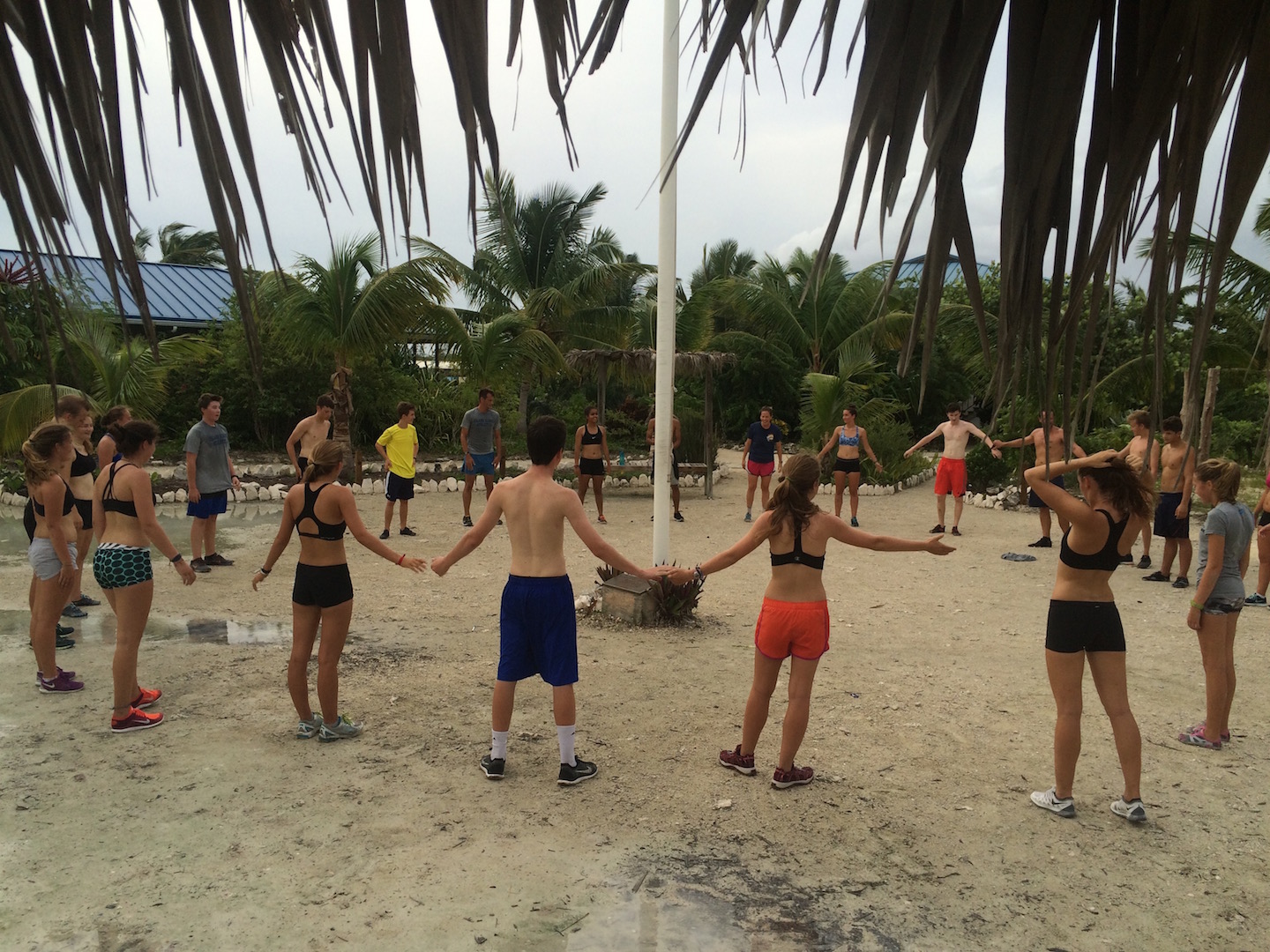
IS started the day with AMX and circled up before chores and final hurricane prep around campus
As is customary, we have been watching this and the other storms of the season, and have stocks of food and water, medical supplies and equipment in place, and are ready to respond to needs in the wider community if we are called on. We are carefully monitoring the forecasts of the storm track and intensity, as well as tides and storm surge projections, and have made higher ground or second floor sleeping arrangements in Deep Creek and on campus for employees and students as a precaution, according to our established hurricane protocols. This is a powerful storm with high winds and rainfall expected, and storm surge possible, and out of an abundance of caution, we are taking all reasonable measures.
IS students, faculty and staff help to get the dining hall safe and ready.
During and after past storms regular internet, phone, and utility power services are interrupted, and we have backup power and communications systems in place. We expect that our Boston-based team will receiving updates from campus throughout, and posting them to our Facebook page and to our blog which is the best place to look for updates.
To reach our team about specific concerns please email us at info@islandschool.org or call our US office number at (609) 620-6700. We appreciate all of the well wishes and good energy people have been sending to us. Please look for more updates daily here.
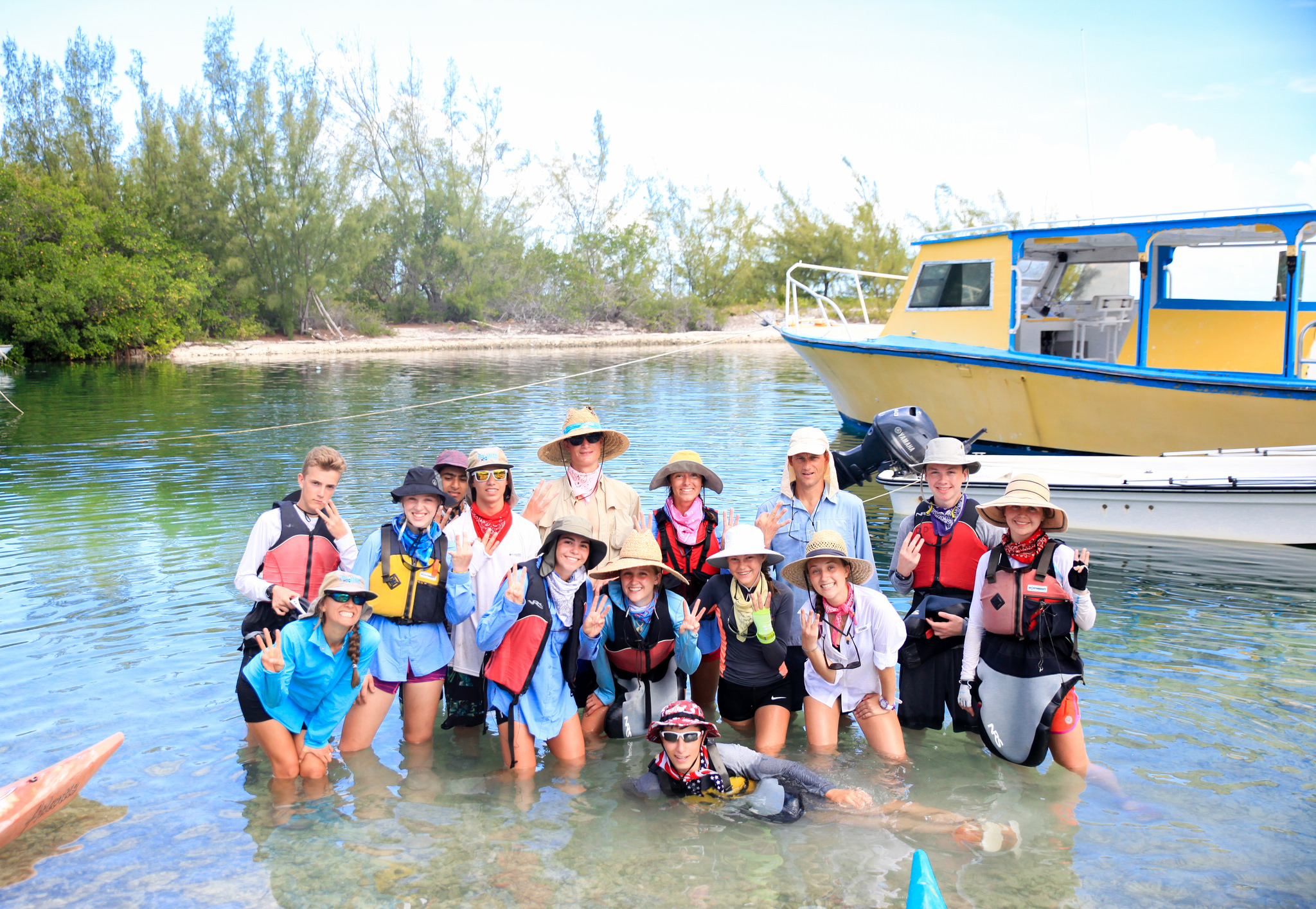
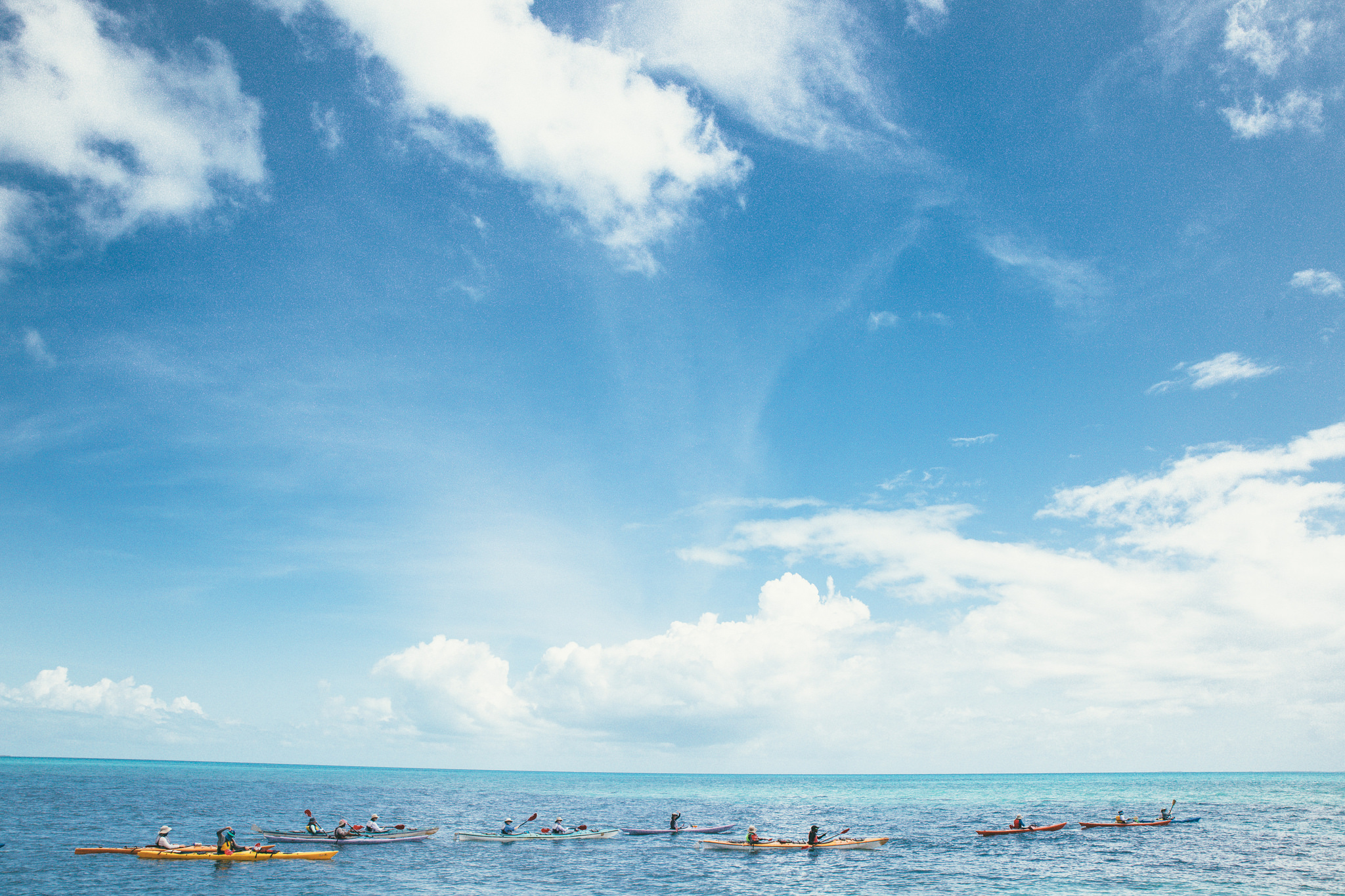
“K3, place to be!” was the slogan of our group’s three-day kayak trip. I could not have asked for a more comical group of students to kayak and camp with for 3 days. We were a strong team of passionate individuals who were not afraid of voicing opinions or leading the group. When we left on Day 1, K3 was off to a great start. We were ready to get on the water and live off the land for three days. We stopped and snorkeled for lunch and then leisurely kayaked to our campsite, Broad Creek. For dinner we ate pasta and sauce but the best part of the meal of the night was the brownies we had for dessert. We all sat in a circle eating brownies with our little bowls and spoons while admiring the stars. Life was good on K3 and we went to bed happy and full and ready for Day 2.
Day 2. Where to begin?! Tensions were high that morning as we figured out who was going to kayak in the double kayaks and who got to ride in the single kayaks. Voices were raised and everyone seemed. Our kayak trip to our lunch spot lacked the energy and excitement so evident on Day 1. We were tired and sore from sleeping on the ground, covered in bug bites from the no-see-ums, and grumpy about the kayak assignments. There was nothing to do but continue to paddle along and we stopped for lunch and snorkeled again.
After lunch, we had only just set back out on the water in our kayaks when it started to rain. We could see the dark mass of clouds rolling in from the horizon but we didn’t think it would hit us so soon. Then the thunder came, accompanied by lightning that lit up the sky. It was just our luck to be caught in the middle of a lightning storm during our paddle! We paddled to shore and huddled under a tree as a group. By now, it was raining buckets and I could barely see ten feet in front of me. The thunder and lightning grew louder and got closer and closer so we scrambled for our PFDs and assumed lightning position, squatting on the life jackets. We squatted in lightning position for over an hour.
To be very clear, that is a long time to hold a squat. Everyone was spread out along the shore, squatting on his or her life jacket and trying to ignore the thunder and lightning that was on top of us. I really thought we were going to get struck by lightning. There was one clap of thunder that was so powerful and loud that I toppled off my life jacket and fell on my face into the sand. I have never been so scared during a storm in my life because we were truly in the middle of it. There was nothing we could do but squat and wait it out. Occasionally, we would talk to each other or try to make a joke, but we basically sat in silence for over an hour. It was the first time I got cold since I arrived at The Island School. We were all shaking from the rain and dying to run into the warm ocean.
When we thought the storm had passed, Leigh and Ashley gave us the thumbs up and K3 sprinted into the ocean. At that moment, we were a group. We weren’t arguing about kayaks or fighting over whose turn it was to be in a double. We weren’t calling people out for not cleaning up or not wearing closed toed shoes. We were just happy to be together. K3 was truly the place to be. At dinner that night, we went around in a circle and shared our rose and thorn of the day. Leigh’s rose was the lightning storm (mine was the brownies). We came together as a group, supported one another, and lived in the moment. The lightning storm was the turning point in K3 and we will forever share that experience with each other.
Rock Sound, a settlement in South Eleuthera, is grounded by the history of generations living there. During settlement day 1, my group wandered around for a little bit until we found something that we thought really stood out to us as a part of the community, softball. By observing and analyzing on our own, we started to scratch the surface of what this place is like and what it’s made of. Afterwards, we came together to talk about the different things we observed. As a product of this, we also saw how worldview impacted the things we observed and how we interacted with the playground and softball practice.
Anneke Sherry’s first High Rock jump
My worldview has been shaped and molded by a hodgepodge of different major life events, all affecting me on a large scale in one way or another. It first started when I was little. My oldest brother has ADHD and autism, my older brother has ADHD, and my mom also has ADHD. These things are only titles, but my experiences that came of these things, these annoyances, amounts to a whole lot. My young life didn’t revolve around me. I was only a small gear in a very large chain of gears making the clock tick. The big gears were my brothers and parents people, but sometimes, they lost a cog. Time stopped in these moments. I was also the fixer, the fixer of the clock, the fixer of time. I had to spend hours tinkering away, trying to find a way to put the cog back in place without putting anything else out of balance. Even from a young age, I was very self aware and detail oriented, knowing how to read facial expressions and body language. I had to prepare for when something was about to go down. I ran around in the background making sure everything worked. There was no glory, but it was what my family needed to have done. Even though it put me through the wringer, I am glad I had those years to teach me how to act. It gave me a piece of mind, a sense of the real world not being all flowers and unicorns like my peers thought. Of course there were some major downfalls to this situation, like being more closed off and not having a strong family dynamic, but but over time I learnt to deal with these things.
A few years passed and I had gotten tired of my hometown. In 8th grade I decided to go to boarding school, but not any boarding school. I had applied to the most prestigious and most intense prep schools in the country; I wanted to go to Andover or Exeter. After much work and debate, I got into both but decided Andover was the place for me. I wanted the intensity, revolutionary exposures and mind blowing adventures. I had no idea what I started for myself. I had not anticipated the economic status of my fellow students and the institution, the hard questions I would have to ask myself about what it means to be me or face and challenge the politics and events about race, gender, sexuality, religion, and more. Although these were hard to deal with, especially as a teenager, it opened my eyes to the cruelties and possibilities of the world and forced me to delve deeper into what it means to be a human in this day and age. I gained close friends that were personally affected by many forms of oppression happening outside campus, and a community to lead me through dissecting these moments and attacking these problems. The people gave me inspirations, and the little things from Andover – community service, cycling, living in a dorm, and more, showed me another dimension of the world – both good and bad. I gained a very large slice of perspective and an additional slice of self-awareness that was unable to be given to me back home. Without Andover, I have no idea where I would be, but definitely not on this island and not even close to the level of thinking and point of view I currently have.
As another product of attending Andover, I left the country for the first time. This summer I went on a 2.5 week language, hiking, and cultural immersion program in Peru. I spent the first month of my summer traveling around Peru, experiencing Peruvian life and nature in the raw. Despite my love for travel, I was always held back by the limitations of my brothers. Even though I had exposed to a lot of the world problems in the U.S., I had never been exposed to another country in the same manner. On one hand, I extracted massive appreciation and information about Incan history and the culture of small spots in Peru, and in turn cultures all around the world, those I haven’t even encountered. Hiking through the mountain ranges for days, fully accepting and diving into the natural world. I also saw just the magnificent power of the human mind and capability. On the flip side, I saw how modern tourism and pollution is destroying these precious ancient site.
While in Rock Sound for my settlement day, my group wandered down to the Whale Hole in an attempt to find some locals. Despite the beauty of this spot, there were no people there since it was a Saturday. Just around the corner, schoolyard peeked out. Lead by the voices of a few young kids, we found a softball practice happening in the school. This was the place. This was the topic we wanted to learn about. I tried to take in everything from the details in the setting to why kids were playing softball in the first place. As Fiona Ross describes, anthropology is “a form of disciplined curiosity” (Teen Die Pad Die Bas, 9). I was simply sitting there, letting my mind run about anything I saw. I then tried to find relationships between what I was seeing and how it has shaped softball and baseball, or been shaped by their progress in Rock Sound. Fiona Ross cites Thomas Hylland Eriksen, who said the main task of anthropology is “to create astonishment, to show that the world is both richer and more complex than it is usually assumed to be” (Teen Die Pad Die Bas, 14). The first settlement day was initiating these thoughts and connections, but the second day allowed me to delve deeper into the bigger picture and the role of baseball and softball in the community. Both of these settlement days created my own astonishment. Saturdays are a rest day, suggesting to me that it would be calm and not much would be happening. But in fact, there was so much happening that I couldn’t absorb it all. The worldview of the locals in Rock Sound and past locals have shaped the physical land that we were interacting with, but also the people on the field. Everything they did from why they were playing ball to how they were playing. The locals we talked to gave us their version of information, a version created with their own worldview. Worldview was all around us. Unseeable and physically intangible, but it was surrounding us in the form of everyone who makes up the community of Rock Sound and any predecessors. This seemingly dead place surprised me, enhancing my own world view, but also those those of my group members.
My peers observed mostly the same things as me, but there were little snippets of information that missed my radar as I was observing something else. For example, I hard a few cars honking but I didn’t notice that they were honking at the kids, encouraging them and showing support. In another sense, I think I picked up on things they missed. I spent a little bit of my time exploring how the softball fit the natural world and how the natural world was interacting with this school. According to Fiona Ross, “all knowledge is produced in relation to others – those with whom we work, those with whom we share our ideas, those against whose ideas we set our own findings, and so on” (Teen Die Pad Die Bas, 12). By using the information that I missed from my peers, I got a more comprehensive grasp of the place. Although there was much similarity, just the difference in a few things helped tremendously. What creates these differences is by our worldview.
Our worldview tells our mind what details to pick up on, where to focus our attention. Our past experiences draw our focus into certain aspects to find connection between ourselves and the thing being studied. In The Cartographer Tries to Map A Way To Zion, Kei Miller explains the relationship between a local and newcomer, and how their worldview changes what is seen about the place. Where the cartographer sees a road, the rastaman hears the songs and history of the roads (The Cartographer Tries to Map A Way To Zion, 31). I tried to grasp everything while in the playground watching the softball practice. My attention to detail about the practice came from paying attention to my brothers, interpreting their every move. In a similar fashion as what I did for my brothers, I analyzed the softball player’s emotions and the coaches style of teaching. My care about the environment and the environmental interaction came from being in the outdoors. I naturally pick out the birds and the wind in the background, the trash on the ground, the plant and grass conditions from constantly having to be connected with the earth around me while hiking, cycling, and exploring. I made a lot of connections with Peru. Seeing what condition Rock Sound was in and the role tourism plays was very similar to that of the Peruvian sites that were once pristine and were now overrun by tourists and their residue. I found myself asking a lot of “What” questions, but more often I followed up with “Why” questions, even though I didn’t write them all down, I always took the next step into thinking. Andover has trained me to think about the motives and the explanation for my findings. Although I tried to remain unbiased, I think my bias came out when I was trying to find those answers. I didn’t know all that much about Rock Sound, so I had to use my best guesses from the Island School, back home, and anywhere else I had visited for an extended period of time. If I were to remain unbiased, I should have left those questions unanswered but being me, my mind automatically needs to probe around and think of possible answers before moving on. I knew they were only speculations, so I tried the best I could to make accurate assumptions but knew there was a good change they were not the right answer. Worldview impacts me and my fellow students daily, even in other Island School classes.
A main part of the marine ecology course is scuba diving at Harbour Rocks and observing a specific part of coral reef life each week. As the classes progress, I gain a more comprehensive understanding of the coral reef. These dives are very similar to settlement days. The better I pay attention to the rock, the more little details become apparent. If my mind wanders or I don’t spend the appropriate time looking at something, crucial elements are lost. Some of those moments are very rare opportunities, so it is critical that I keep my eyes peeled and attentive. Even though I have to keep eyes on the task at hand, I also have to always be aware of my surroundings and my own boundaries. If one isn’t attuned to the things around them, there can be serious consequences. In there same way, settlement days need full attention or else things can be missed. Although there isn’t a life threatening aspect to settlement days, surroundings are just as important and knowing the boundaries to show respect for the culture are critical in these situations. Although my job is to learn, I have to keep my comments and questions within reason.
My time at the settlement has been extremely positive, and I am so happy this project exists because otherwise I would have never known about the places like this on Eleuthera and the history behind them. Not only has it taught me things about the connections inside and outside of Eleuthera, it has taught me about my interest in culture and worldview. I never really thought about how and why we see different things, and that those things could be so deeply rooted in us as humans. Whether or not we use our worldview is not up to us. It is omnipresent. It has personally shaped each and every one of us into different people. My worldview has greatly shaped my time in Rock Sound observing and absorbing, as well as the locals who have provided me with the culture which I am learning and growing from. I hope to continue delving deeper into the ideas of culture and worldview with experiences such as these.
At home, thunder and lightning doesn’t bother me. In fact, I kind of like it. It’s cool to watch and experience from the safety of my home or another solid building. Here at The Island School you never know where you’re going to be when a thunderstorm hits. You could be in the dorms, the dining hall, out in the field, or out on kayak.. Watching from the dining hall or the dorms can be fun. Watching storms while on kayak trips or out in the field is less fun but much more of an adventure.
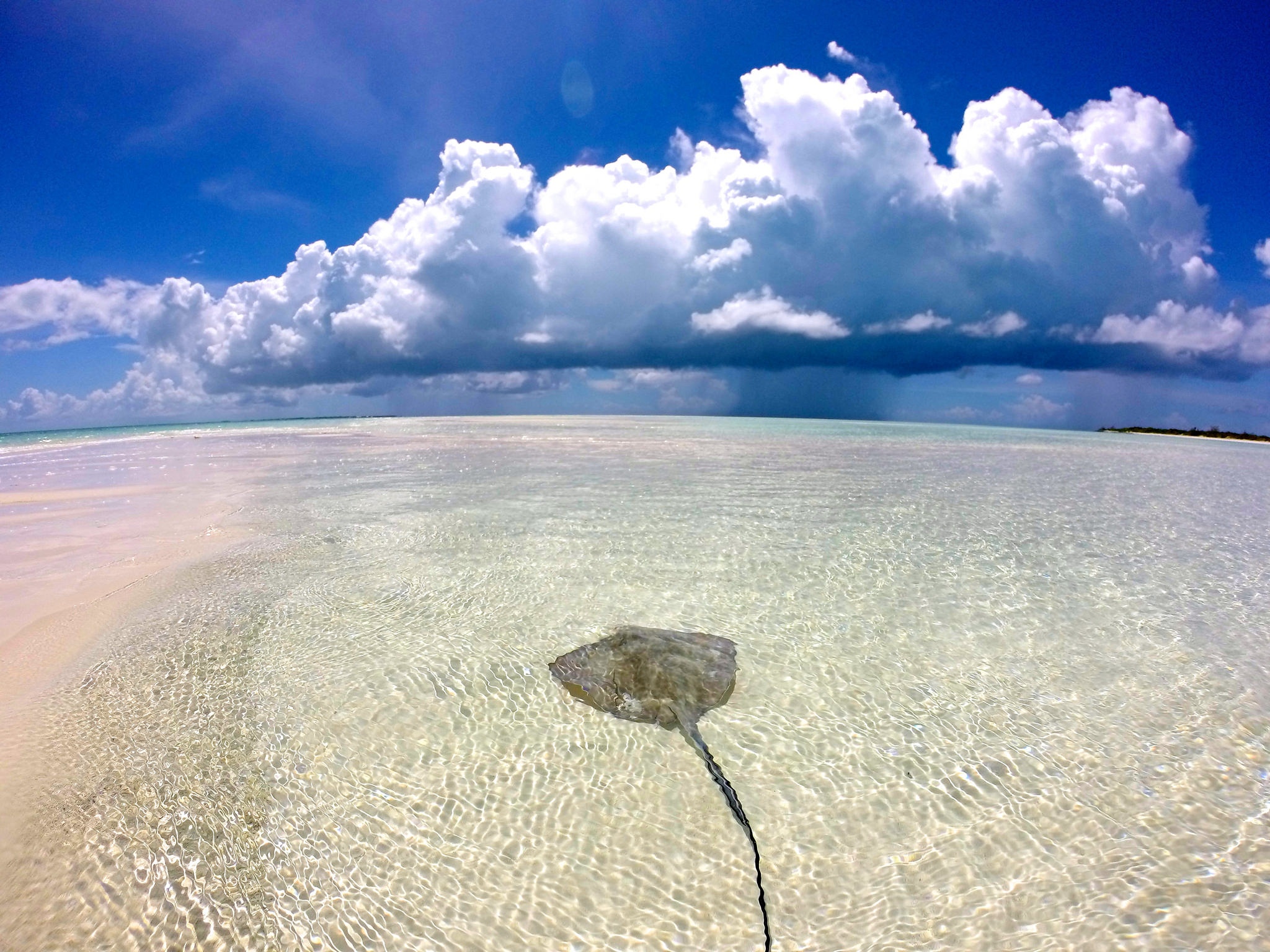
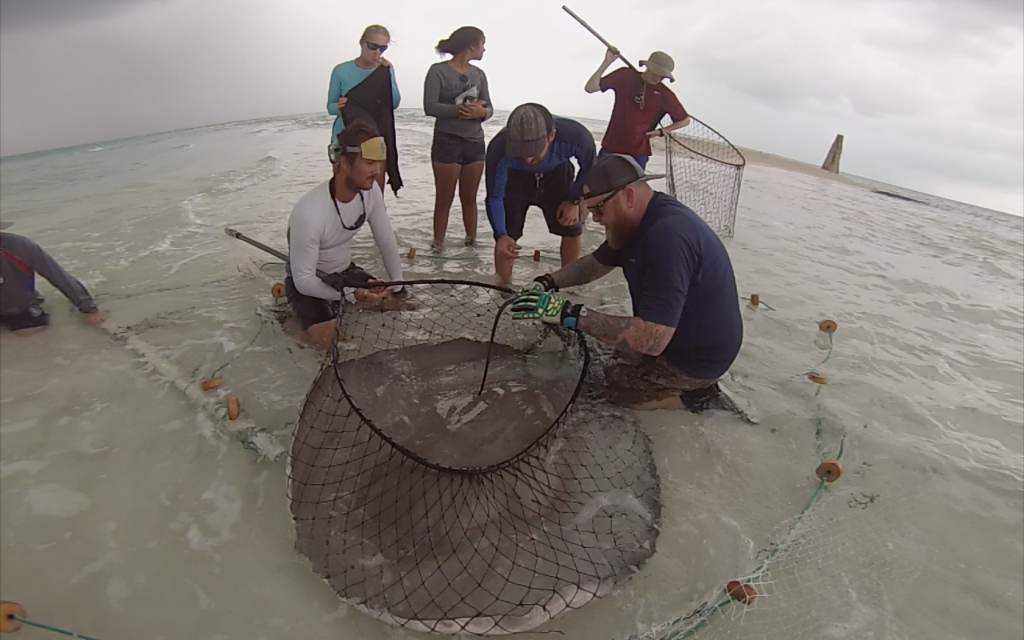
This past Monday I was out in the field catching and tagging rays with my research team. Seas were choppy as we headed out on the boat to our research site and in the distance you could see the storm clouds rolling in. Eventually I was dropped off to investigate a bit of sediment that was kicked up. It was hard to tell whether or not it was a ray simply because it was so big. Pretty soon I figured it out though. It was a huge ray, the biggest we have caught yet. We used both a barrier net and black hand nets but this ray could barely fit. As we caught the ray and secured its barb we felt rain begin to sprinkle. By the time we started taking measurements of the ray it was pouring and Nick, an Island School teacher, and Owen, our research advisor, were counting the seconds between thunder and lightning. More than 30 seconds. We were in the clear just then but kept counting.
I had to run to the boat to get a notebook and sprinted the whole way. The water kept getting deeper and by the time I reached the boat it was up to my waist. I grabbed the notebook and started back, I have never been more scared in my entire life. We continued counting the lightning and the gaps were shorter and shorter. Finally we released the ray and everyone started sprinting back to the boat. We all reached it safely. It was a huge relief but adrenaline was still pumping through us. The five students all sat in the front of the boat facing each other. We talked and laughed and relived the moment that had just past. I realized the experience had brought us closer as a research group and taught us the power of mother nature.
For more photos of stingray and lightning adventures, follow our research team’s activities on the Island School Flickr page!